The Algarve is best tackled by prioritizing its coastline and old towns over trying to see everything. Ponta da Piedade delivers the region's most dramatic cliffs and grottoes, while the Benagil Sea Cave nearby is the single image most visitors come chasing, best reached on one of the Benagil Cave & Coastal Boat Tours. Inland, Lagos Old Town and Tavira Old Town offer cobbled streets and history without the crowds of the coast, and the Ria Formosa Natural Park adds a quieter, wildlife-rich contrast. Together these six cover beaches, caves, heritage, and nature in a compact, easily combined route.
The Algarve's coastline is punctuated by dramatic geological formations and fortified monuments that mark the edge of continental Europe. From wind-battered clifftop fortresses to sea-carved rock arches, these landmarks define the region's identity.
Must See
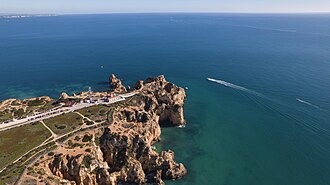
Ponta da Piedade
A dramatic headland near Lagos where ochre limestone cliffs plunge into turquoise Atlantic water, carved into arches, grottoes, and free-standing rock pillars. A lighthouse marks the point, and a staircase descends to a small jetty where boat tours depart into the caves. Best visited at sunrise or sunset when the rock glows golden. Kayaking and small-boat excursions let visitors paddle directly through the arches.
Must See📌 Book Ahead
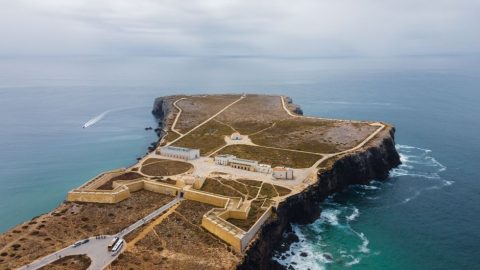
Benagil Sea Cave
The Algarve's most photographed natural wonder: a sea cave with a partial dome roof open to the sky, accessible only by kayak, paddleboard, or boat tour from Benagil beach or Portimão/Lagos marinas. Sunlight streams through the circular opening onto a small sandy interior beach. Arrive early morning to avoid crowds and rough afternoon swell; landing inside the cave is now restricted, but boats can enter and circle within it.
Tips for Landmarks & Monuments
- Timing: Visit Ponta da Piedade and Benagil early morning for calm seas and soft light
- Safety: Cliff-edge paths have no barriers in places — keep well back, especially in wind
- Booking: Benagil boat/kayak tours sell out in summer — book a day ahead
- Combine: Sagres and Cabo de São Vicente are 6km apart and easily visited together
With over 150 beaches along roughly 200km of coastline, the Algarve ranges from sheltered golden coves backed by cliffs to the wild, wave-battered strands of the west-facing Costa Vicentina, favored by surfers.
Must See
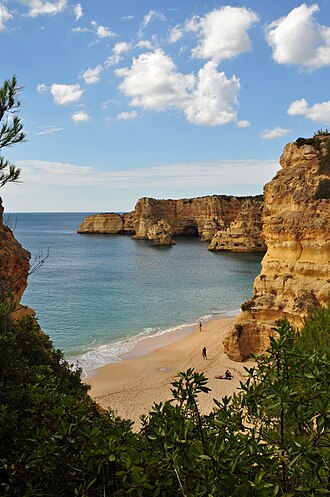
Praia da Marinha
Regularly ranked among Europe's most beautiful beaches, this small cove near Carvoeiro sits beneath towering ochre cliffs pierced by natural arches and sea stacks. A steep staircase descends from the clifftop car park to golden sand and clear water popular with snorkelers. The clifftop Seven Hanging Valleys Trail (Percurso dos Sete Vales Suspensos) runs past it, linking several similarly dramatic beaches.
Tips for Beaches & Coastline
- Blue Flag: Look for the Blue Flag rating for water quality and facilities
- Parking: Arrive before 10am in July-August — cliffside car parks fill quickly
- West coast: Water is noticeably colder and surf rougher than the south coast
- Trail walking: The trail is a roughly 6 km one-way coastal walk between Praia da Marinha and Praia de Vale de Centianes; it does not provide transport between trailheads.
Long before it became a beach destination, the Algarve (from the Arabic al-Gharb, "the West") was a Roman province and later the last Moorish stronghold on the Iberian Peninsula, leaving behind ruins that trace two millennia of occupation.
Must See
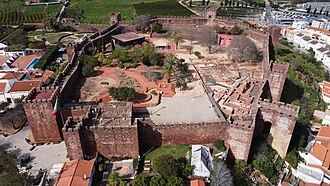
Silves Castle (Castelo de Silves)
The Algarve's finest Moorish fortress, its distinctive red sandstone walls dominate the hilltop town of Silves, once the region's medieval capital under Moorish rule (Xelb). Inside, visitors can walk the ramparts, explore underground cisterns, and view archaeological excavations of the former royal palace. The adjacent hilltop cathedral and old town streets make Silves one of the Algarve's most historically rich inland towns.
Tips for Ancient & Historical Sites
- Combine: Milreu ruins pair naturally with a visit to the nearby Palácio de Estói
- Shade: Silves Castle has little shade — visit morning or late afternoon in summer
- Footwear: Uneven ancient paving at all three sites calls for sturdy shoes
Away from the resort strips, the Algarve's old towns preserve a distinctly Portuguese character: whitewashed houses with wrought-iron balconies, cobbled lanes, and squares shaded by orange trees.
Must See
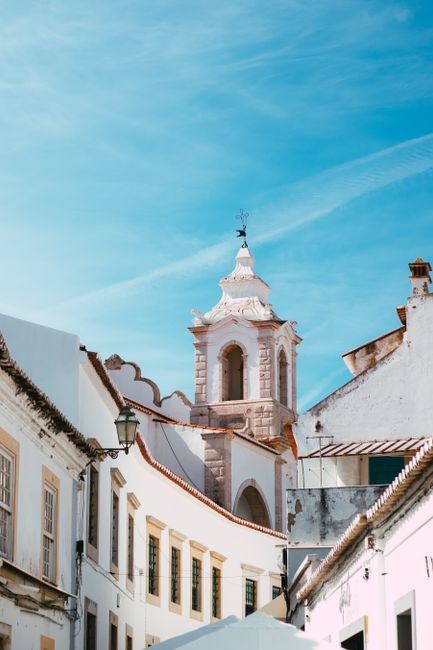
Lagos Old Town
Encircled by 16th-century walls, Lagos's historic center is a maze of cobbled pedestrian streets, lively squares, and pastel townhouses that served as a launch point for early Portuguese voyages of discovery. Praça Gil Eanes and the ornate Igreja de Santo António sit alongside boutiques, tascas (traditional taverns), and a bustling marina. Its compact, walkable scale and mix of history and nightlife make it the Algarve's most popular base.
Must See
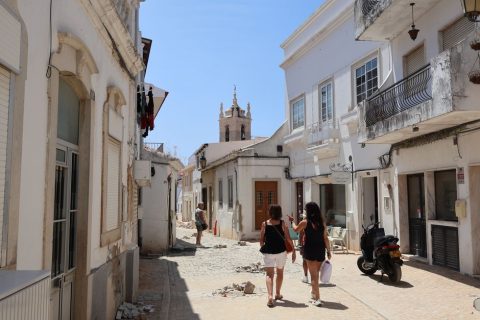
Tavira Old Town
Often called the Algarve's most elegant town, Tavira straddles the Gilão River, linked by a Roman-origin seven-arched bridge. Its skyline of over 30 church towers, a hilltop castle garden, and riverside cafés give it a refined, unhurried character distinct from the busier resort towns. Ferries connect to the unspoiled Ilha de Tavira barrier-island beach nearby.
Tips for Historic Towns & Neighborhoods
- Golden hour: Old town streets photograph best in the low light of early evening
- Storks: Look up in Faro — storks nest on rooftops and walls throughout the old town
- Ferry timing: Check return ferry times before crossing to Ilha de Tavira
Beyond its beaches, the Algarve protects extensive wetlands, lagoons, and coastal wilderness that support migratory birds, native flora, and quiet walking trails far removed from the resort crowds.
Must See
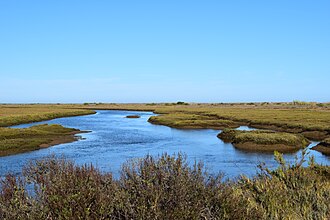
Ria Formosa Natural Park
A vast lagoon system of barrier islands, salt marshes, and tidal channels stretching 60km along the coast between Faro and Tavira. Home to flamingos, purple herons, and rare wading birds, it can be explored by boat tour, kayak, or the boardwalks near Faro and Olhão. The park also shelters remote, undeveloped barrier-island beaches accessible only by ferry.
Tips for Parks & Nature Reserves
- Birdwatching: Spring and autumn migration seasons bring the highest bird diversity to Ria Formosa
- Boat tours: Small operators in Faro and Olhão run affordable lagoon and island-hopping trips
- Insect repellent: Wetland areas can have mosquitoes at dusk
The Algarve's coastline and mild climate support a wide range of outdoor activities, from boat trips into sea caves to some of Europe's top-rated golf courses.
Must See📌 Book Ahead
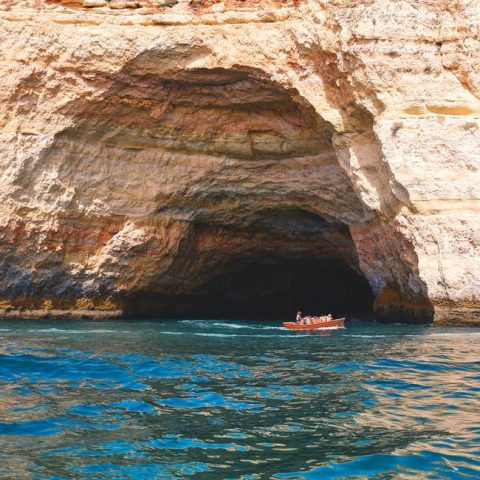
Benagil Cave & Coastal Boat Tours
Small motorboats, RIBs, and kayak tours depart from Benagil beach, Portimão, Lagos, and Albufeira marinas to explore the coastline's sea caves, arches, and grottoes, including Benagil Cave itself. Tours typically run 1-2 hours and combine several formations along the Barlavento coast. Book operators with proper safety licensing, especially for kayak or paddleboard options.
Tips for Tours & Activities
- Life jackets: Reputable boat operators provide and require life jackets on smaller craft
- Sea conditions: Cave tours may be cancelled or rerouted in rough Atlantic swell, especially outside summer
- Book ahead: Popular July-August tours and tee times fill days in advance
Algarve is really a region of separate resort towns rather than one city, and each of its main hubs runs its own December holiday village instead of a single unified market. Portimão hosts the region's biggest and best-known Christmas market, while Faro, Albufeira, and Vilamoura each add smaller festive markets, ice rinks, and light displays through the same broad season. Travelers based anywhere on the Algarve coast can reach two or three of these by a short drive, making a self-planned holiday-market tour easy in December 2026.
Must See
Aldeia de Natal (Portimão Christmas Village)
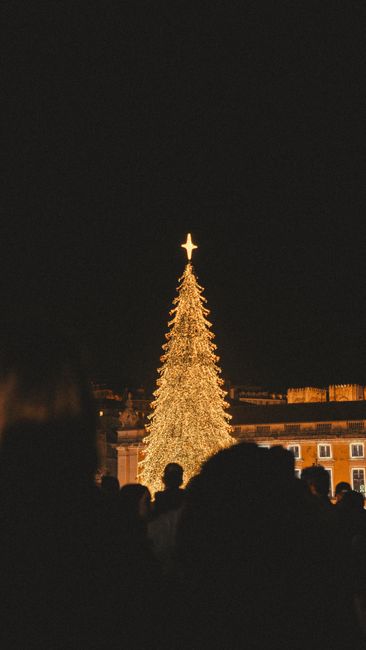
Portimão hosts the Aldeia de Natal (Christmas Village), widely regarded as the Algarve's largest and most elaborate holiday market. Spread across the riverside gardens near the marina, the pop-up village typically opens in early December and runs through the first week of January, mirroring its usual seasonal window. Wooden chalets sell handmade crafts, mulled wine, roasted chestnuts, and regional sweets like Dom Rodrigo, while an ice-skating rink, carousel, and a towering illuminated Christmas tree anchor the site. Live entertainment includes choirs, brass bands, and weekend shows aimed at families, and a Ferris wheel often offers night views over the town. Santa's workshop and a toy train keep younger visitors busy. Arrive after dusk to see the full lighting display, and expect the busiest crowds on weekends and during school winter holidays. Entry to the village is generally free, though rides and food carry separate charges.
Tips for Christmas Market
- Portimão's Aldeia de Natal is the biggest single market in the region, worth prioritizing if you can only visit one.
- Markets generally run from early December through the first week of January, but exact opening dates shift slightly year to year, so check local tourism boards closer to your visit.
- Rent a car or plan a short taxi ride between towns, since Faro, Portimão, Albufeira, and Vilamoura are 20-40 minutes apart along the coast.
- Evenings after sunset are best for the lighting displays and ice rinks; daytime visits are quieter but less atmospheric.
- Algarve winters are mild by European standards, so a light jacket is usually enough even for evening market visits.
By day the Algarve is beaches and cliffs, but after sunset the region shifts gears into one of southern Europe's liveliest coastal nightlife scenes. Albufeira's Strip and Vilamoura's marina anchor the party circuit with clubs and bars running until sunrise, while Lagos and Faro offer a mellower mix of live-music bars and rooftop lounges.
Must See
Albufeira Strip (Avenida Sá Carneiro)
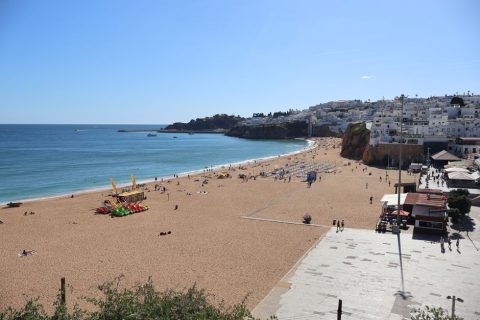
The undisputed epicenter of Algarve nightlife, this neon-lit strip in Albufeira packs dozens of bars, clubs, and late-night eateries into a few walkable blocks. Crowds build from around 11pm, with big-name clubs spinning house and commercial dance tracks until dawn, while smaller bars offer karaoke, sports screenings, and cheap cocktail deals to lure in the pre-club crowd. It draws a young, largely international holiday crowd, especially in peak summer months, and the atmosphere is loud, festive, and unapologetically touristy. Expect bar crawls, fancy-dress stag and hen parties, and street promoters handing out drink vouchers. Bring cash for cover charges at the bigger venues and pace yourself, as most places don't hit their stride until well after midnight. It is best enjoyed in a group and is not the spot for a quiet evening.
Tips for Nightlife
- Peak nightlife runs June through September; many clubs scale back or close entirely in winter
- Clubs rarely fill up before midnight, so plan a late dinner rather than arriving early
- Watch drinks being poured and stick to licensed venues, especially on the busier Albufeira strip
- Book taxis or ride-hailing in advance late at night, as availability drops sharply after 2am
The Algarve is one of Europe's best regions for a family holiday, pairing calm swimming beaches with a cluster of purpose-built theme parks around Albufeira, Lagoa and Quarteira. From dolphin shows and water slides to zoo encounters and pedal-boat lakes, there is enough to fill a full week without repeating a single day.
Must See📌 Book Ahead
Zoomarine Algarve
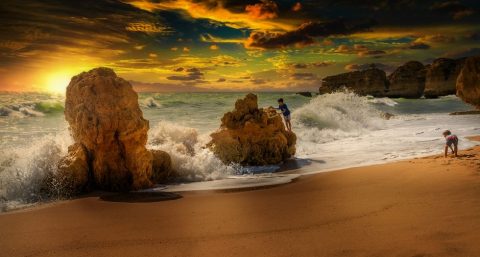
Part marine park, part zoo, part water park, Zoomarine is the Algarve's flagship family attraction near Guia, close to Albufeira. Children can watch dolphin and sea lion shows, walk through a tropical bird aviary, meet parrots and flamingos, and ride a small rollercoaster and swan pedal boats. In summer the on-site Slidey World water park area is included in the ticket, so a single visit easily fills a whole day. There are also 4D cinema shows and a dolphin emotions interaction program for an extra fee. Shaded picnic areas and several restaurants make it easy to manage a full day with toddlers as well as older kids. Buy tickets online in advance during July and August, when the park is busiest and queues for the main shows build up quickly.
Tips for With Kids
- Book Zoomarine tickets online in July and August to skip the ticket-counter queue and lock in show times.
- Bring reef-safe sunscreen and reapply often — Algarve summer sun is strong even with a sea breeze.
- Water parks are seasonal (roughly May/June to September) — check opening dates before visiting outside peak summer.
- Arrive at opening time for water parks to grab shaded loungers and beat the midday queues for the popular slides.
- Pack water shoes for splash zones and rocky pool edges, especially for toddlers.
The Algarve keeps a lively calendar year-round, from pre-Lenten carnival parades to summer music festivals and medieval fairs that spill through whitewashed old towns. Coastal resorts add fireworks and open-air concerts through the warmer months, while inland towns like Loulé and Silves anchor the region's biggest traditional gatherings. Plan a visit around one of these dates to see the Algarve at its most festive.
Must See
Loulé Carnival Parade
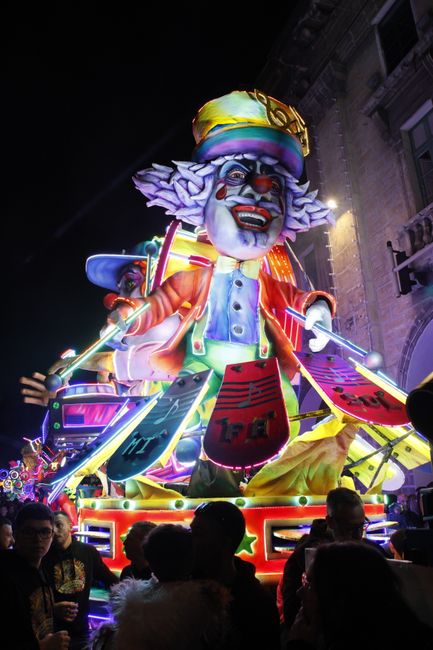
One of Portugal's oldest and most flamboyant carnivals, the Loulé Carnival transforms this inland Algarve town into a riot of colour, samba rhythm and satirical floats. Expect the celebration to run from 13 to 17 February 2026, The 2026 parade dates were February 15–17 (Sunday through Tuesday); February 14 was not a parade day. Dancers in elaborate Brazilian-style costumes perform alongside floats poking fun at local and national politics, a tradition dating back over a century. Street food stalls, live bands and a dedicated childrens parade round out the programme. Arrive early to claim a spot along the barriers, as the route through the town centre fills quickly. It is a rare chance to see Algarve locals cut loose after the quiet winter months, and hotel rooms in Loulé and nearby Faro book up well in advance.
Must See
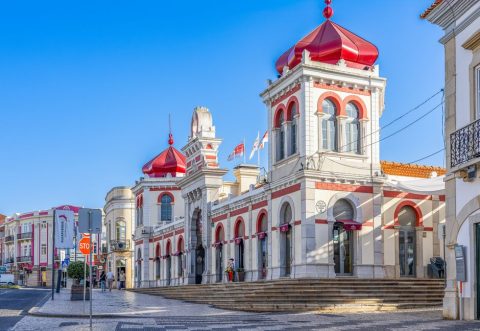
Festival MED - World Music Festival, Loulé
Every summer the historic centre of Loulé becomes an open-air stage for Festival MED, a free world-music festival celebrating the sounds of the Mediterranean, Africa and Latin America. The main festival ran June 25–27, with a free-admission Open Day on June 28., with multiple stages set among the towns cobbled squares, castle walls and market building. Beyond the concerts, a sprawling handicraft market sells textiles, ceramics and jewellery from artisans across three continents, and food stalls serve dishes to match the festivals global theme. Circus performers, fire shows and DJ sets keep the energy going well past midnight. Entry is free, which makes it one of the best-value cultural events in the Algarve, though visitors should expect the town to be extremely busy and parking scarce. Comfortable shoes are essential for navigating the sloped, cobbled streets between stages.
Must See📌 Book Ahead
New Year's Eve Fireworks, Vilamoura Marina
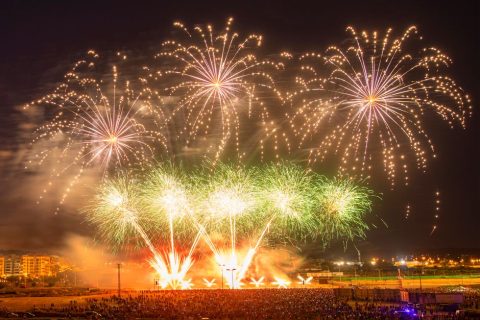
The Algarves biggest New Years Eve celebration lights up Vilamoura Marina on the night of 31 December 2026, when a large fireworks display explodes over the yachts and waterfront restaurants at midnight. Crowds gather along the marina promenade from early evening, with bars and restaurants hosting live DJs and countdown parties that spill outdoors regardless of the mild winter temperatures. Nearby Albufeira holds a similar, slightly smaller display over its old town cliffs, and many visitors combine both by staying along the coast between the two resorts. Book a marina-view table well ahead, as restaurants with a direct sightline to the fireworks sell out weeks in advance. Free public viewing spots remain available along the promenade for those happy to stand, making it an accessible and spectacular way to welcome the new year on the Atlantic coast.
Tips for Events Calendar
- Book accommodation in Loulé, Portimão or Silves months ahead if visiting during their signature festival dates, as rooms sell out fast.
- Most street festivals are free to attend, but arrive early for the best viewing spots along parade routes and stages.
- Check official municipal tourism sites closer to the date, as exact festival dates can shift slightly year to year.
- Wear comfortable shoes for cobbled old-town venues like Loulé and Silves.
- Combine a summer festival visit with a beach day, since most towns hosting these events sit within a short drive of the coast.
Real, highly-rated Restaurants in Algarve, sourced from Google Places (rating above 4★).

Versatile Steakhouse
Versatile Steakhouse is a highly-rated restaurant in Algarve, rated 4.9★ from 90 reviews. Located at Urbanização do Mercado Nº 34 Lj 13, 8200-609 Albufeira, Portugal.
Opening Hours
- Monday: Closed
- Tuesday: 6:30 – 10:30 PM
- Wednesday: 6:30 – 10:30 PM
- Thursday: 6:30 – 10:30 PM
- Friday: 6:30 – 10:30 PM
- Saturday: 6:30 – 10:30 PM
- Sunday: Closed

Restaurante Thyme
Restaurante Thyme is a highly-rated restaurant in Algarve, rated 4.8★ from 262 reviews. Located at Urbanização Alto Club 8500, Alvor, Portugal.
Opening Hours
- Monday: 6:45 – 11:00 PM
- Tuesday: 6:45 – 11:00 PM
- Wednesday: 6:45 – 11:00 PM
- Thursday: 6:45 – 11:00 PM
- Friday: 6:45 – 11:00 PM
- Saturday: 6:45 – 11:00 PM
- Sunday: Closed

austa
austa is a highly-rated restaurant in Algarve, rated 4.8★ from 634 reviews. Located at R. Cristóvão Pires Norte, 8135-117 Almancil, Portugal.
Opening Hours
- Monday: Closed
- Tuesday: 11:30 AM – 4:00 PM, 7:00 – 10:30 PM
- Wednesday: 11:30 AM – 4:00 PM, 7:00 – 10:30 PM
- Thursday: 11:30 AM – 4:00 PM, 7:00 – 10:30 PM
- Friday: 11:30 AM – 4:00 PM, 7:00 – 10:30 PM
- Saturday: 11:30 AM – 4:00 PM, 7:00 – 10:30 PM
- Sunday: Closed

Al Quimia
Al Quimia is a highly-rated restaurant in Algarve, rated 4.8★ from 265 reviews. Located at EPIC SANA Algarve Hotel Pinhal do Concelho, Praia da Falésia, 8200-593 Albufeira, Portugal.
Opening Hours
- Monday: Closed
- Tuesday: 7:00 – 9:30 PM
- Wednesday: 7:00 – 9:30 PM
- Thursday: 7:00 – 9:30 PM
- Friday: 7:00 – 9:30 PM
- Saturday: 7:00 – 9:30 PM
- Sunday: Closed

Quinta Dos Santos
Quinta Dos Santos is a highly-rated restaurant in Algarve, rated 4.8★ from 1004 reviews. Located at R. do Pestana Golf Resort 1, 8400-049 Estômbar, Portugal.
Opening Hours
- Monday: 5:00 – 10:00 PM
- Tuesday: 1:00 – 10:00 PM
- Wednesday: 1:00 – 10:00 PM
- Thursday: 1:00 – 10:00 PM
- Friday: 1:00 – 10:00 PM
- Saturday: 1:00 – 10:00 PM
- Sunday: Closed

Vila Joya
Vila Joya is a highly-rated restaurant in Algarve, rated 4.8★ from 825 reviews. Located at Estrada da Galé, 8200-416 Albufeira, Portugal.

Gusto
Gusto is a highly-rated restaurant in Algarve, rated 4.8★ from 138 reviews. Located at Estr. da Quinta do Lago, 8135-162 Almancil, Portugal.
Opening Hours
- Monday: Closed
- Tuesday: 7:00 – 10:30 PM
- Wednesday: 7:00 – 10:30 PM
- Thursday: 7:00 – 10:30 PM
- Friday: 7:00 – 10:30 PM
- Saturday: 7:00 – 10:30 PM
- Sunday: Closed

Metrópole Restaurante & Bar Lounge
Metrópole Restaurante & Bar Lounge is a highly-rated restaurant in Algarve, rated 4.8★ from 1404 reviews. Located at Edifício Odisseias, R. das Caravelas Loja A, 8365-116 Armação de Pêra, Portugal.
Opening Hours
- Monday: 6:00 – 10:30 PM
- Tuesday: Closed
- Wednesday: 6:00 – 10:30 PM
- Thursday: 6:00 – 10:30 PM
- Friday: 6:00 – 10:30 PM
- Saturday: 6:00 – 10:30 PM
- Sunday: 12:00 – 3:00 PM, 6:00 – 10:30 PM

Restaurante ETXEA
Restaurante ETXEA is a highly-rated restaurant in Algarve, rated 4.8★ from 318 reviews. Located at R. dos Pescadores 33, 8400-512 Carvoeiro, Portugal.
Opening Hours
- Monday: 6:00 – 10:00 PM
- Tuesday: 6:00 – 10:00 PM
- Wednesday: 6:00 – 10:00 PM
- Thursday: 6:00 – 10:00 PM
- Friday: 6:00 – 10:00 PM
- Saturday: 6:00 – 10:00 PM
- Sunday: 6:00 – 10:00 PM

UMAMI
UMAMI is a highly-rated restaurant in Algarve, rated 4.7★ from 122 reviews. Located at Rua das Palmeiras Rot.6, Quinta do Lago Resort Algarve, Av. André Jordan, 8135-024, Portugal.
Opening Hours
- Monday: 6:30 – 11:30 PM
- Tuesday: 6:30 – 11:30 PM
- Wednesday: 6:30 – 11:30 PM
- Thursday: 6:30 – 11:30 PM
- Friday: 6:30 – 11:30 PM
- Saturday: 6:30 – 11:30 PM
- Sunday: Closed

Restaurante O Marinheiro
Restaurante O Marinheiro is a highly-rated restaurant in Algarve, rated 4.7★ from 1958 reviews. Located at Caminho Praia da Coelha Sesmarias 350h, 8200-054 Albufeira, Portugal.
Opening Hours
- Monday: 6:30 – 11:30 PM
- Tuesday: 6:30 – 11:30 PM
- Wednesday: 6:30 – 11:30 PM
- Thursday: 6:30 – 11:30 PM
- Friday: 6:30 – 11:30 PM
- Saturday: 6:30 – 11:30 PM
- Sunday: Closed

Windmill - Adults Only
Windmill - Adults Only is a highly-rated restaurant in Algarve, rated 4.7★ from 566 reviews. Located at Urbanização, Alto do Moínho, Cerro da Piedade, 8200-320 Albufeira, Portugal.
Opening Hours
- Monday: 6:00 – 10:30 PM
- Tuesday: 6:00 – 10:30 PM
- Wednesday: 6:00 – 10:30 PM
- Thursday: 6:00 – 10:30 PM
- Friday: 6:00 – 10:30 PM
- Saturday: 6:00 – 10:30 PM
- Sunday: 6:00 – 10:30 PM

Frank's
Frank's is a highly-rated restaurant in Algarve, rated 4.7★ from 278 reviews. Located at Olhos D'Agua, R. Torre da Medronheira 1, 8200-635 Albufeira, Portugal.
Opening Hours
- Monday: Closed
- Tuesday: 6:00 – 10:00 PM
- Wednesday: 6:00 – 10:00 PM
- Thursday: 6:00 – 10:00 PM
- Friday: 6:00 – 10:00 PM
- Saturday: 6:00 – 10:00 PM
- Sunday: Closed

Restaurante Ocean
Restaurante Ocean is a highly-rated restaurant in Algarve, rated 4.7★ from 320 reviews. Located at R. Anneliese Pohl, Alporchinhos, 8400-450 Porches, Portugal.
Opening Hours
- Monday: Closed
- Tuesday: Closed
- Wednesday: 7:00 – 10:00 PM
- Thursday: 7:00 – 10:00 PM
- Friday: 7:00 – 10:00 PM
- Saturday: 7:00 – 10:00 PM
- Sunday: 7:00 – 10:00 PM

Restaurante Casa Chico Zé
Restaurante Casa Chico Zé is a highly-rated restaurant in Algarve, rated 4.6★ from 3286 reviews. Located at N125, Faro, Portugal.
Opening Hours
- Monday: 12:00 – 4:00 PM
- Tuesday: 12:00 – 4:00 PM
- Wednesday: 12:00 – 4:00 PM
- Thursday: 12:00 – 4:00 PM
- Friday: 12:00 – 4:00 PM
- Saturday: 12:00 – 5:00 PM
- Sunday: Closed
Real, highly-rated Beach Bars in Algarve, sourced from Google Places (rating above 4★).

Pirata Beach Bar
Pirata Beach Bar is a highly-rated beach bar in Algarve, rated 4.9★ from 170 reviews. Located at Areal, Meia Praia, 8600-315 Lagos, Portugal.
Opening Hours
- Monday: 10:00 AM – 7:00 PM
- Tuesday: 10:00 AM – 7:00 PM
- Wednesday: 10:00 AM – 7:00 PM
- Thursday: 10:00 AM – 7:00 PM
- Friday: 10:00 AM – 7:00 PM
- Saturday: 10:00 AM – 7:00 PM
- Sunday: 10:00 AM – 7:00 PM

Dunas Douradas Beach Club
Dunas Douradas Beach Club is a highly-rated beach bar in Algarve, rated 4.7★ from 699 reviews. Located at Aldeamento Dunas Douradas Beach Club, 8135-170 Almancil, Portugal.
Opening Hours
- Monday: Open 24 hours
- Tuesday: Open 24 hours
- Wednesday: Open 24 hours
- Thursday: Open 24 hours
- Friday: Open 24 hours
- Saturday: Open 24 hours
- Sunday: Open 24 hours

Ecobeach
Ecobeach is a highly-rated beach bar in Algarve, rated 4.6★ from 136 reviews. Located at Escadinhas da Cova Redonda, 8400-450 Porches, Portugal.
Opening Hours
- Monday: 9:00 AM – 8:30 PM
- Tuesday: 9:00 AM – 8:30 PM
- Wednesday: 9:00 AM – 8:30 PM
- Thursday: 9:30 AM – 8:30 PM
- Friday: 9:00 AM – 8:30 PM
- Saturday: 9:00 AM – 8:30 PM
- Sunday: 9:00 AM – 8:30 PM

Nova Beach Club
Nova Beach Club is a highly-rated beach bar in Algarve, rated 4.6★ from 194 reviews. Located at R. Agricola, 8650-117 Burgau, Portugal.
Opening Hours
- Monday: 12:00 – 8:30 PM
- Tuesday: Closed
- Wednesday: 12:00 – 8:30 PM
- Thursday: 12:00 – 8:30 PM
- Friday: 12:00 – 8:30 PM
- Saturday: 12:00 – 8:30 PM
- Sunday: 12:00 – 8:30 PM

Kalu Beach Bar
Kalu Beach Bar is a highly-rated beach bar in Algarve, rated 4.6★ from 550 reviews. Located at Ferragudo, Portugal.
Opening Hours
- Monday: Closed
- Tuesday: 10:00 AM – 7:00 PM
- Wednesday: 10:00 AM – 7:00 PM
- Thursday: 10:00 AM – 7:00 PM
- Friday: 10:00 AM – 7:00 PM
- Saturday: 10:00 AM – 7:00 PM
- Sunday: 10:00 AM – 7:00 PM

Maramais
Maramais is a highly-rated beach bar in Algarve, rated 4.6★ from 983 reviews. Located at Praia da, Ilha do Farol, 8000-554 Faro, Portugal.
Opening Hours
- Monday: 10:30 AM – 7:30 PM
- Tuesday: 10:30 AM – 7:30 PM
- Wednesday: 10:30 AM – 7:30 PM
- Thursday: 10:30 AM – 7:30 PM
- Friday: 10:30 AM – 7:30 PM
- Saturday: 10:30 AM – 7:30 PM
- Sunday: 10:30 AM – 7:30 PM

W Lounge
W Lounge is a highly-rated beach bar in Algarve, rated 4.6★ from 33 reviews. Located at CX Postal, Estrada da Galé 290 H, Sesmarias, 8200-385 Albufeira, Portugal.
Opening Hours
- Monday: 11:00 AM – 1:00 AM
- Tuesday: 11:00 AM – 1:00 AM
- Wednesday: 11:00 AM – 1:00 AM
- Thursday: 11:00 AM – 1:00 AM
- Friday: 11:00 AM – 1:00 AM
- Saturday: 11:00 AM – 1:00 AM
- Sunday: 11:00 AM – 1:00 AM