Innsbruck packs an unusual mix of imperial history and high-alpine drama into a compact center, which is why a short visit should stay focused. The Goldenes Dachl anchors the Altstadt, its glittering balcony a short walk from the Hofburg Imperial Palace and the Gothic Dom zu St. Jakob, so the historic core rewards little more than a morning of strolling Maria Theresien Strasse and Herzog-Friedrich-Strasse. What sets the city apart, though, is the Nordkettenbahn Cable Car, lifting visitors from the old town straight into the Nordkette Alpine Terrain within minutes. Prioritizing these picks means covering baroque streets and mountain views without wasted time.
Innsbruck's skyline blends medieval towers with Baroque palaces and bold modern architecture, all framed by the dramatic Nordkette mountain range. From the glittering Goldenes Dachl to the sleek curves of the Bergisel Ski Jump, the city's landmarks tell a story spanning six centuries of Alpine history.
Must See
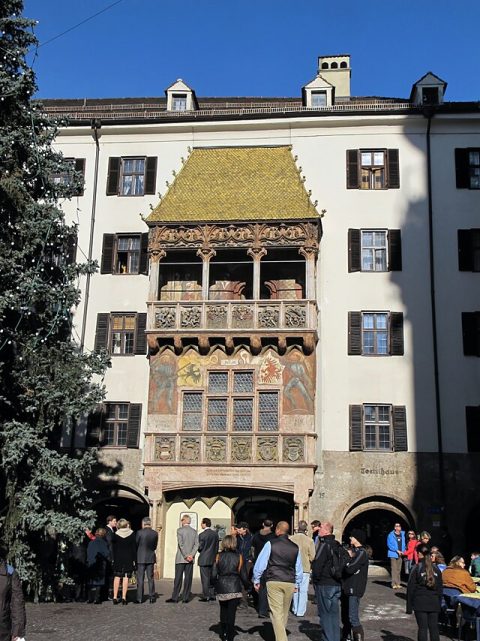
Goldenes Dachl (Golden Roof)
Innsbruck's most iconic symbol, the Goldenes Dachl is a late-Gothic oriel window crowned by a roof of 2,657 fire-gilded copper tiles. Commissioned by Emperor Maximilian I around 1500 as a royal box for watching tournaments, it is decorated with reliefs depicting the emperor, his two wives, and court jesters. A small museum inside explores Maximilian's life and reign. The shimmering rooftop is best photographed in early morning light before the crowds arrive.
Tips for Landmarks & Monuments
- Visit the Goldenes Dachl early morning (before 9 am) to avoid crowds and capture the best light on the gilded tiles.
- Combine the Stadtturm climb with a stroll through the Altstadt — the two are steps apart.
- The Bergisel tower café is open to non-athletes; enjoy coffee with an Alpine panorama.
- The Triumphpforte is always free to view from outside and looks spectacular floodlit after dark.
Innsbruck punches well above its size in museum culture. The Tiroler Landesmuseen network spans art, archaeology, and folk traditions, while imperial collections at the Hofburg and Ambras Castle reflect the city's deep Habsburg heritage across centuries of Alpine rule.
Must See
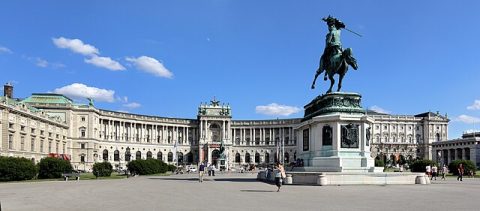
Hofburg Imperial Palace
The Hofburg is Innsbruck's grandest building — a Baroque imperial palace rebuilt under Empress Maria Theresa in the 18th century. The interiors are opulent: the Giants' Hall with its trompe-l'œil ceiling frescoes, state apartments hung with Habsburg portraits, and lavishly appointed ceremonial rooms. The chapel and private chambers give a vivid sense of Habsburg court life. An audio guide is included in the admission price and available in multiple languages.
Must See
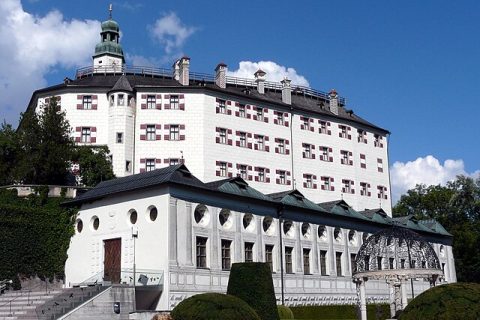
Schloss Ambras (Ambras Castle)
Perched on a forested hill above Innsbruck, Ambras Castle is one of the most significant Renaissance castles in Austria. Transformed by Archduke Ferdinand II in the 16th century, it houses an extraordinary Cabinet of Curiosities, a peerless portrait gallery of European royalty, and an unmatched armour collection. The Spanish Hall — a Renaissance masterpiece painted with portraits of Tyrolean rulers — is among the finest secular interiors in Austria. The surrounding park is free to enter.
Tips for Museums & Galleries
- The Innsbruck Card grants free entry to the Hofburg, Volkskunstmuseum, Ferdinandeum, Ambras Castle, and Alpenzoo — outstanding value for a multi-day visit.
- Ambras Castle is 4 km from the centre; Take bus M from the city centre, or bus 540 from the main station.
- The Ferdinandeum is closed for renovation through 2028.
- The Volkskunstmuseum and Hofkirche share a joint ticket — visit both on the same trip.
Innsbruck's religious heritage spans the soaring Baroque interiors of its cathedral to a medieval court church housing one of Europe's most spectacular royal monuments. The Rococo pilgrimage basilica at Wilten adds another layer of spiritual and artistic splendour to the city's landscape.
Must See
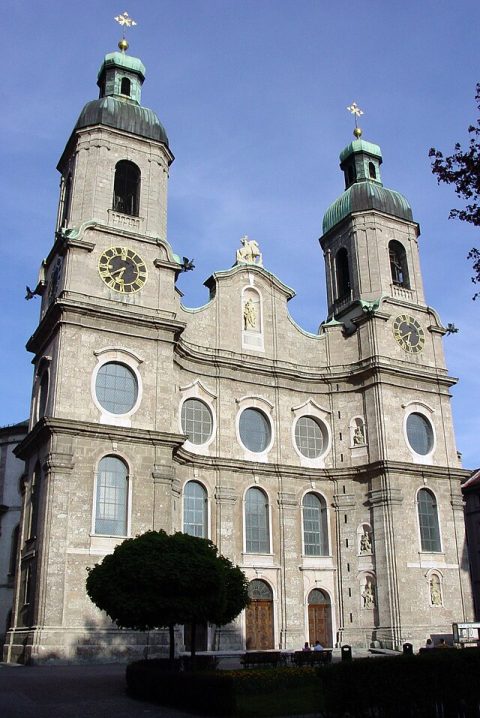
Dom zu St. Jakob (Innsbruck Cathedral)
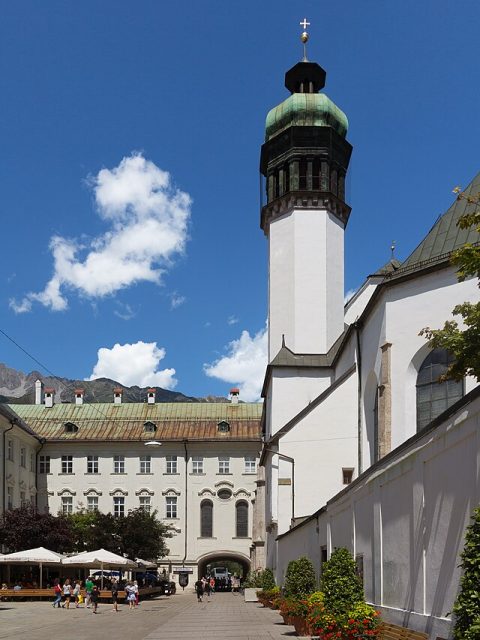
The Cathedral of St. James is Innsbruck's principal church, a superb Baroque building completed in 1724. Its twin-towered façade dominates the Domplatz, while the ornate interior features magnificent ceiling frescoes by the Asam brothers depicting the life of St. James — among the finest Baroque fresco cycles in Tyrol. Above the high altar hangs Lucas Cranach the Elder's Mariahilf, a 16th-century painting of the Virgin venerated for centuries. Entry is free.
Must See
Hofkirche (Court Church)
The Hofkirche is one of the most important Renaissance churches in the German-speaking world, built 1553–1563 to house the cenotaph of Emperor Maximilian I. The empty tomb is surrounded by 28 life-sized bronze statues of his ancestors — including King Arthur and Theodoric the Great — while 24 marble reliefs illustrate scenes from his life. The adjacent Silberne Kapelle (Silver Chapel) contains the tomb of Archduke Ferdinand II and his beloved consort Philippine Welser.
Tips for Religious Sites
- The Hofkirche and the Volkskunstmuseum share a combined ticket — visit both in one trip.
- Dress modestly when entering all churches; shoulders and knees should be covered.
- The Cathedral and Hofkirche are in the Old Town and can be combined in a single walking tour.
- Masses are held regularly at all sites — check schedules to avoid arriving during services.
Innsbruck's pedestrian heart is one of the most picturesque in the Alpine world — a blend of medieval arcaded lanes, Baroque street furniture, and a grand imperial boulevard, all framed by the spectacular Nordkette mountain range as an ever-present backdrop.
Must See
Maria Theresien Strasse
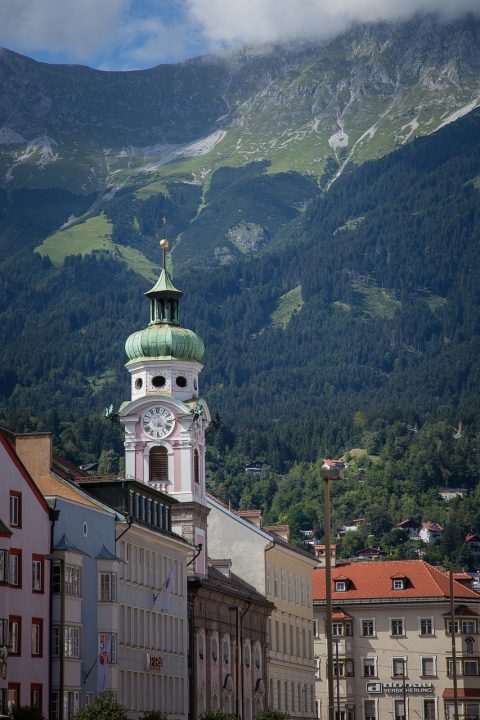
Maria Theresien Strasse is Innsbruck's grand main boulevard, stretching from the Altstadt to the Triumphpforte. Named after Empress Maria Theresa, the street is lined with elegant Baroque and Biedermeier townhouses, upscale shops, and pavement cafés. The view northward from the Annasäule column — down the boulevard toward the Nordkette — is one of the most photographed scenes in all Austria. The street is largely pedestrianised and buzzing with life at all hours of the day.
Must See
Altstadt – Herzog-Friedrich-Strasse
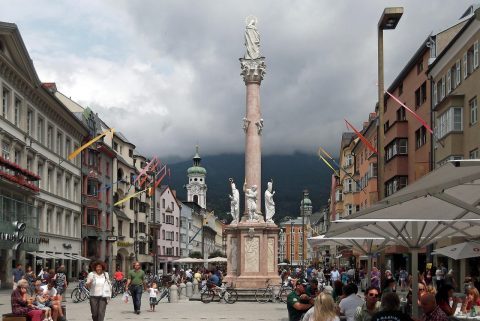
The heart of Innsbruck's Altstadt, Herzog-Friedrich-Strasse is a beautifully preserved medieval street running from the Inn River to the Goldenes Dachl. Both sides are lined with arcaded Gothic and Renaissance buildings — a rarity in the Alps — with ground-floor arches sheltering boutiques, cafés, and jewellery shops. Closed to traffic and perfect for a slow promenade, it is the soul of historic Innsbruck: equally enchanting under winter snow or in summer sunshine.
Tips for Squares & Streets
- Walk Maria Theresien Strasse at dusk for the best light on the mountains — the view is magical at golden hour.
- The arcades along Herzog-Friedrich-Strasse provide welcome shelter during rain showers.
- The Christmas markets (late November through January) transform these streets into a fairy-tale setting.
- Allow time to explore the small lanes branching off the main street — many hide cosy wine bars and local boutiques.
Beyond the historic centre, Innsbruck's distinct neighbourhoods offer authentic local colour: the village-like calm of Wilten with its abbey and basilica, the student energy of the university quarter, and the hillside drama of Hötting rising above the north bank of the Inn River.
Must See
Altstadt (Old Town)
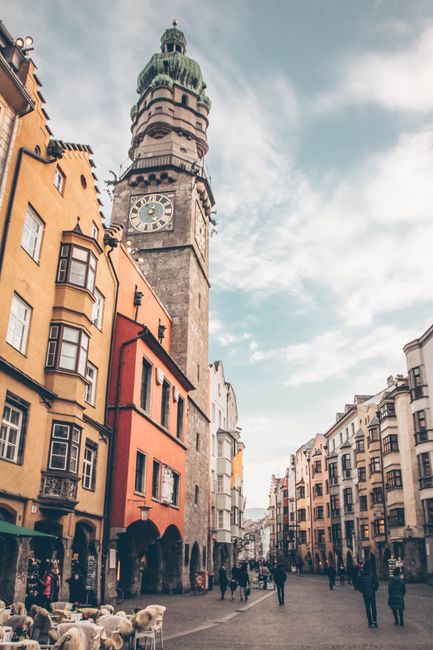
Innsbruck's Altstadt is the historic core of the city — a remarkably well-preserved ensemble of medieval, Gothic, and Baroque buildings concentrated between the Inn River and the Hofburg. Key sights including the Goldenes Dachl, Stadtturm, Cathedral, and Hofburg are all within easy walking distance. The neighbourhood's arcaded streets, colourful painted façades, and dramatic mountain backdrop create an atmosphere found nowhere else in the Alps. Both winter and summer visits offer unforgettable scenes.
Tips for Neighborhoods
- The Altstadt is compact enough to explore entirely on foot in half a day.
- Wilten is easily reached by tram lines 1 and 3 from the city centre.
- Take the Hungerburgbahn funicular from Congress Station — the glass stations designed by Zaha Hadid are an attraction in themselves.
Innsbruck's green spaces range from formal imperial gardens to wild mountain meadows accessible within minutes of the city centre. The surrounding Alps ensure that genuine wilderness is never more than a cable car ride away, offering some of Europe's most accessible high-Alpine terrain.
Must See
Nordkette Alpine Terrain
The Nordkette mountain range rises directly above Innsbruck to 2,334 metres, offering spectacular Alpine scenery accessible year-round via the Nordkettenbahn cable car. In summer the high-altitude terrain is ideal for hiking, mountain biking, and paragliding; in winter it becomes a ski resort with runs descending nearly to the city. The area around the Seegrube and Hafelekar stations offers jaw-dropping panoramas, Alpine wildflowers, and playful marmots at close range.
Tips for Parks & Gardens
- The Hofgarten pavilion hosts free open-air concerts in summer — check the city events calendar.
- Bring sunscreen and water for Nordkette — UV exposure is significantly higher at altitude even on cloudy days.
- Marmots are commonly spotted near Hafelekar in summer; dawn and dusk are the best viewing times.
- The Nordkettenbahn is included in the Innsbruck Card.
From high-altitude skiing to crystal-encrusted art installations, Innsbruck's activity scene spans an extraordinary range. Whether you seek outdoor adventure, cultural immersion, or winter thrills, the city and its Alpine hinterland deliver world-class experiences throughout the year.
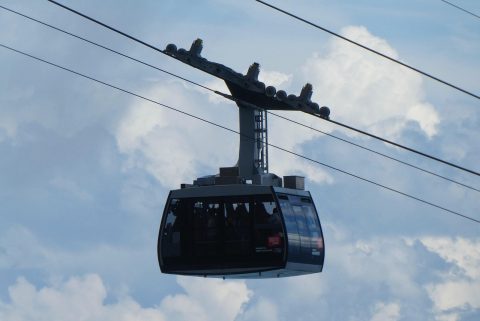
Must See
Nordkettenbahn Cable Car
The Nordkettenbahn is Innsbruck's most thrilling urban attraction: a three-stage journey by funicular and cable car from the city centre at 574 metres to the Hafelekar station at 2,256 metres (the summit is 2,334 m) in under 25 minutes. The lower Hungerburgbahn funicular stations were designed by Zaha Hadid with curvaceous organic forms. At the summit the panorama of the Inn Valley and Central Alps is breathtaking. Summer brings hiking across high-Alpine terrain; winter brings skiing with runs back to the city.
Must See
Skiing & Snowboarding in Innsbruck
Innsbruck is unique among world cities for offering genuine skiing directly from the urban core. The SKI plus CITY Pass Stubai Innsbruck covers 12 ski areas around the city and in the Stubai Valley, including the Nordkette, Axamer Lizum, Patscherkofel, Kühtai and the Stubai Glacier, plus city attractions. The city hosted Winter Olympic ski events in 1964 and 1976 at venues still in active use today. Ski buses connect the city to all resorts; equipment rental is available at every base station.
Tips for Tours & Activities
- Book ski lessons and equipment rental in advance during peak winter season (Christmas and February half-term).
- The Nordkettenbahn can be very busy on sunny winter weekends — arrive before 9 am to beat the queues.
- The free Stubaier Gletscher ski bus departs from Innsbruck Hauptbahnhof — check the current timetable at stubaier-gletscher.com.
- Swarovski Crystal Worlds uses timed-entry tickets — book online in advance, especially in summer.
Innsbruck is ideally positioned as a base for exploring spectacular mountain and heritage destinations across the Austrian Alps and into Italy, with most major excursions reachable within 30–90 minutes by public transport from the Hauptbahnhof.
Must See
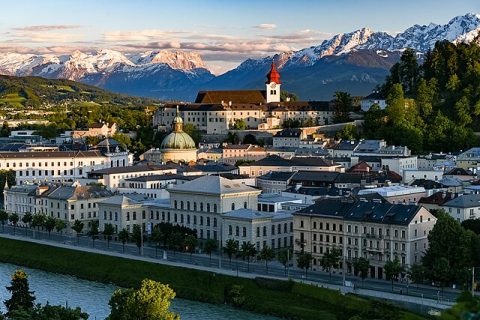
Salzburg
Salzburg, Mozart's birthplace and the filming location of The Sound of Music, is one of Austria's most beautiful cities. The UNESCO-listed Old Town clusters below the dramatic Hohensalzburg Fortress, with Baroque churches, the historic Getreidegasse, Mirabell Gardens, and world-class music venues. From Innsbruck, direct trains reach Salzburg in approximately 1 hour 50 minutes — a very manageable day trip, though an overnight stay does it fuller justice.
Tips for Day Trips
- Hall in Tirol is best explored on a weekday to enjoy its medieval streets without weekend crowds.
- Book Salzburg accommodations well in advance during the Salzburg Festival season (July–August).
- The Achenseebahn steam railway is seasonal (May–October) — check the timetable before visiting.
- ÖBB day passes and Sparschiene (advance) tickets offer significant savings on train day trips from Innsbruck.
Real, highly-rated Restaurants in Innsbruck, sourced from Google Places (rating above 4★).
Restaurant Oniriq
Restaurant Oniriq is a highly-rated restaurant in Innsbruck, rated 4.9★ from 335 reviews. Located at Bürgerstraße 13, 6020 Innsbruck, Austria.
Opening Hours
- Monday: Closed
- Tuesday: Closed
- Wednesday: 6:00 PM – 12:00 AM
- Thursday: 6:00 PM – 12:00 AM
- Friday: 6:00 PM – 12:00 AM
- Saturday: 6:00 PM – 12:00 AM
- Sunday: Closed
Le Murge
Le Murge is a highly-rated restaurant in Innsbruck, rated 4.8★ from 650 reviews. Located at am Wiltener Platzl, Leopoldstraße 27, 6020 Innsbruck, Austria.
Opening Hours
- Monday: 8:00 AM – 3:00 PM
- Tuesday: 8:00 AM – 10:00 PM
- Wednesday: 8:00 AM – 10:00 PM
- Thursday: 8:00 AM – 10:00 PM
- Friday: 8:00 AM – 10:00 PM
- Saturday: 8:00 AM – 10:00 PM
- Sunday: Closed
Pippilotta
Pippilotta is a highly-rated restaurant in Innsbruck, rated 4.8★ from 182 reviews. Located at Heiliggeiststraße 7-9, 6020 Innsbruck, Austria.
Opening Hours
- Monday: 8:30 AM – 6:00 PM
- Tuesday: 8:30 AM – 6:00 PM
- Wednesday: 8:30 AM – 6:00 PM
- Thursday: 8:30 AM – 9:00 PM
- Friday: 3:00 – 9:00 PM
- Saturday: 3:00 – 9:00 PM
- Sunday: 9:00 AM – 1:00 PM
Cool Run Inn
Cool Run Inn is a highly-rated restaurant in Innsbruck, rated 4.8★ from 362 reviews. Located at Schöpfstraße 14, 6020 Innsbruck, Austria.
Opening Hours
- Monday: Closed
- Tuesday: 5:00 PM – 1:00 AM
- Wednesday: 5:00 PM – 1:00 AM
- Thursday: 5:00 PM – 1:00 AM
- Friday: 5:00 PM – 1:00 AM
- Saturday: 5:00 PM – 1:00 AM
- Sunday: Closed
Arabisk Restaurant
Arabisk Restaurant is a highly-rated restaurant in Innsbruck, rated 4.8★ from 1448 reviews. Located at Dreiheiligenstraße 33, 6020 Innsbruck, Austria.
Opening Hours
- Monday: Closed
- Tuesday: Closed
- Wednesday: 11:00 AM – 2:00 PM, 5:00 – 9:30 PM
- Thursday: 11:00 AM – 2:00 PM, 5:00 – 9:30 PM
- Friday: 11:00 AM – 2:00 PM, 5:00 – 9:30 PM
- Saturday: 1:00 – 9:30 PM
- Sunday: 2:00 – 9:30 PM
Burkia Innsbruck
Burkia Innsbruck is a highly-rated restaurant in Innsbruck, rated 4.7★ from 1205 reviews. Located at Exlgasse 24, 6020 Innsbruck, Austria.
Opening Hours
- Monday: 8:00 AM – 11:00 PM
- Tuesday: 8:00 AM – 11:00 PM
- Wednesday: 8:00 AM – 11:00 PM
- Thursday: 8:00 AM – 11:00 PM
- Friday: 8:00 AM – 11:00 PM
- Saturday: Closed
- Sunday: Closed
Burenwirt
Burenwirt is a highly-rated restaurant in Innsbruck, rated 4.7★ from 1000 reviews. Located at Dorfgasse 9, 6020 Innsbruck, Austria.
Opening Hours
- Monday: 4:00 PM – 12:00 AM
- Tuesday: Closed
- Wednesday: Closed
- Thursday: 4:00 PM – 12:00 AM
- Friday: 4:00 PM – 12:00 AM
- Saturday: 4:00 PM – 12:00 AM
- Sunday: 4:00 PM – 12:00 AM
Fischiff
Fischiff is a highly-rated restaurant in Innsbruck, rated 4.7★ from 329 reviews. Located at Josef-Wilberger-Straße 19, 6020 Innsbruck, Austria.
Opening Hours
- Monday: Closed
- Tuesday: 11:30 AM – 11:00 PM
- Wednesday: 11:30 AM – 11:00 PM
- Thursday: 11:30 AM – 11:00 PM
- Friday: 11:30 AM – 11:00 PM
- Saturday: 9:00 AM – 5:00 PM
- Sunday: Closed
die Wilderin
die Wilderin is a highly-rated restaurant in Innsbruck, rated 4.6★ from 1264 reviews. Located at Seilergasse 5, 6020 Innsbruck, Austria.
Opening Hours
- Monday: Closed
- Tuesday: 5:00 PM – 12:00 AM
- Wednesday: 5:00 PM – 12:00 AM
- Thursday: 5:00 PM – 12:00 AM
- Friday: 5:00 PM – 12:00 AM
- Saturday: 5:00 PM – 12:00 AM
- Sunday: 5:00 PM – 12:00 AM
Restaurant Das Innsbruck
Restaurant Das Innsbruck is a highly-rated restaurant in Innsbruck, rated 4.6★ from 114 reviews. Located at Seilergasse 10, 6020 Innsbruck, Austria.
Opening Hours
- Monday: 12:00 – 10:00 PM
- Tuesday: 12:00 – 10:00 PM
- Wednesday: 12:00 – 10:00 PM
- Thursday: 12:00 – 10:00 PM
- Friday: 12:00 – 10:00 PM
- Saturday: 12:00 – 10:00 PM
- Sunday: 12:00 – 10:00 PM
Restaurant Bierwirt
Restaurant Bierwirt is a highly-rated restaurant in Innsbruck, rated 4.6★ from 623 reviews. Located at Bichlweg 2, 6020 Innsbruck, Austria.
Opening Hours
- Monday: 4:30 – 11:00 PM
- Tuesday: 4:30 – 11:00 PM
- Wednesday: 4:30 – 11:00 PM
- Thursday: 4:30 – 11:00 PM
- Friday: 4:30 – 11:00 PM
- Saturday: Closed
- Sunday: Closed
Restaurant Akropolis
Restaurant Akropolis is a highly-rated restaurant in Innsbruck, rated 4.6★ from 2124 reviews. Located at Innrain 13, 6020 Innsbruck, Austria.
Opening Hours
- Monday: 11:30 AM – 2:30 PM, 5:30 – 10:30 PM
- Tuesday: Closed
- Wednesday: 11:30 AM – 2:30 PM, 5:30 – 10:30 PM
- Thursday: 11:30 AM – 2:30 PM, 5:30 – 10:30 PM
- Friday: 11:30 AM – 2:30 PM, 5:30 – 10:30 PM
- Saturday: 11:30 AM – 2:30 PM, 5:30 – 10:30 PM
- Sunday: 11:30 AM – 2:30 PM, 5:30 – 10:30 PM
Trattoria-Pizzeria Due Sicilie
Trattoria-Pizzeria Due Sicilie is a highly-rated restaurant in Innsbruck, rated 4.6★ from 2266 reviews. Located at Höttinger G. 15, 6020 Innsbruck, Austria.
Opening Hours
- Monday: 5:00 – 10:45 PM
- Tuesday: 5:00 – 10:45 PM
- Wednesday: 5:00 – 10:45 PM
- Thursday: 5:00 – 10:45 PM
- Friday: 5:00 – 10:45 PM
- Saturday: 5:00 – 10:45 PM
- Sunday: 12:00 – 2:30 PM, 5:00 – 10:45 PM