Grodno packs an unusual density of history into a compact riverside core, so a short visit works best when it stays focused. Start with the Old Castle and New Castle facing each other above the Neman, then step into the Grodno State History and Archaeology Museum for context on both. The Kalozha Church, one of the last surviving examples of ancient Black Rus architecture, and the baroque Cathedral of St. Francis Xavier anchor the Old Town's walking routes. Travelers with extra time can pair the city with day trips to Mir Castle, Nesvizh Palace, or the ancient Białowieża Forest, rounding out a compact but rewarding itinerary.
Grodno boasts an exceptional collection of architectural landmarks spanning centuries, from medieval fortifications to baroque palaces, making it one of Belarus's most historically rich and visually compelling cities.
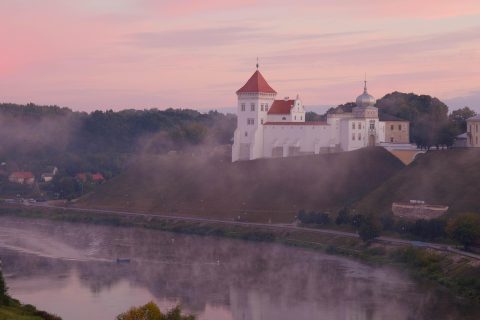
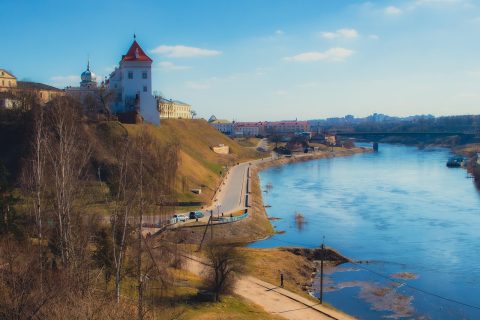
The Old Castle is Grodno's most iconic landmark, founded in the 11th century and rebuilt in Renaissance style in the 16th century under King Stefan Batory. Perched dramatically above the Neman River, it houses the Grodno State History and Archaeology Museum. The castle grounds reveal layers of history from Kievan Rus to the Polish-Lithuanian Commonwealth, with preserved towers, palace halls, and archaeological excavations visible on-site.
Built in 1734–1751 as a royal summer residence for Polish King Augustus III, the New Castle is a striking example of Saxon Baroque architecture. The palace witnessed the last session of the Polish-Lithuanian Commonwealth Sejm in 1793. Today it serves as a museum with partially restored 18th-century interiors. It faces the Old Castle across a scenic courtyard, creating a unique historical ensemble above the river.
Tips for Landmarks & Monuments
- Visit the Old and New Castles together — they are within walking distance on the same hill.
- Arrive early morning for castle views over the Neman River with minimal crowds.
- Combined tickets for both castles offer better value than individual entry fees.
- Check museum seasonal hours before visiting as they vary throughout the year.
Grodno's museums reflect the city's multicultural heritage as a crossroads of Belarusian, Polish, Jewish, and Lithuanian cultures, offering fascinating collections from prehistoric times through the Soviet era.
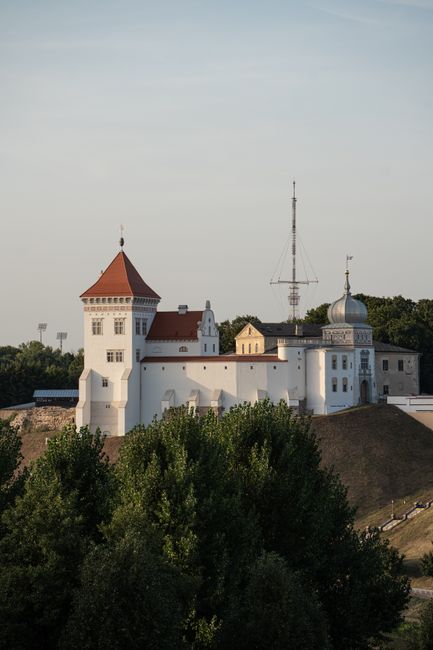
Housed within the Old Castle, this is the city's primary museum featuring extensive collections of archaeological finds, medieval weapons, coins, and artwork from the region. Exhibits trace Grodno's history from the Stone Age through the 20th century, with emphasis on the city's prominence in the Polish-Lithuanian Commonwealth. Highlights include excavated castle courtyard artifacts and a detailed scale model of historic Grodno.
Tips for Museums & Galleries
- The History Museum and New Castle museum can be combined into a single half-day tour.
- Grodno Zoo is excellent for families — allow at least a full morning.
- Many museums are closed on Mondays; always verify hours before visiting.
- Guided tours in English may need to be pre-booked through the museum website.
Grodno is celebrated for its extraordinary concentration of religious buildings from multiple faiths and centuries, reflecting its complex multicultural identity as a former jewel of the Polish-Lithuanian Commonwealth.
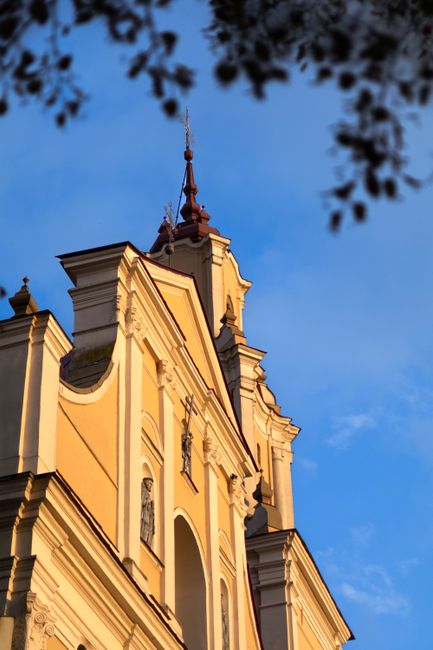
The crown jewel of Grodno's religious architecture, this Jesuit baroque cathedral was built between 1647 and 1705 and is considered one of the finest baroque churches in the entire region. Its soaring twin towers dominate the old town skyline. The interior features stunning painted ceilings, gilded altars, and an exceptional 17th-century pipe organ — one of the largest working historic organs in Eastern Europe — the subject of regular acclaimed concerts.
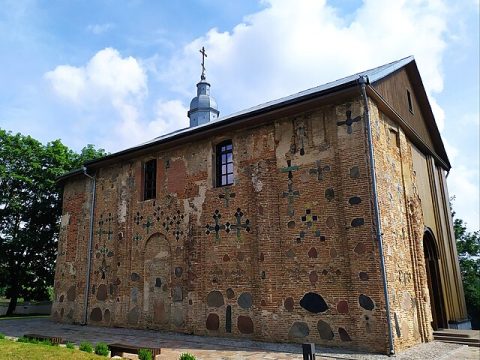
The Kalozha Church is one of the most precious surviving monuments of ancient Rus architecture, built circa 1160 and considered a candidate for UNESCO World Heritage status. This small, austere Orthodox church features unique decorative ceramic inserts in its walls. Its dramatic position on an eroding riverbank cliff, partially collapsed over centuries, makes it one of Belarus's most atmospheric and historically significant sites.
Tips for Religious Sites
- Dress modestly when visiting churches — shoulders and knees must be covered.
- The Farny Cathedral organ concerts are a highlight — check the schedule and book in advance.
- Visit Kalozha Church at sunset for dramatic golden-hour views over the Neman River.
- Many churches are active places of worship — be respectful and quiet during services.
- The old town's concentration of churches makes a self-guided walking tour extremely rewarding.
Grodno's distinct neighborhoods reveal different layers of the city's history, from the medieval castle hill and baroque merchant quarters to the 19th-century artisan suburb across the Neman River.
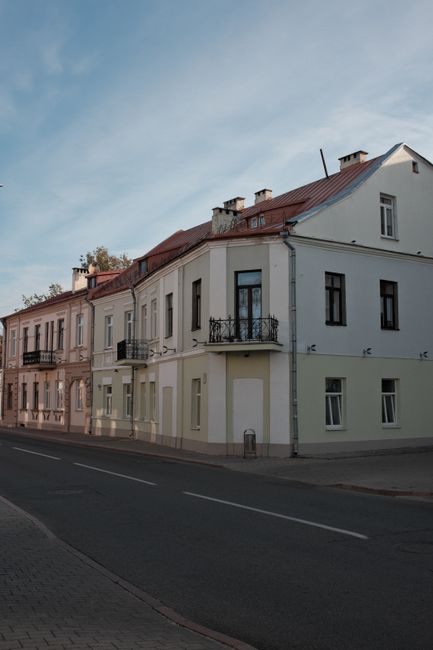
Grodno's historic center is one of the best-preserved old towns in Belarus, with a dense concentration of baroque, Renaissance, and neoclassical buildings in a compact, walkable area. Centered on the castle hill and descending to the Neman River, it encompasses the major churches, museums, historic merchant houses, and restaurants. Unlike many Belarusian cities devastated in WWII, Grodno's core survived largely intact, preserving its pre-war urban character.
Tips for Neighborhoods
- The old town is very walkable — comfortable shoes are essential for cobblestone streets.
- Explore side streets beyond the main tourist circuit for hidden architectural gems.
- The Forstadt district across the river is an excellent half-day exploration away from crowds.
Grodno offers a rich variety of guided tours and experiential activities that bring its complex multicultural history to life, from walking tours through the old town to river cruises and world-class organ music concerts.
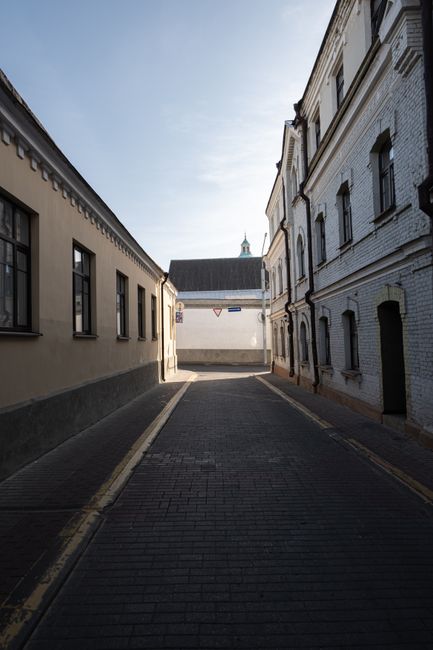
Guided walking tours of Grodno's historic center are the best way to understand the city's layered history across the Grand Duchy of Lithuania, the Polish-Lithuanian Commonwealth, the Russian Empire, and the Soviet Union. Expert local guides bring to life stories of medieval kings, baroque architects, Jewish merchants, and WWII survivors, covering the two castles, Farny Cathedral, Kalozha Church, and the former Jewish quarter.
Tips for Tours & Activities
- Book walking tours through the city tourist information center or the museum website.
- Organ concerts at Farny Cathedral sell out quickly in summer — book at least a week ahead.
- River boat trips run seasonally (May–September) and depend on weather conditions.
- Ask guides specifically about Grodno's Jewish heritage — this deeply moving history is often the most memorable part of any visit.
Grodno's strategic location in western Belarus, close to the Polish and Lithuanian borders, makes it an ideal base for day trips to remarkable natural wonders, UNESCO World Heritage sites, and cross-border destinations.
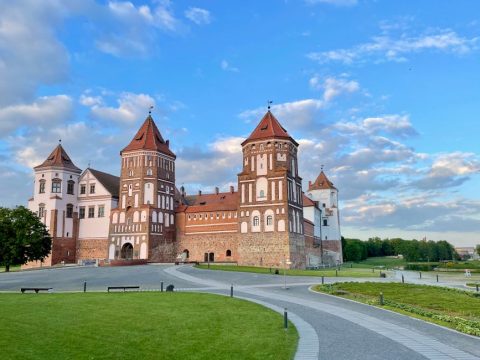
Mir Castle is a UNESCO World Heritage Site and one of Belarus's greatest architectural treasures — a well-preserved 16th-century Gothic-Renaissance castle with surrounding moat and excellent museum, located approximately 150 km east of Grodno. It pairs perfectly with nearby Nesvizh Palace (another UNESCO site) in a popular combined day trip. Both sites can be arranged through Grodno's local tour operators.
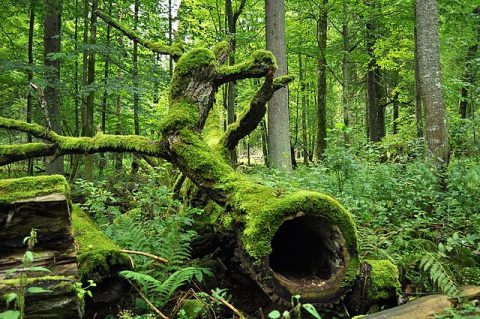
Europe's last primeval lowland forest, Białowieża Forest is a shared UNESCO World Heritage Site between Belarus and Poland. The Belarusian national park, accessible from Grodno in approximately 2 hours, is home to the world's largest population of wild European bison. Guided nature walks into the protected primary forest zone, wildlife observation, and a visit to Father Frost's unique residence make this an unforgettable day trip.
Tips for Day Trips
- Mir Castle and Nesvizh Palace can be combined efficiently in a single long day trip from Grodno.
- The Augustów Canal is best visited May–September for kayaking and boat excursions.
- Białowieża Forest requires advance booking for access to restricted primary forest zones.
- Check current visa and border-crossing requirements if considering day trips into Poland or Lithuania.
Real, highly-rated Restaurants in Grodno, sourced from Google Places (rating above 4★).
Blinnaya Laboratoriya is a highly-rated restaurant in Grodno, rated 5★ from 24 reviews. Located at бульвар Ленинского Комсомола 56, Hrodna, Hrodna Region 230030, Belarus.
Opening Hours
- Monday: 11:00 AM – 11:00 PM
- Tuesday: 11:00 AM – 11:00 PM
- Wednesday: 11:00 AM – 11:00 PM
- Thursday: 11:00 AM – 11:00 PM
- Friday: 11:00 AM – 11:00 PM
- Saturday: 11:00 AM – 11:00 PM
- Sunday: 11:00 AM – 11:00 PM
THE CULT RESTAURANT is a highly-rated restaurant in Grodno, rated 4.9★ from 45 reviews. Located at Vilienskaja vulica 37, Hrodna, Hrodna Region 230023, Belarus.
Opening Hours
- Monday: 8:00 AM – 11:00 PM
- Tuesday: 8:00 AM – 11:00 PM
- Wednesday: 8:00 AM – 11:00 PM
- Thursday: 8:00 AM – 11:00 PM
- Friday: 8:00 AM – 12:00 AM
- Saturday: 8:00 AM – 12:00 AM
- Sunday: 8:00 AM – 11:00 PM
Apart Otel' U Grushi is a highly-rated restaurant in Grodno, rated 4.8★ from 29 reviews. Located at vulica Uryckaha 26, Hrodna, Hrodna Region 230025, Belarus.
Zamok Zevany is a highly-rated restaurant in Grodno, rated 4.7★ from 929 reviews. Located at Hrodna Region, Belarus.
Opening Hours
- Monday: Closed
- Tuesday: Closed
- Wednesday: 12:00 PM – 12:00 AM
- Thursday: 12:00 PM – 12:00 AM
- Friday: 12:00 PM – 12:00 AM
- Saturday: 12:00 PM – 12:00 AM
- Sunday: 12:00 PM – 12:00 AM
Pizza Forno is a highly-rated restaurant in Grodno, rated 4.6★ from 2327 reviews. Located at 1-я Працоўная вуліца 10, Hrodna, Hrodna Region, Belarus.
Opening Hours
- Monday: 12:00 – 11:00 PM
- Tuesday: 12:00 – 11:00 PM
- Wednesday: 12:00 – 11:00 PM
- Thursday: 12:00 – 11:00 PM
- Friday: 12:00 PM – 12:00 AM
- Saturday: 12:00 PM – 12:00 AM
- Sunday: 12:00 – 11:00 PM