Beyond its postcard villages and headline monuments, Alsace hides a quieter layer of open-air museums, underground fortresses, and wildlife reserves tucked into the plain and the Vosges foothills. These spots draw locals far more often than tour buses, rewarding travelers willing to detour off the Wine Route.
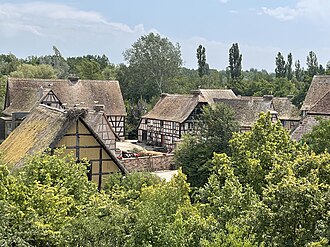
Spread across 20 hectares near Ungersheim, this open-air village museum reassembles more than 70 original Alsatian houses, farms, and workshops rescued from demolition elsewhere in the region. Costumed artisans still work the forge, bakery, and pottery wheel, and farm animals graze between half-timbered barns, giving a far more tactile sense of rural Alsatian life than any city-center museum. Kids can ride an old-fashioned carousel or watch a stork nest up close, while adults linger over demonstrations of traditional bread-baking and basket weaving. It is easily a half-day outing, and far less crowded than the wine villages nearby, even in peak summer. The site also hosts seasonal festivals tied to the farming calendar, from harvest celebrations to a candlelit winter market.
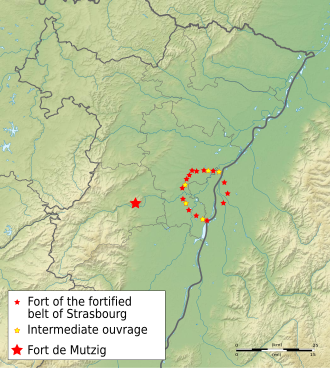
One of the largest and most technologically advanced fortresses built anywhere in the world before 1914, this sprawling German-era complex near Mutzig is riddled with underground galleries, rotating gun turrets, and disused rail tunnels. Volunteers lead guided tours through sections still lit only by lamplight, explaining how the fort combined concrete bunkers, electric lifts, and steam-powered ventilation decades ahead of its time. Because it sits outside the main Strasbourg-Colmar corridor, it receives a fraction of the visitors of the region's medieval castles, despite arguably being the more remarkable feat of engineering. Wear sturdy shoes and a light jacket, as the tunnels stay cool year-round. The surrounding forest paths make for a pleasant walk between fortified sections, several of which are only reachable on foot.
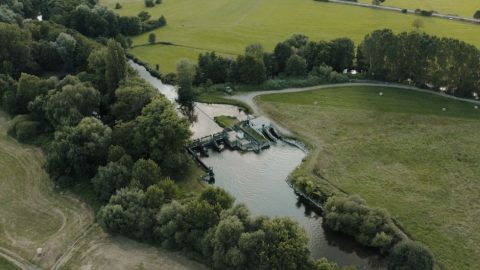
This small conservation park near Hunawihr was founded to bring back Alsace's emblematic white storks, which had nearly vanished from the region by the 1970s, along with the once-extinct-locally European otter. Wooden platforms let visitors watch storks nesting at close range, while covered pools give a rare glimpse of otters swimming underwater. Daily feeding demonstrations, including a free-flight show with cranes, ibises, and pelicans, draw families but almost no international tour groups. It pairs naturally with a stroll through Hunawihr's tiny fortified church and vineyards afterward. The park is compact enough to see thoroughly in a couple of hours, and its conservation story is a genuinely uplifting counterpoint to the region's more commercial attractions.
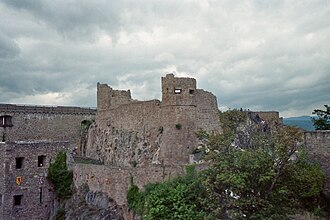
Perched on a ridge above Wintzenheim with sweeping views over Colmar and the Alsace plain, this 13th-century ruin was massively reinforced by Habsburg engineers in the 1470s and today draws only a trickle of the crowds that flock to its more famous rival further north. Costumed reenactors stage medieval combat and archery demonstrations on summer weekends, and the on-site exhibit explains the castle's role guarding the vineyard routes below. The climb up is short but steep, rewarded by one of the best panoramic viewpoints in the region, especially at sunset. Picnic tables scattered along the ramparts make it an easy add-on to a morning in Colmar. Entry is inexpensive and the site rarely feels crowded even in August.
Housed in a former royal commandery on the edge of Mulhouse, this niche museum traces the history of hand-printed wallpaper, a craft that made the town of Rixheim a European manufacturing hub in the 18th and 19th centuries. Original carved printing blocks, rare pattern books, and room-sized panoramic wallpapers, some depicting exotic landscapes designed to transport pre-photography audiences, fill the galleries. It is an unexpectedly rich stop for anyone curious about decorative arts or industrial history, and the building itself, with its calm courtyard, is worth the visit alone. Temporary exhibitions rotate through contemporary wallpaper design, keeping the collection feeling current rather than purely archival. Very few visitors outside design circles seem to know it exists.
Tips for Hidden Gems
- Combine the Écomusée d'Alsace with a stop at the nearby Bioscope amusement park if traveling with kids, or skip it for a slower, adults-only pace
- Fort de Mutzig requires joining a scheduled guided tour, so check timings online before driving out
- Bring binoculars to the stork and otter park for the best view of the nesting platforms
- Pair Château du Hohlandsbourg with a late-afternoon visit for golden-hour views over the vineyards
- Many of these sites are only reachable by car, so budget extra time if relying on regional trains