Beyond its rebuilt center and famous naval sights, Brest hides pockets that survived or grew after the wars: a cobbled artisan street, a bustling covered market, mural-covered backstreets, and a windswept lighthouse guarding the roadstead. These are the corners locals actually linger in.
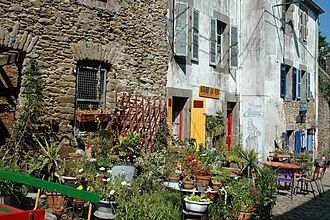
Rue Saint-Malo
Tucked behind the modern boulevards, Rue Saint-Malo is the rare fragment of old Brest that dodged the near-total destruction of 1944. Its narrow cobbled lane, timber-framed facades, and tiny stone houses feel like a portal into the pre-war city, and today the street has quietly become a haven for ceramicists, glassblowers, and independent craftspeople who have restored the old dwellings into open studios. There are no crowds and no ticket booths, just a slow wander past workshop windows, a small chapel, and community gardens planted in the ruins of bombed-out plots. Evening light on the granite walls makes it a favorite for photographers who already know Brest's postwar concrete center is not the whole story. Pair it with a coffee at one of the small local cafes for a genuinely unhurried hour away from the harbor sights.
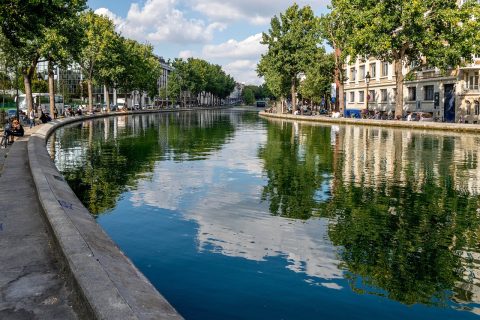
Saint-Martin Street Art Quarter
The hillside district of Saint-Martin is Brest's unofficial open-air gallery, where building facades, stairwells, and back alleys have been steadily covered in large-scale murals by French and international street artists. Unlike the reconstructed city center, this neighborhood kept its irregular, sloping streets, which give the artwork room to sprawl across whole gable walls. It rewards aimless wandering rather than a fixed route: turn down any side lane off Rue de Kerhallet or the narrow passages nearby and something unexpected usually appears. Few tour groups make it up here, so the atmosphere stays local, with small independent bars and a genuine neighborhood feel between the murals. Bring a phone camera and expect the collection to keep changing year to year as older pieces are painted over with new commissions. It is best explored on foot in daylight, ideally combined with a coffee stop in the district.
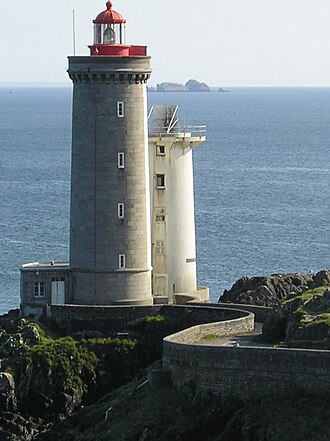
Phare du Petit Minou
Perched on a rocky spur where the Rade de Brest meets the open Atlantic, the Petit Minou lighthouse is a striking mix of pink-granite fort and slender white-and-red tower, connected to the mainland by a short stone footbridge. It sits just outside Brest proper in neighboring Plouzané, which keeps it off most city-center itineraries despite dramatic views back across the roadstead toward the naval base and out to the Iroise Sea. The surrounding cliff path is popular with local walkers and anglers rather than tour buses, and sunset here is genuinely spectacular with almost no competition for a good viewpoint. The lighthouse itself is not open to climb, but the fort platform, tide pools, and coastal path make it worth the short drive. Bring windproof layers, as the point catches the full force of Atlantic gusts even on calm days elsewhere in the city.

Les Halles Saint-Louis
While visitors photograph Rue de Siam, locals do their daily shopping at Les Halles Saint-Louis, Brest's covered market. Stalls of Breton cheese, fresh langoustines, artisan bread, and Kouign-amann sit alongside small counters serving oysters or galettes for lunch. It is less a tourist attraction than a working slice of the city, which is exactly its appeal: no polish, just genuine local life in a bright, functional postwar hall. Arriving mid-morning gives the best mix of atmosphere and available seating at the small eat-in counters. It is an easy, low-effort way to taste the region without booking a restaurant, and vendors are used to curious visitors asking what things are. Combine a visit with a stroll through the surrounding Saint-Louis neighborhood, whose plain concrete blocks hide some surprisingly good bakeries and wine shops rarely mentioned in guidebooks.
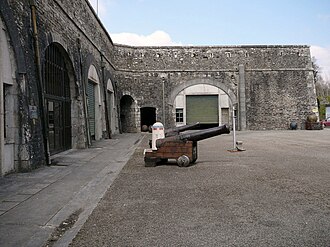
Fort Montbarey
A squat 18th-century fortification on the western edge of the city, Fort Montbarey now houses a small, volunteer-run museum dedicated to the brutal 1944 Battle of Brest, when the city was leveled fighting to dislodge the German garrison. Uniforms, vehicles, personal letters, and reconstructed bunker rooms tell a far more intimate story than the plaques found downtown, and the fort's thick granite walls and dry moat are worth seeing on their own. It draws a trickle of history enthusiasts rather than general tourists, so visits are unhurried and sometimes led informally by knowledgeable staff. Opening hours are limited to select afternoons, so checking ahead is worthwhile before making the trip. For anyone curious why Brest looks so uniformly postwar, this fort explains the missing piece other central attractions only hint at.
Tips for Hidden Gems
- Rue Saint-Malo and the Saint-Martin murals are both walkable from the center but sit uphill, so comfortable shoes help.
- Les Halles Saint-Louis is busiest and freshest in the morning; many stalls close by early afternoon.
- Check opening days for Fort Montbarey before visiting, as hours are seasonal and limited.
- Petit Minou is a short drive or taxi from central Brest and best combined with a coastal walk.