The Peloponnese rewards travelers who prioritize ruins over rush. Mycenae reveals the Bronze Age citadel behind Homer's legends, while Ancient Olympia, birthplace of the games, pairs its temple foundations with the Archaeological Museum of Olympia for context you cannot get from stone alone. Nafplio Old Town and its hilltop Palamidi Fortress offer the region's most photogenic base, and a short detour reaches Mystras, a crumbling Byzantine hill town, or the fortified sea-cliffs of Monemvasia Medieval Town. Together these sites compress three millennia of Greek history into a few days of driving, making them the smartest places to spend limited time.
The Peloponnese's landmarks span a canal that reshaped Mediterranean shipping to fortress towns still guarding its coastline centuries after they were built.
Must See📌 Book Ahead
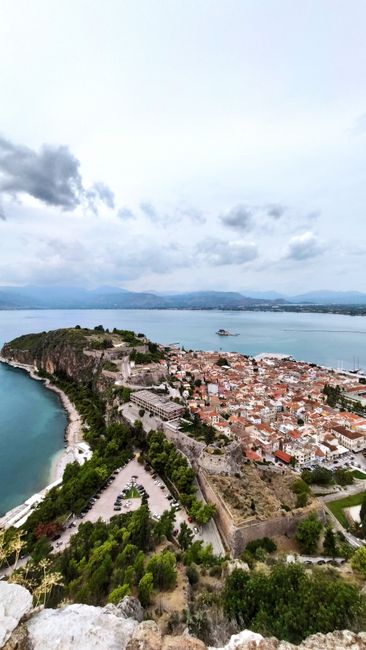
Palamidi Fortress, Nafplio
This sprawling Venetian fortress crowns a hill above Nafplio, reachable by road or a famous 857-step staircase climbing straight up from the old town. Built in the early 18th century, its bastions offer sweeping views over the Argolic Gulf and the town's red-tiled rooftops below. The complex includes cells once used to imprison Theodoros Kolokotronis, a hero of the Greek War of Independence.
Tips for Landmarks & Monuments
- Wear sturdy shoes for the Palamidi staircase, it is steep and has no shade
- Combine the Corinth Canal stop with a drive between Athens and the Peloponnese, it sits right on the main route
- Methoni is best visited late afternoon for the light and cooler temperatures
Museums across the peninsula hold some of Greece's most significant archaeological finds, from Mycenaean gold to Olympic Games artifacts.
Must See
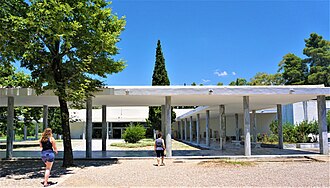
Archaeological Museum of Olympia
Steps from the ancient sanctuary itself, this museum houses treasures recovered from Olympia's excavations, including the Hermes of Praxiteles, monumental sculptures from the Temple of Zeus pediments, and bronze offerings left by ancient athletes and pilgrims. Well-organized displays trace the site's religious and sporting significance across more than a thousand years of continuous use.
Tips for Museums & Galleries
- Buy the combined ticket at Olympia, it covers the museum and archaeological site together
- The original Mycenae gold masks are in the National Archaeological Museum in Athens, not on-site
Few regions on Earth pack in as much ancient history as the Peloponnese, birthplace of the Olympic Games and home to Mycenaean palaces that inspired Homer.
Must See📌 Book Ahead
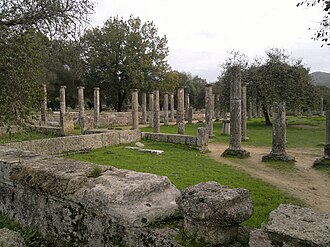
Ancient Olympia
The original home of the Olympic Games, founded in the 8th century BCE, this sprawling sanctuary includes the stadium where ancient athletes competed, the ruins of the Temple of Zeus, and the palaestra where wrestlers trained. The flame is lit in Olympia before each edition of the Olympic Games; Summer and Winter Games alternate every two years. Walking onto the ancient stadium track, still lined with its original stone starting blocks, is a highlight for most visitors.
Must See📌 Book Ahead
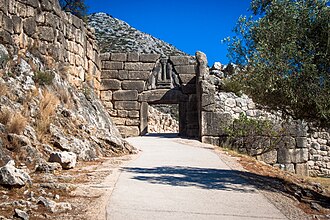
Mycenae
Home of the legendary King Agamemnon, this Bronze Age citadel gave its name to an entire Greek civilization. Highlights include the monumental Lion Gate, the Cyclopean walls Homer described as built by giants, and the beehive-shaped Treasury of Atreus, one of the most sophisticated stone structures of the ancient world. Heinrich Schliemann's 19th-century excavations here uncovered gold masks and treasures that rewrote the timeline of Greek prehistory.
Must See📌 Book Ahead
Mystras
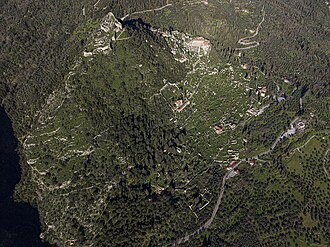
A UNESCO-listed Byzantine ghost town cascading down a steep hillside near Sparta, Mystras was once a thriving capital of the Despotate of the Morea, the last outpost of Byzantine culture before the fall of Constantinople. Wandering its stone streets today, visitors pass abandoned mansions, monasteries with vivid frescoes still visible in the Pantanassa Convent, and a hilltop fortress, largely empty and remarkably atmospheric.
Tips for Ancient & Historical Sites
- Wear closed shoes with good grip, ancient stone paths at Mystras and Acrocorinth are uneven and can be slippery
- Visit Olympia and Mycenae in the early morning in summer, there is very little shade
- The Greek Ministry of Culture sells combined tickets covering multiple sites at Olympia and Mycenae
Nafplio and Monemvasia hold two of Greece's most beautifully preserved old towns, their streets shaped by centuries of Venetian and Byzantine influence.

Must See
Nafplio Old Town
Widely considered one of the most romantic towns in Greece, Nafplio's old quarter is a maze of neoclassical mansions, Venetian architecture, and narrow pedestrian lanes leading down to a harbor promenade. Syntagma Square, the town's elegant central plaza, is lined with cafes and was the site where Greece's first constitution was declared after independence.
Must See
Monemvasia Medieval Town
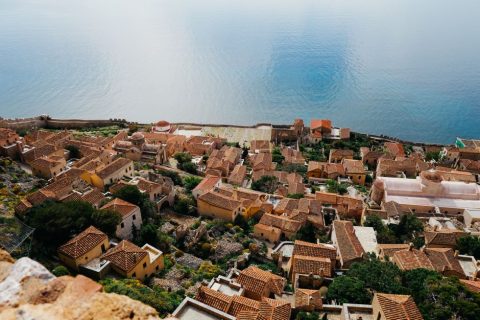
Connected to the mainland by a narrow causeway, this fortified medieval town sits hidden on a rock outcrop, invisible until you round the final bend, hence its nickname the "Gibraltar of Greece." Cobblestone lanes wind past stone houses, Byzantine churches, and boutique guesthouses up to a clifftop fortress, with sweeping sea views the entire way.
Tips for Squares & Streets
- Monemvasia's old town is car-free, park at the causeway and walk in
- Nafplio is best explored on foot in the early evening when the harbor promenade fills with locals
Beyond its ruins, the Peloponnese holds some of Greece's most striking natural landscapes, from underground rivers to alpine gorges.
Must See📌 Book Ahead
Diros Caves
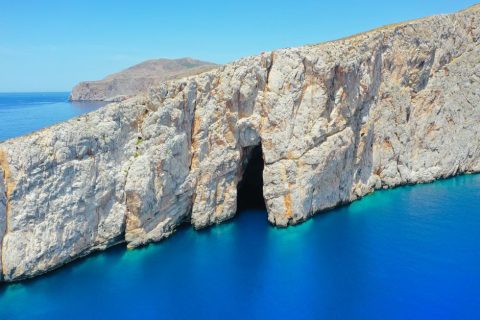
In the rugged Mani peninsula, visitors glide by small boat through this network of illuminated underground lakes and passages, formed over millions of years and only partially explored to this day. The half-hour boat ride through narrow, low-ceilinged chambers past stalactites and stalagmites is one of the most unusual experiences in the region.
Tips for Parks & Gardens
- Book Diros Caves boat tickets in advance in summer, capacity is limited and lines form early
- Bring water shoes for Voidokilia, the lagoon crossing can be muddy
From ancient open-air theater performances to wine tasting in Greece's most respected red wine region, the Peloponnese rewards travelers who go beyond ruin-hopping.
Must See📌 Book Ahead
Ancient Theater of Epidaurus Performances
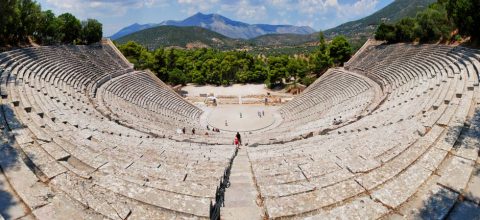
Famous for near-perfect acoustics that let a whisper from center stage reach the back row unamplified, this 4th-century BCE theater still hosts live performances of ancient Greek drama each summer as part of the Epidaurus Festival. Even outside festival dates, visitors can test the acoustics themselves by dropping a coin or speaking from the stone stage.
Tips for Tours & Activities
- Epidaurus Festival tickets sell out for popular productions, book online well ahead
- A rental car is strongly recommended for the Mani and Nemea, public transport is sparse
The Peloponnese is compact enough that several of its headline sites work well as day loops from a base in Nafplio, Kalamata, or Athens.

Must See
Sparta & Mystras Day Loop
Modern Sparta, built on the site of the legendary military city-state, makes a low-key base for visiting nearby Mystras, the far more visually dramatic Byzantine ruins just a few kilometers away. The pairing lets visitors contrast classical Sparta's minimal surviving ruins with Mystras's extraordinarily preserved medieval townscape in the same day.
Tips for Day Trips
- Distances look short on the map but mountain roads are slow, budget more driving time than GPS estimates suggest
- Base yourself in Nafplio for the Argolid sites (Mycenae, Epidaurus, Corinth) and in Kalamata for Messinia and Mani
The Peloponnese has no German-style Christmas market of its own, but its towns lean into the season with elaborate lights, tree-lighting festivities, and mountain snow that make December a rewarding time to visit. Nafplio is the region's undisputed holiday showpiece, while Kalavryta draws families for snow and ski slopes, and Athens is an easy day trip for a full-scale Christmas market experience.
Must See
Nafplio Christmas Illuminations
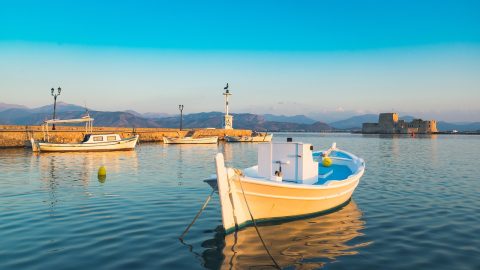
Nafplio is consistently ranked among Greece's most beautifully decorated towns for the holidays, and by December 2026 its old town should again be strung with elaborate lights from late November through early January. The show centers on Syntagma Square and the harbor-front street of Bouboulinas, where a large illuminated tree, festive arches, and decorated balconies turn the neoclassical streets into a walkable winter scene. Cafes around the square stay busy into the evening, and the nearby Palamidi fortress and Bourtzi islet make a striking backdrop when lit at night. There is no ticket or market stalls here, just free, open-air strolling among the decorations, so an evening visit pairs naturally with dinner in the old town. It gets crowded on weekends, so a weekday evening gives a calmer view of the lights.
Tips for Christmas Market
- The Peloponnese has no large-scale German-style Christmas market of its own — Nafplio's lights are the closest thing to a must-see festive spectacle in the region.
- Check exact 2026 opening dates for Kalamata's Christmas Village and the Kalavryta Ski Center closer to your trip, as schedules depend on the municipality and snowfall.
- Rent a car if visiting Kalavryta in December, since mountain roads can require extra care after snow.
- Book Nafplio accommodation early for weekends in mid-to-late December, when the lights draw day-trippers from Athens.
- Pack warm layers even for coastal towns, evenings are cold, and Kalavryta can see genuine snow.
Peloponnese pulses with a year-round rhythm of ancient drama revivals, folk festivals, and harvest celebrations that reflect the region's deep classical and rural heritage. From the marble tiers of Epidaurus to village squares heavy with new-pressed olive oil, 2026's calendar offers a reason to visit in every season.
Must See📌 Book Ahead
Epidaurus Festival: Ancient Drama Revival
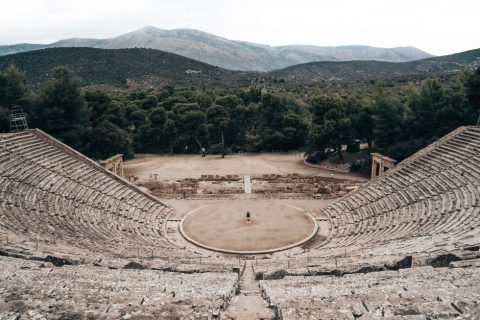
Each summer the 4th-century BC Theatre of Epidaurus, celebrated for its flawless acoustics, hosts revivals of Sophocles, Euripides, and Aristophanes performed by leading Greek and international companies. In 2026 the festival runs from June 12 to August 23, with performances typically staged on Friday and Saturday evenings under the open sky. Arriving early lets visitors watch the sunset over the surrounding hills before the chorus begins. Bring a cushion, as the ancient stone seating rewards comfort over authenticity. Many spectators pair the performance with a daytime visit to the nearby Sanctuary of Asklepios and its archaeological museum. This is widely considered one of Europe's oldest continuously run theatre festivals, drawing scholars and casual travelers alike into a still-living tradition rather than a museum piece.
Tips for Events Calendar
- Book Epidaurus Festival tickets online in advance, as popular performances sell out weeks ahead.
- During Patras Carnival, reserve hotels in Patras or nearby Rio months early, especially for the final weekend.
- Bring a cushion or light blanket for open-air stone-seat venues like Epidaurus and Kalamata Castle.
- Check exact 2026 dates closer to travel, as several festivals confirm final schedules only a few months out.
Real, highly-rated Restaurants in Peloponnese, sourced from Google Places (rating above 4★).

Καλή Καρδιά Οικογενειακή Ταβέρνα
Καλή Καρδιά Οικογενειακή Ταβέρνα is a highly-rated restaurant in Peloponnese, rated 4.9★ from 860 reviews. Located at Skafidaki 212 00, Greece.
Opening Hours
- Monday: 7:00 AM – 1:00 AM
- Tuesday: 7:00 AM – 1:00 AM
- Wednesday: 7:00 AM – 1:00 AM
- Thursday: 7:00 AM – 1:00 AM
- Friday: 7:00 AM – 1:00 AM
- Saturday: 7:00 AM – 1:00 AM
- Sunday: 7:00 AM – 1:00 AM
Μέλας Ζωμός Τρύπη Λακωνίας
Μέλας Ζωμός Τρύπη Λακωνίας is a highly-rated restaurant in Peloponnese, rated 4.9★ from 1649 reviews. Located at EO Kalamatas Spartis 206, Tripi 231 00, Greece.
Opening Hours
- Monday: 1:00 PM – 12:00 AM
- Tuesday: 1:00 PM – 12:00 AM
- Wednesday: 1:00 PM – 12:00 AM
- Thursday: 1:00 PM – 12:00 AM
- Friday: 12:30 PM – 12:00 AM
- Saturday: 12:30 PM – 12:00 AM
- Sunday: 12:00 PM – 12:00 AM

Taverna Koukounari
Taverna Koukounari is a highly-rated restaurant in Peloponnese, rated 4.9★ from 357 reviews. Located at Τσίντζινα, Σπάρτη 231 00, Greece.
Opening Hours
- Monday: 11:00 AM – 11:00 PM
- Tuesday: 11:00 AM – 12:00 AM
- Wednesday: 12:00 AM – 11:00 PM
- Thursday: 11:00 AM – 11:00 PM
- Friday: 11:00 PM – 12:00 AM
- Saturday: 12:00 AM – 11:00 PM
- Sunday: 11:00 AM – 11:00 PM
Ταβέρνα Χαρίλαος
Ταβέρνα Χαρίλαος is a highly-rated restaurant in Peloponnese, rated 4.9★ from 246 reviews. Located at E961, Alepochori 220 16, Greece.
Opening Hours
- Monday: 7:01 AM – 11:00 PM
- Tuesday: 7:01 AM – 11:00 PM
- Wednesday: 7:01 AM – 11:00 PM
- Thursday: 7:01 AM – 11:00 PM
- Friday: 7:01 AM – 11:00 PM
- Saturday: 7:01 AM – 11:00 PM
- Sunday: 7:01 AM – 11:00 PM
MiLi Restaurant & Bar
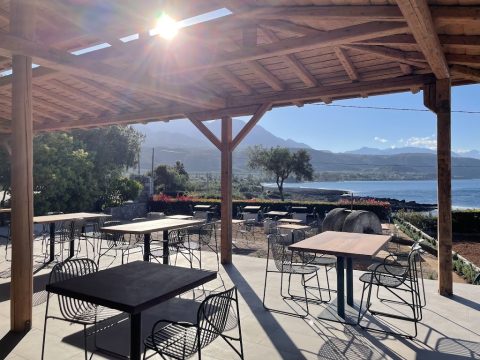
MiLi Restaurant & Bar is a highly-rated restaurant in Peloponnese, rated 4.9★ from 134 reviews. Located at Unknown road, Kardamili 240 22, Greece.
Opening Hours
- Monday: 8:00 – 11:30 AM, 6:00 – 10:00 PM
- Tuesday: 8:00 AM – 5:00 PM, 6:00 – 10:00 PM
- Wednesday: 8:30 – 11:30 AM, 6:00 – 10:00 PM
- Thursday: 8:00 – 11:30 AM, 6:00 – 10:00 PM
- Friday: 8:00 – 11:30 AM, 6:00 – 10:00 PM
- Saturday: 8:00 – 11:30 AM, 6:00 PM – 1:00 AM
- Sunday: 8:00 – 11:30 AM, 6:00 – 10:00 PM
Χειλανθή
Χειλανθή is a highly-rated restaurant in Peloponnese, rated 4.9★ from 233 reviews. Located at Unnamed Road, Καλαμάτα 241 00, Greece.
Opening Hours
- Monday: Closed
- Tuesday: Closed
- Wednesday: Closed
- Thursday: Closed
- Friday: Closed
- Saturday: Closed
- Sunday: 1:00 – 5:00 PM
Oinosofies
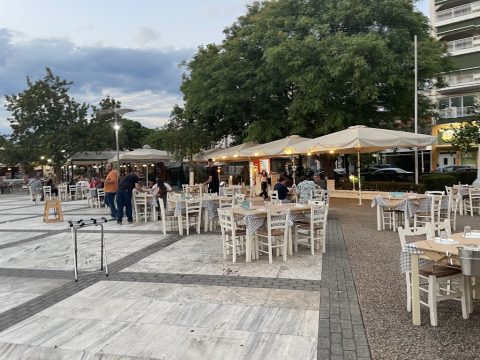
Oinosofies is a highly-rated restaurant in Peloponnese, rated 4.9★ from 1879 reviews. Located at Potiri 12, Messini 242 00, Greece.
Opening Hours
- Monday: 12:00 PM – 12:00 AM
- Tuesday: 12:00 PM – 12:00 AM
- Wednesday: 12:00 PM – 12:00 AM
- Thursday: 12:00 PM – 12:00 AM
- Friday: 12:00 PM – 12:00 AM
- Saturday: 12:00 PM – 12:00 AM
- Sunday: 12:00 PM – 12:00 AM
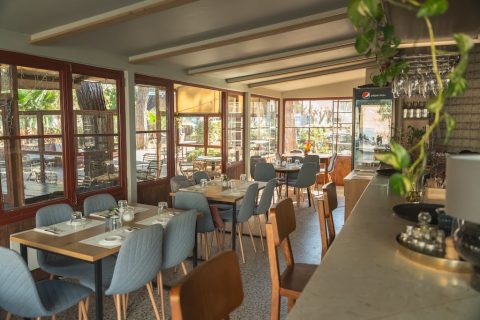
Aphrálato
Aphrálato is a highly-rated restaurant in Peloponnese, rated 4.8★ from 1653 reviews. Located at Miaouli 30, Kalamata 241 00, Greece.
Opening Hours
- Monday: 5:30 PM – 1:00 AM
- Tuesday: 5:30 PM – 1:00 AM
- Wednesday: 5:30 PM – 1:00 AM
- Thursday: 5:30 PM – 1:00 AM
- Friday: 5:30 PM – 1:00 AM
- Saturday: 5:30 PM – 1:00 AM
- Sunday: 5:30 PM – 1:00 AM
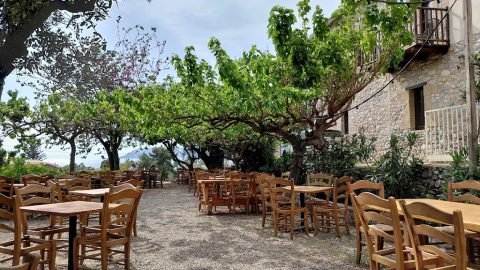
Old Kardamili Traditional Restaurant
Old Kardamili Traditional Restaurant is a highly-rated restaurant in Peloponnese, rated 4.8★ from 1016 reviews. Located at Kardamyli 240 22, Greece.
Opening Hours
- Monday: 1:00 – 10:00 PM
- Tuesday: 1:00 – 10:00 PM
- Wednesday: 1:00 – 10:00 PM
- Thursday: 1:00 – 10:00 PM
- Friday: 1:00 – 10:00 PM
- Saturday: 1:00 – 10:00 PM
- Sunday: 1:00 – 10:00 PM
Εστιατόριο το Κάστρο
Εστιατόριο το Κάστρο is a highly-rated restaurant in Peloponnese, rated 4.8★ from 556 reviews. Located at Methoni 240 06, Greece.
Opening Hours
- Monday: 6:00 – 11:00 PM
- Tuesday: 6:00 – 11:00 PM
- Wednesday: 6:00 – 11:00 PM
- Thursday: 6:00 – 11:00 PM
- Friday: 6:00 – 11:00 PM
- Saturday: 6:00 – 11:00 PM
- Sunday: 6:00 – 11:00 PM
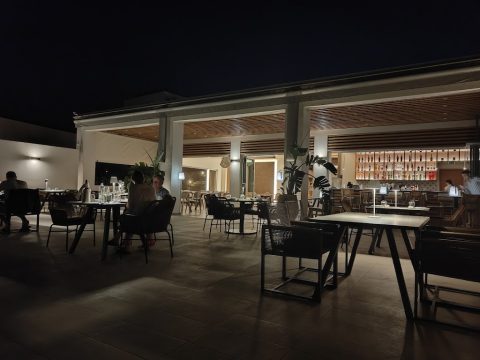
Pithos Restaurant
Pithos Restaurant is a highly-rated restaurant in Peloponnese, rated 4.8★ from 49 reviews. Located at Vounaria 241 00, Greece.
Opening Hours
- Monday: 8:00 AM – 10:30 PM
- Tuesday: 8:00 AM – 10:30 PM
- Wednesday: 8:00 AM – 10:30 PM
- Thursday: 8:00 AM – 10:30 PM
- Friday: 8:00 AM – 10:30 PM
- Saturday: 8:00 AM – 10:30 PM
- Sunday: 8:00 AM – 10:30 PM
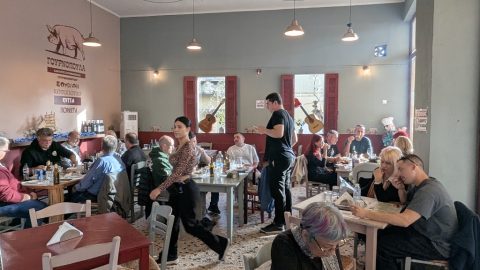
Gournopoula
Gournopoula is a highly-rated restaurant in Peloponnese, rated 4.8★ from 1445 reviews. Located at Agiou Dimitriou 3, Mpournias 241 00, Greece.
Opening Hours
- Monday: Closed
- Tuesday: 11:00 AM – 6:00 PM
- Wednesday: 11:00 AM – 6:00 PM
- Thursday: 11:00 AM – 6:00 PM
- Friday: 11:00 AM – 6:00 PM
- Saturday: 11:00 AM – 6:00 PM
- Sunday: 11:00 AM – 6:00 PM
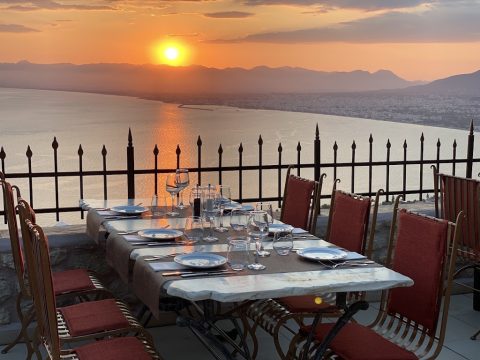
Kastraki-Meteoro
Kastraki-Meteoro is a highly-rated restaurant in Peloponnese, rated 4.7★ from 6897 reviews. Located at Verga, Kalamata 241 00, Greece.
Opening Hours
- Monday: 7:00 PM – 2:00 AM
- Tuesday: 7:00 PM – 2:00 AM
- Wednesday: 7:00 PM – 2:00 AM
- Thursday: 7:00 PM – 2:00 AM
- Friday: 7:00 PM – 2:00 AM
- Saturday: 7:00 PM – 2:00 AM
- Sunday: 7:00 PM – 2:00 AM
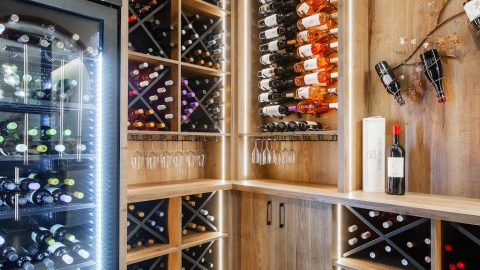
Pidalio Tavern
Pidalio Tavern is a highly-rated restaurant in Peloponnese, rated 4.7★ from 7102 reviews. Located at 25is Martiou 5, Nafplio 211 00, Greece.
Opening Hours
- Monday: 1:30 – 10:45 PM
- Tuesday: Closed
- Wednesday: 1:30 – 10:45 PM
- Thursday: 1:30 – 10:45 PM
- Friday: 1:30 – 10:45 PM
- Saturday: 1:30 – 10:45 PM
- Sunday: 1:30 – 10:45 PM

Alexandra
Alexandra is a highly-rated restaurant in Peloponnese, rated 4.7★ from 2033 reviews. Located at Pl. Karaiskaki, Porto Cheli 213 00, Greece.
Opening Hours
- Monday: 12:00 PM – 12:00 AM
- Tuesday: 12:00 PM – 12:00 AM
- Wednesday: 12:00 PM – 12:00 AM
- Thursday: 12:00 PM – 12:00 AM
- Friday: 12:00 PM – 12:00 AM
- Saturday: 12:00 PM – 12:00 AM
- Sunday: 12:00 PM – 12:00 AM