Dhaka rewards visitors who prioritize its layered history over trying to see everything. Lalbagh Fort, an unfinished seventeenth-century Mughal complex, and the neighboring Star Mosque (Tara Masjid) with its glittering mosaic tilework anchor a walk through Old Dhaka (Puran Dhaka), where narrow lanes reveal centuries of trade and craft. Nearby, Ahsan Manjil, the pink-hued former palace of Dhaka's nawabs, overlooks the Buriganga River. For the more recent past, the Liberation War Museum and the towering Shahid Minar honor the sacrifices behind Bangladesh's independence. Together these sites compress Mughal grandeur, colonial-era architecture, and modern national memory into a single, manageable itinerary.
Dhaka's iconic structures showcase centuries of architectural heritage and cultural significance. From Mughal-era buildings to colonial masterpieces, these landmarks tell the story of the city's rich past.
Must See
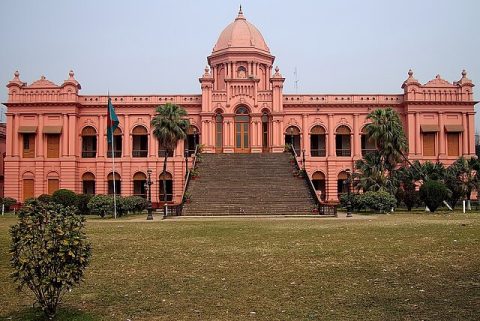
Ahsan Manjil (Pink Palace)
A stunning 19th-century pink mansion overlooking the Buriganga River. Built in 1872, this three-story palace is a blend of Indo-Saracenic and European styles. Now a museum showcasing period furniture, artwork, and historical artifacts from the Nawab family's era.
Must See
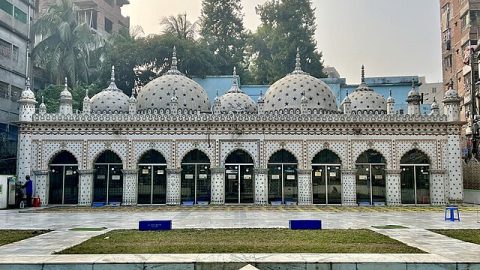
Star Mosque (Tara Masjid)
A 19th-century mosque renowned for its exquisite blue star-patterned tiles and intricate decorative work. Located in the old city, this intimate prayer space features stunning hand-painted ceramic tiles covering interior walls with geometric and floral patterns.
Must See
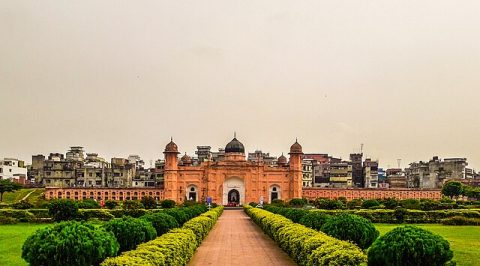
Lalbagh Fort
A 17th-century Mughal fort built in 1678 with impressive red sandstone structures and defensive walls. Features the Diwan-i-Aam (Hall of Commons), a mosque, and underground chambers. The fortress showcases Mughal military architecture and remains a significant historical monument.
Must See
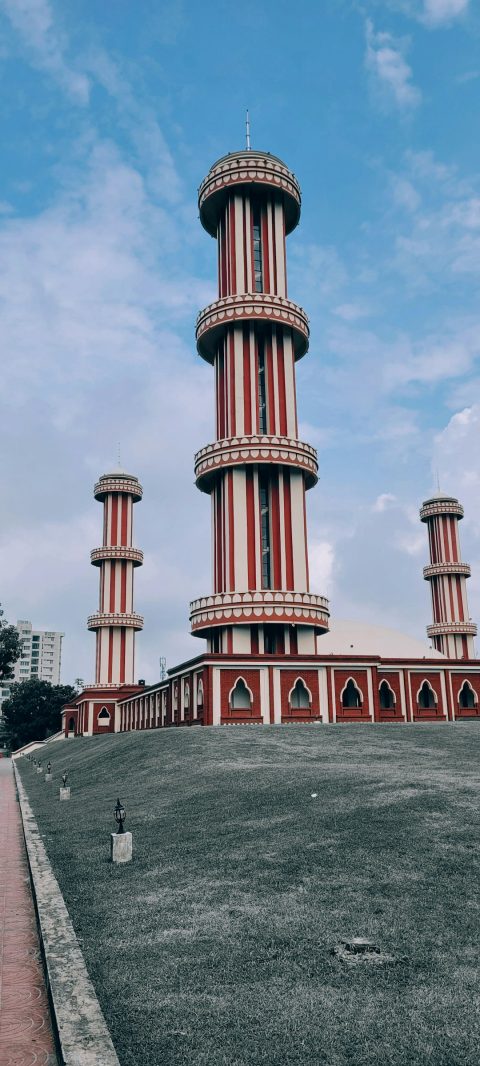
Shahid Minar (Martyr's Monument)
An iconic monument dedicated to those who died during the 1952 Language Movement. The current monument, completed in 1963 to replace the first, temporary one of 1952, has become a symbol of Bengali national pride and cultural identity. Beautifully illuminated at night.
Tips for Landmarks & Monuments
- Visit Lalbagh Fort early morning to avoid crowds and heat
- Dress modestly when visiting mosques; remove shoes before entering prayer areas
- Photography may be restricted in some religious sites; always ask permission
- Star Mosque is best photographed during golden hour for stunning tile reflections
- Combine visits to nearby monuments in the old city to minimize travel time
Dhaka's museums preserve Bangladesh's rich cultural heritage, from ancient artifacts to contemporary art. Discover treasures spanning archaeology, history, textiles, and modern creative expression.
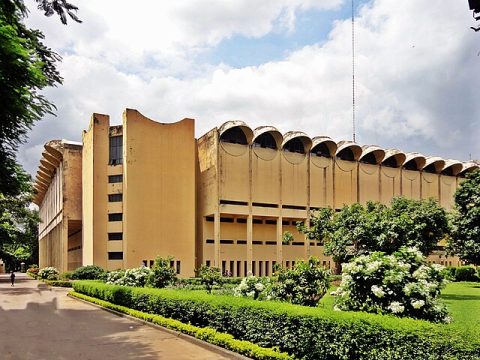
Must See
National Museum of Bangladesh
The country's premier museum housing over 31,000 artifacts across 47 galleries. Collections include Buddhist sculptures, manuscripts, royal regalia, traditional weapons, textiles, and contemporary art spanning 5,000 years. Comprehensive overview of Bengali civilization and culture.
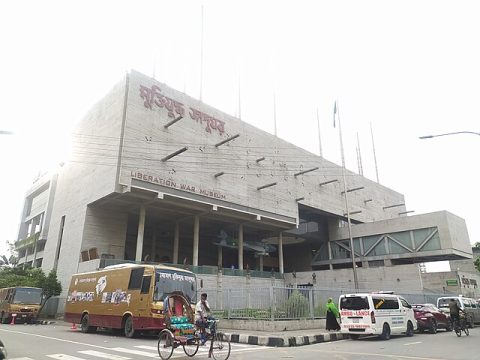
Must See
Liberation War Museum
A powerful museum dedicated to Bangladesh's 1971 Independence War. Documents through photographs, documents, weapons, and personal narratives the struggle for liberation. Deeply moving exhibits preserving memory of the conflict and nation's birth.
Tips for Museums & Galleries
- Book tickets for Liberation War Museum in advance during peak season
- The Bangladesh National Museum closes weekly on Thursday; its published hours list Saturday–Wednesday and Friday visiting times.
- The National Museum has English-speaking guides available for hire
- Photography restrictions apply in some exhibitions; ask staff before photographing
- Plan museum visits during cooler morning or evening hours
Dhaka's diverse neighborhoods each possess distinct character, from vibrant market districts to upscale residential areas. Wandering through these streets reveals authentic local life, street food, and neighborhood culture.
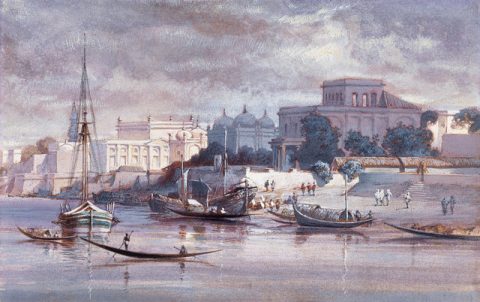
Must See
Old Dhaka (Puran Dhaka)
The historic heart of the city featuring narrow winding streets, traditional wooden architecture, and centuries-old bazaars. Home to iconic monuments, traditional craftspeople, spice merchants, and textile traders. Chaotic, colorful, and intensely authentic—the soul of Dhaka.
Tips for Neighborhoods & Streets
- Old Dhaka is best explored on foot or by rickshaw; avoid during peak traffic hours
- Hire a local guide to navigate Old Dhaka's maze-like streets and get insider access
- Visit markets early morning for best experience and fewer crowds
- Bring small change for local transactions; not all shops accept cards
- Respect locals' privacy when photographing; ask permission before taking pictures of people
Real, highly-rated Restaurants in Dhaka, sourced from Google Places (rating above 4★).
Meat Theory
Meat Theory is a highly-rated restaurant in Dhaka, rated 4.8★ from 5439 reviews. Located at Tower B11, Level 14 Plot 43, Block F Road No. 11, Dhaka 1213, Bangladesh.
Opening Hours
- Monday: 1:00 – 10:30 PM
- Tuesday: 1:00 – 10:30 PM
- Wednesday: 1:00 – 10:30 PM
- Thursday: 1:00 – 11:00 PM
- Friday: 1:00 – 11:00 PM
- Saturday: 1:00 – 10:30 PM
- Sunday: 1:00 – 10:30 PM
Hongbao
Hongbao is a highly-rated restaurant in Dhaka, rated 4.7★ from 1020 reviews. Located at 65 Gulshan Ave, Dhaka 1212, Bangladesh.
Opening Hours
- Monday: 12:00 – 3:30 PM, 7:00 – 10:30 PM
- Tuesday: 12:00 – 3:30 PM, 7:00 – 10:30 PM
- Wednesday: 12:00 – 3:30 PM, 7:00 – 10:30 PM
- Thursday: 12:00 – 3:30 PM, 7:00 – 10:30 PM
- Friday: 12:00 – 3:30 PM, 7:00 – 10:30 PM
- Saturday: 12:00 – 3:30 PM, 7:00 – 10:30 PM
- Sunday: 12:00 – 3:30 PM, 7:00 – 10:30 PM
Amrit restaurant
Amrit restaurant is a highly-rated restaurant in Dhaka, rated 4.7★ from 973 reviews. Located at 21 Road No. 17, Dhaka 1212, Bangladesh.
Opening Hours
- Monday: 1:00 – 11:00 PM
- Tuesday: 1:00 – 11:00 PM
- Wednesday: 1:00 – 11:00 PM
- Thursday: 1:00 – 11:00 PM
- Friday: 1:00 – 11:00 PM
- Saturday: 10:00 AM – 11:00 PM
- Sunday: 1:00 – 11:00 PM
Seasonal Tastes
Seasonal Tastes is a highly-rated restaurant in Dhaka, rated 4.6★ from 1484 reviews. Located at The Westin, Main Gulshan Ave, Dhaka 1212, Bangladesh.
Opening Hours
- Monday: 6:30 AM – 12:00 AM
- Tuesday: 6:30 AM – 12:00 AM
- Wednesday: 6:30 AM – 12:00 AM
- Thursday: 6:30 AM – 12:00 AM
- Friday: 6:30 AM – 12:00 AM
- Saturday: 6:30 AM – 12:00 AM
- Sunday: 6:30 AM – 12:00 AM
Aquadeck at InterContinental Dhaka
Aquadeck at InterContinental Dhaka is a highly-rated restaurant in Dhaka, rated 4.6★ from 376 reviews. Located at 1 Minto Rd, Dhaka 1000, Bangladesh.
Opening Hours
- Monday: 12:00 – 11:30 PM
- Tuesday: 12:00 – 11:30 PM
- Wednesday: 12:00 – 11:30 PM
- Thursday: 12:00 – 11:30 PM
- Friday: 12:00 – 11:30 PM
- Saturday: 12:00 – 11:30 PM
- Sunday: 12:00 – 11:30 PM