Istanbul's streets feature ornate Ottoman fountains and contemporary public art. These elements add beauty to public spaces and reflect centuries of artistic tradition.
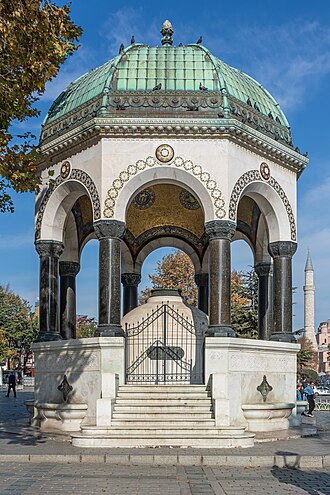
German Fountain
A neo-Byzantine style gazebo fountain in Sultanahmet Square, presented by German Emperor Wilhelm II, who visited in 1898; the fountain was completed in 1901. The octagonal domed structure features beautiful mosaics, gold-leaf decorations, and intricate columns. It's a popular meeting point and photo spot. The fountain represents Ottoman-German relations at the turn of the 20th century. While not ancient, it's become an iconic landmark in the historic square. The location makes it a natural stop while exploring nearby monuments like Hagia Sophia and the Blue Mosque.
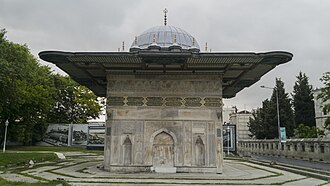
Tophane Fountain
An exquisite 18th-century Ottoman fountain in Karaköy, built by Sultan Mahmud I. The baroque-style structure features elaborate marble decorations, calligraphy, and traditional Turkish rococo elements. The fountain's ornate facade showcases the height of Ottoman decorative arts. Located near the Nusretiye Mosque and Tophane tram stop, it's in a neighborhood transforming into a hip arts district. The fountain represents Istanbul's tradition of public water sources as charitable works. Excellent example of monumental Ottoman fountain architecture, less crowded than Sultanahmet attractions.
Tips for Fountains & Public Art
- Photo opportunities: Ottoman fountains are beautifully decorated great for architectural photography
- Neighborhood context: Fountains often mark important intersections or neighborhood centers
- No longer functional: Most historic fountains are preserved monuments, not drinking sources