Innsbruck's skyline blends medieval towers with Baroque palaces and bold modern architecture, all framed by the dramatic Nordkette mountain range. From the glittering Goldenes Dachl to the sleek curves of the Bergisel Ski Jump, the city's landmarks tell a story spanning six centuries of Alpine history.
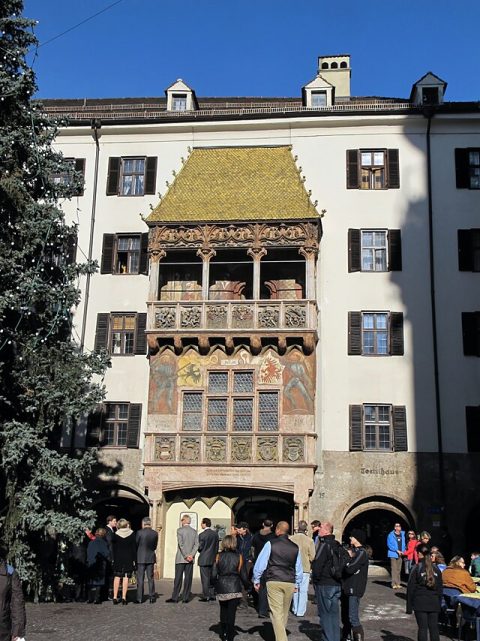
Goldenes Dachl (Golden Roof)
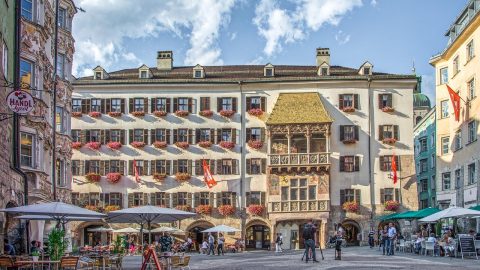
Innsbruck's most iconic symbol, the Goldenes Dachl is a late-Gothic oriel window crowned by a roof of 2,657 fire-gilded copper tiles. Commissioned by Emperor Maximilian I around 1500 as a royal box for watching tournaments, it is decorated with reliefs depicting the emperor, his two wives, and court jesters. A small museum inside explores Maximilian's life and reign. The shimmering rooftop is best photographed in early morning light before the crowds arrive.
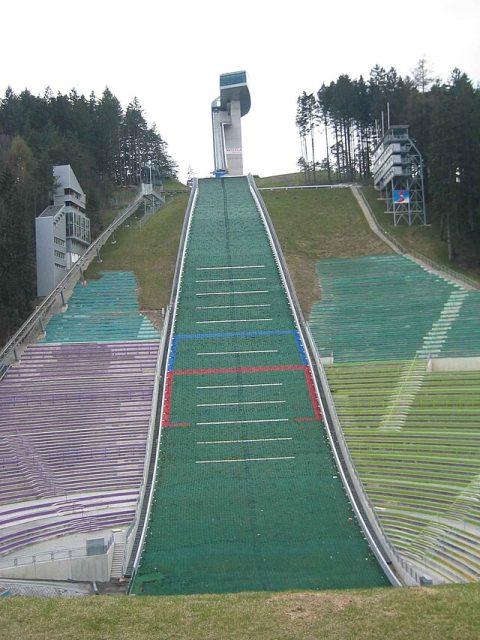
Bergisel Ski Jump
Designed by Zaha Hadid and opened in 2002, the Bergisel Ski Jump is a striking piece of contemporary architecture perched high above Innsbruck. The venue hosted the 1964 and 1976 Winter Olympics and remains an active FIS World Cup site. Visitors can ride the funicular and elevator to the tower's panoramic café, offering breathtaking views over the Inn Valley and surrounding Alps. An exhilarating experience even without a competition.
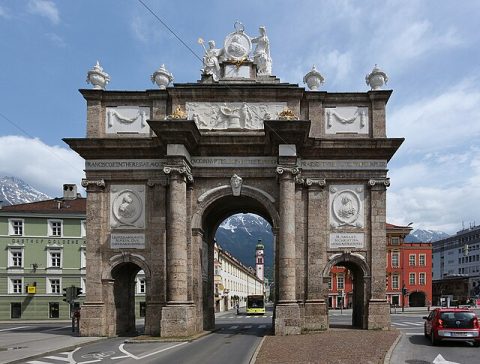
Triumphpforte (Triumphal Arch)
Standing at the southern end of Maria Theresien Strasse, the Triumphpforte was erected in 1765 to simultaneously celebrate the marriage of the future Emperor Leopold II and mourn the death of Emperor Franz I Stephan. Uniquely, the arch has two faces: the south side celebrates the royal wedding while the north bears mourning symbols. One of the finest examples of Baroque monumental architecture in the Alpine region, it frames a classic mountain view.
Stadtturm (City Tower)
The Stadtturm rises 51 metres above the Old Town, built around 1450 as part of the original city hall and serving as a watchtower and fire lookout. Visitors who climb the 133 steps to the viewing gallery at 31 metres are rewarded with sweeping panoramic views over Innsbruck's red-tiled rooftops, the Inn River, and the surrounding Alpine peaks. The tower's distinctive octagonal lantern is a defining feature of the Innsbruck skyline, especially beautiful when floodlit at night.
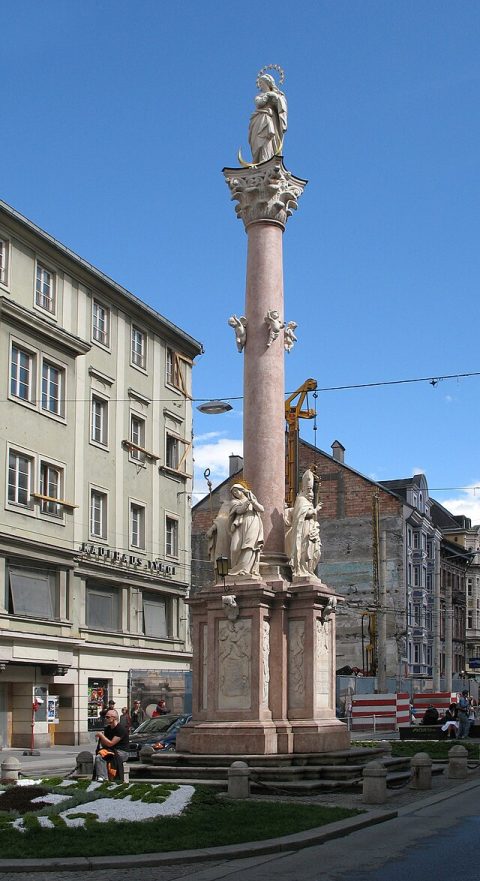
Annasäule (St. Anne's Column)
Erected in 1706 to commemorate the withdrawal of Bavarian troops from Tyrol on St. Anne's Day, the Annasäule is the central landmark of Maria Theresien Strasse. The red marble column is topped by a golden statue of the Virgin Mary, surrounded by four saints — Anne, Cassian, Vigilius, and George — at its base. It serves as the heart of outdoor civic life, a gathering point for locals, and provides the classic backdrop of an Alpine boulevard with mountain views beyond.
Tips for Landmarks & Monuments
- Visit the Goldenes Dachl early morning (before 9 am) to avoid crowds and capture the best light on the gilded tiles.
- Combine the Stadtturm climb with a stroll through the Altstadt — the two are steps apart.
- The Bergisel tower café is open to non-athletes; enjoy coffee with an Alpine panorama.
- The Triumphpforte is always free to view from outside and looks spectacular floodlit after dark.