Madrid's grand plazas and animated streets form the city's social heart, where historic architecture meets vibrant street life, outdoor terraces, and endless people-watching opportunities.
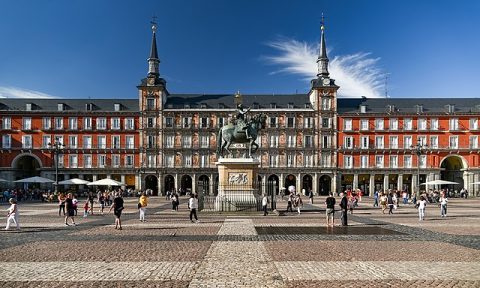
Plaza Mayor
Madrid's magnificent main square, built in 1619, features 237 balconies overlooking the cobblestoned plaza surrounded by ochre-colored buildings. The equestrian statue of Philip III commands the center. Once hosting bullfights, executions, and royal ceremonies, today it's filled with terrace cafés, street artists, and the famous Sunday stamp and coin market. The Casa de la Panadería's colorful frescoes dominate the north side. Nine arched gateways lead to surrounding streets.
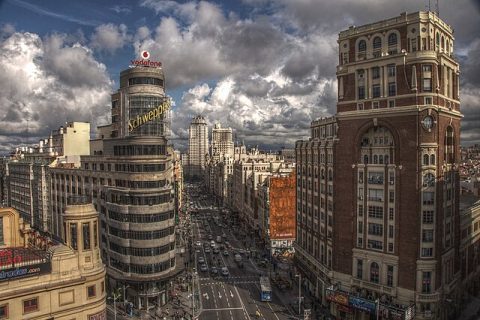
Gran Vía
Madrid's most famous street, the Spanish Broadway, dazzles with early 20th-century architecture, flagship stores, theaters, and cinematic rooftop bars. Built between 1910-1931, the 1.3km boulevard showcases eclectic architectural styles from art nouveau to art deco. Landmark buildings include Edificio Telefónica, Edificio Metrópolis with its winged statue, and Edificio Grassy. Day or night, Gran Vía pulses with energy, shopping, entertainment, and spectacular neon signs after dark.
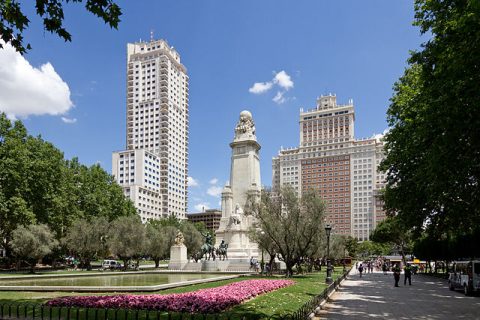
Plaza de España
Recently redesigned as a green pedestrian space, this expansive square features the iconic Cervantes Monument with bronze statues of Don Quixote and Sancho Panza. The surrounding area offers views of the Torre de Madrid and Edificio España skyscrapers. The renovated plaza now provides shaded walkways, fountains, and relaxation spaces, making it a pleasant stop between the Royal Palace and Gran Vía.
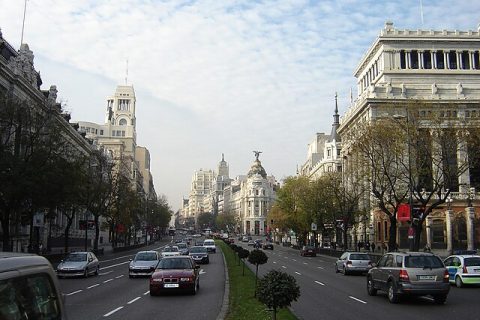
Calle de Alcalá
One of Madrid's longest and most historic streets, running from Puerta del Sol to the city's eastern edges. This elegant thoroughfare passes major landmarks including the Metropolis Building, Bank of Spain, and Puerta de Alcalá. The mix of neoclassical and modern architecture reflects Madrid's evolution. The street's eastern section leads to Las Ventas bullring, while the central portion offers upscale shopping and historic buildings.
Tips for Squares & Streets
- Visit Plaza Mayor early morning or late evening to avoid tourist crowds
- Gran Vía is perfect for sunset photography with golden light on buildings
- Terrace dining in Plaza Mayor is pricey venture to side streets for better value
- Walk Gran Vía at night to see the spectacular illuminated façades