Beyond the ancient theaters and medieval fortresses, the Peloponnese hides waterfalls, stone villages, and windswept capes that even seasoned Greece travelers overlook. These spots reward those willing to drive an extra hour off the main circuit.
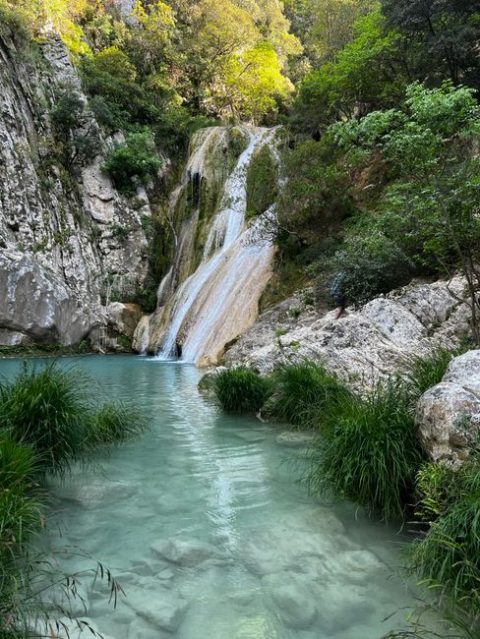
Polylimnio Waterfalls
Tucked into a limestone gorge near Kalamata, Polylimnio is a cascading series of turquoise pools and waterfalls carved into the Messinian countryside. A network of wooden bridges and dirt paths winds through fig trees and oleander, leading hikers past a dozen swimmable basins fed by cold mountain streams. Unlike the well-trodden coastal beaches nearby, this spot draws mostly local families and a handful of in-the-know travelers, especially on weekday mornings. The largest pool, reachable after a moderate 30-minute walk, sits beneath a dramatic rock arch and makes for one of the best wild swimming spots in the region. Bring proper shoes, as the trail crosses slick rocks and shallow water crossings. Spring and early summer bring the fullest flow, while late summer reveals more sunbathing rock ledges. There is no entrance fee and minimal infrastructure, so pack water and snacks.
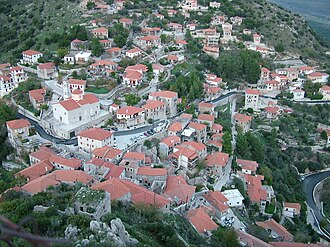
Karytaina
Karytaina is a small stone-built village clinging to a hillside above the Alfeios River, crowned by a ruined 13th-century Frankish castle once dubbed the Toledo of Greece for its resemblance to the Spanish city. Cobbled lanes lead past Byzantine chapels and abandoned mansions to the castle ruins, where sweeping views stretch across the Arcadian mountains and a graceful medieval bridge below. Few tour buses make the winding drive here, leaving the village largely to shepherds, cats, and the occasional hiker. The 12th-century Monastery of Panagia Karyotissa sits just outside the village and holds icons rescued from earlier structures. Karytaina also played a role in the Greek War of Independence as a stronghold of the klepht leader Theodoros Kolokotronis. Visit in late afternoon when the light turns the stone golden and the castle silhouette is at its most striking.
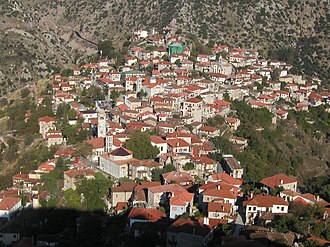
Dimitsana
Perched dramatically above the Lousios Gorge, Dimitsana is a stone-built mountain village that quietly powered the Greek Revolution: its watermills once produced gunpowder for the rebels, now preserved at the excellent Open-Air Water Power Museum on the village outskirts. Wander past centuries-old mansions, a folklore museum, and the birthplace of Patriarch Gregory V to reach the gorge rim, where a footpath descends toward the hidden monasteries of Prodromou and Filosofou, carved into the cliffside far from any road. The village stays cool even in high summer and empties out almost completely on weekdays, making it a rare pocket of calm in a region built around ancient ruins. Local tavernas serve wild greens, mountain trout, and thick tsipouro, best enjoyed on a terrace overlooking the gorge at sunset. Winter brings snow and roaring fireplaces, a side of the Peloponnese most beach-focused visitors never see.
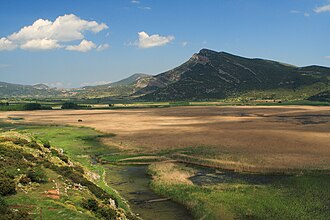
Lake Stymphalia
Steeped in mythology as the marshy home of the man-eating Stymphalian Birds defeated by Hercules, this quiet wetland in northern Arcadia is one of the least visited landscapes in the Peloponnese. The lake shrinks and swells with the seasons, surrounded by reed beds, oak forests, and the remains of an ancient settlement barely explored by archaeologists. A small environmental museum run by the Piraeus Bank Group explains the area's ecology and the ingenious Roman-era drainage tunnels still partly in use. Birdwatchers can spot herons, ducks, and migratory species along a short lakeside path, while the ruins of a 13th-century Cistercian monastery, Zaraka, sit nearby in a farmer's field. The whole area feels forgotten by time, with no crowds and no souvenir stands, just open sky and mountain silence. Combine it with a stop in nearby Kastania village for a full half-day excursion away from the coast.
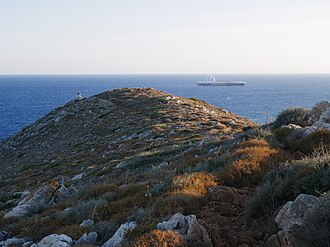
Cape Tainaron (Cape Matapan)
The southernmost tip of mainland Greece, Cape Tainaron feels like the edge of the world, a rocky, wind-scoured finger of land the ancient Greeks believed held an entrance to the underworld. A rough thirty-minute walk past the ruins of the abandoned hamlet of Kokkinogia leads to a small 19th-century lighthouse, with only goats and the occasional lone traveler for company. Nearby, the sunken ruins of an ancient temple to Poseidon lie just beneath the harbor waters at Asomati, visible on a calm day for anyone willing to peer over the edge of a boat or wade in. The deep Mediterranean and Aegean seas visibly meet off the point, and the isolation here is total, no cafes, no signal, just cliffs, wind, and legend. The drive down through the barren southern Mani, past stone tower villages like Vathia, is as memorable as the cape itself.
Tips for Hidden Gems
- Rent a car — these spots are reached by mountain roads with little or no public transport.
- Fill up on fuel before heading into the Arcadian mountains or deep Mani, as stations are scarce.
- Visit on weekdays to have these places largely to yourself.
- Bring cash, as rural tavernas and museums rarely accept cards.