Vilnius' squares serve as the city's living rooms – spaces where history, culture, and daily life intersect. From the grand Cathedral Square to intimate neighborhood gathering spots, these public spaces pulse with markets, festivals, protests, and everyday interactions that define urban Lithuanian life.
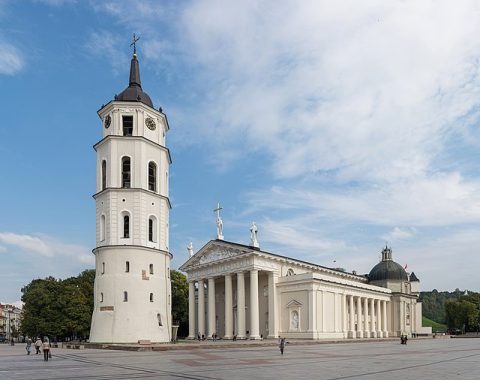
Cathedral Square (Katedros aikštė)
The symbolic and geographic heart of Vilnius, Cathedral Square has witnessed coronations, protests, celebrations, and historic moments for centuries. Dominated by the neoclassical Vilnius Cathedral and its freestanding bell tower, the vast open space connects Old Town to modern Vilnius via Gediminas Avenue. The square hosted the pivotal 1989 Baltic Way demonstration and continues as the gathering point for national celebrations, Christmas markets, and New Year's festivities. Look for the 'Stebuklas' (Miracle) tile marking where the Baltic Way human chain began – tradition says spinning three times on it while making a wish brings good fortune. The square offers unobstructed views of Gediminas Tower on the hill and serves as the starting point for exploring the city.
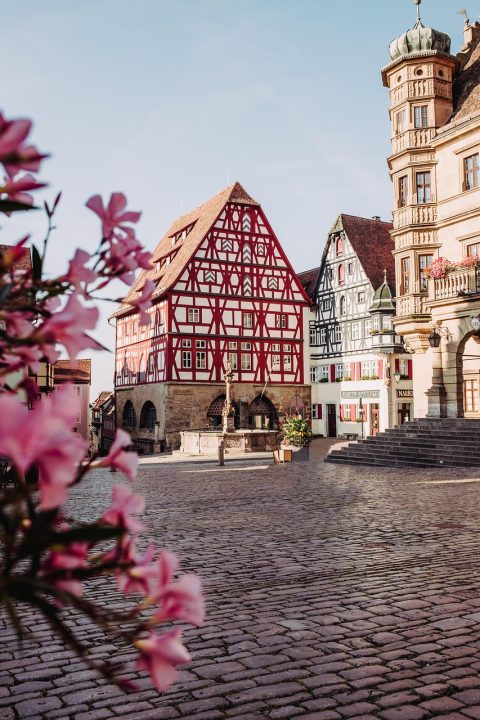
Town Hall Square (Rotušės aikštė)
Located in Old Town's heart, Town Hall Square has been Vilnius' main marketplace and civic center since the 15th century. The elegant neoclassical Town Hall building, nicknamed 'White Swan' for its graceful appearance, anchors the space. Historically, the square hosted markets, executions, proclamations, and city celebrations. Today, it's surrounded by colorful buildings housing restaurants and cafés with outdoor seating. The square frequently hosts festivals, concerts, Christmas markets, and cultural events. The atmospheric space, enclosed by historic architecture, provides a more intimate counterpoint to the grand Cathedral Square and exemplifies Old Town's living history.
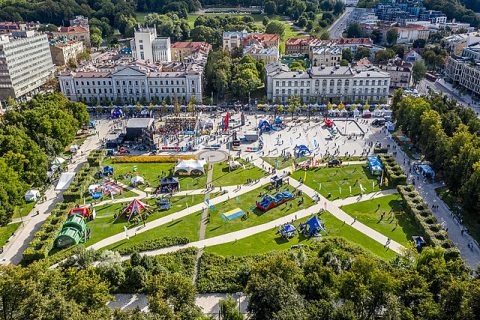
Lukiškės Square
Vilnius' largest square has a complex and controversial history reflecting Lithuania's turbulent 20th century. Originally created during the Russian Empire, it was later dominated by a massive Lenin statue during Soviet occupation (removed after independence). The square has witnessed protests, celebrations, and continues to generate debate about its purpose and design. Recent controversies included plans for a memorial that were abandoned. Today, the vast open space hosts markets, concerts, festivals, and outdoor activities. The square's ongoing evolution symbolizes Lithuania's struggle to reconcile difficult history while creating meaningful public space. Its size and central location make it significant despite aesthetic debates.
Tips for Squares & Streets
- Events calendar: Check what's happening in squares – markets, concerts, and festivals occur regularly
- Christmas markets: Cathedral Square and Town Hall Square transform into magical winter wonderlands December-January
- Photography timing: Early morning or evening light creates beautiful atmospheric shots with fewer crowds
- Outdoor dining: Town Hall Square cafés offer prime people-watching spots in warm weather