Bucharest's most iconic structures tell the story of Romania's complex history, from medieval foundations to Belle Époque grandeur and communist monumentalism. These landmarks define the city's unique architectural character.
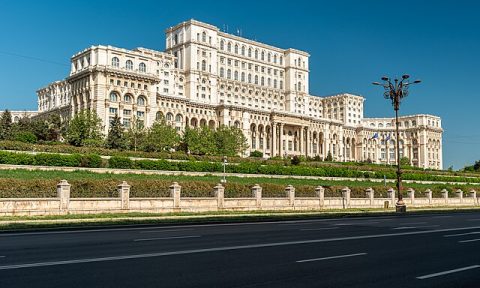
Palace of Parliament (Palatul Parlamentului)
The world's second-largest administrative building after the Pentagon, this colossal structure is Ceaușescu's most controversial legacy. Built with one million cubic meters of marble, 3,500 tons of crystal, and 700,000 tons of steel, the palace contains 1,100 rooms spread across 12 stories. Guided tours reveal opulent halls with massive chandeliers, hand-woven carpets, and lavish communist-era design. The building's construction required demolishing a fifth of Bucharest's historic center. Booking required: Tours must be reserved in advance with passport details. Allow 1.5-2 hours for the standard tour.
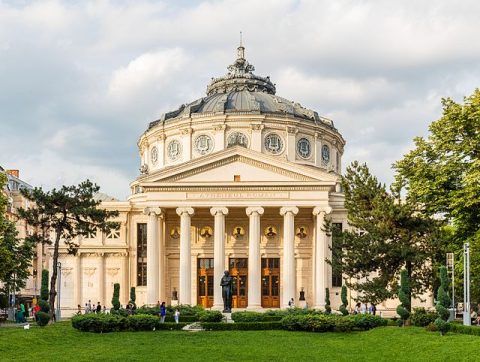
Romanian Athenaeum (Ateneul Român)
This neoclassical concert hall is Romania's most prestigious cultural venue and an architectural jewel. Built in 1888, the circular building features a stunning dome, Ionic columns, and intricate frescoes depicting Romanian history. Home to the George Enescu Philharmonic Orchestra, attending a classical concert here is an unforgettable experience. The 75-meter fresco inside circles the entire concert hall, showcasing key moments from Romanian history. Even if you don't attend a performance, the exterior and small museum are worth visiting.
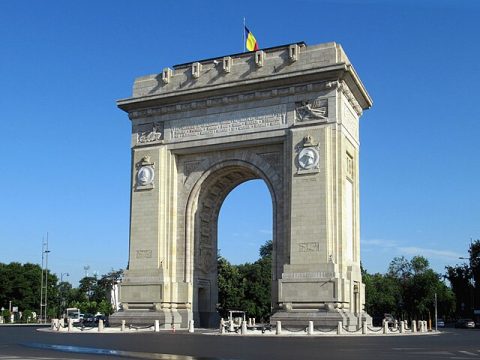
Arcul de Triumf
Romania's triumphal arch commemorates the nation's reunification in 1918 following World War I. Modeled after Paris's Arc de Triomphe, the 27-meter granite structure features sculptural works by prominent Romanian artists. Located at the entrance to Herăstrău Park, it's become a symbol of Romanian independence. The arch is occasionally opened for special events, allowing visitors to climb to the top platform for panoramic views. The surrounding area is pleasant for walking and photography.
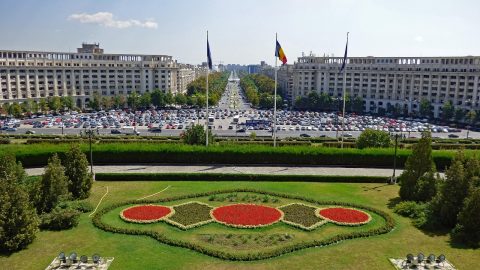
Revolution Square (Piața Revoluției)
This historic square was the epicenter of the 1989 Romanian Revolution that ended communist rule. The square is surrounded by significant buildings including the former Communist Party Central Committee (now housing the Ministry of Interior), the Royal Palace, and the Romanian Athenaeum. A striking modernist memorial spike marks the spot where revolution speeches were given. Bullet holes from the 1989 events are still visible on some buildings. It's a powerful reminder of Romania's recent struggle for democracy.
Tips for Landmarks & Monuments
- Photography: The Palace of Parliament looks most impressive at sunset from Constitution Square
- Timing: Book Palace tours for morning slots as they fill up quickly, especially in summer
- Concert tickets: Check the Romanian Athenaeum schedule online and book classical concert tickets in advance
- Walking route: These landmarks can be connected in a 2-hour walking tour through central Bucharest