Ibiza's coastline delivers everything from boho-chic beach clubs to wild, pine-backed coves. The south and west host the island's most photographed turquoise water, while the north stays quieter and less developed.
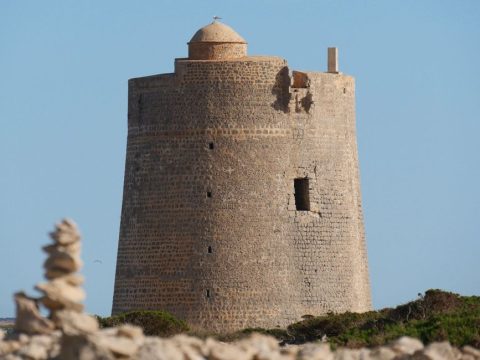
Ses Salines Beach
Ibiza's most iconic strip of sand, backing directly onto the Ses Salines Natural Park salt flats. Turquoise, shallow water and a line of boho-chic beach clubs (Jockey Club, Sa Trinxa) draw a fashionable, see-and-be-seen crowd, while the far ends stay quieter. Flamingos are a common sight in the adjoining salt pans in spring and autumn.
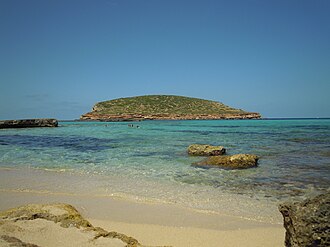
Cala Comte (Cala Conta)
A trio of coves on the west coast famous for the Mediterranean's most-photographed sunsets, with the small Illes Bledes islets silhouetted offshore. Crystal-clear, calm water makes it excellent for swimming and snorkeling. Arrive early in summer — the car park fills by mid-morning and beach bars get packed for sunset.
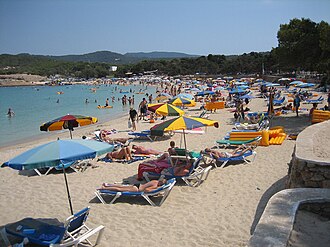
Cala Bassa
A wide, sheltered west-coast bay with unusually calm, shallow water thanks to a protective headland — a favorite for families and snorkelers exploring the seagrass meadows just offshore. A beach club and watersports rentals sit at the main strand, with quieter rocky platforms further along.
Es Cavallet
A long, white-sand beach inside Ses Salines Natural Park, historically the island's naturist and LGBTQ+-friendly beach, with a laid-back, alternative vibe distinct from the polished clubs at Ses Salines proper. Wilder dunes and fewer sunbeds toward the southern end.
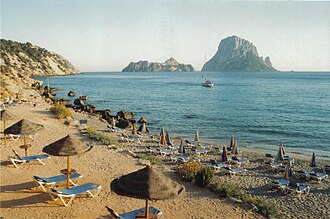
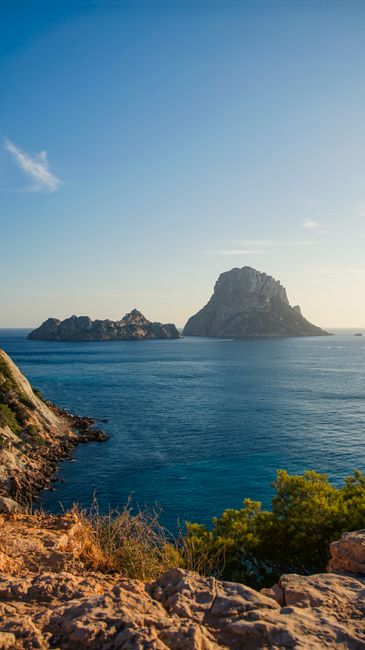
Cala d'Hort (Es Vedrà Viewpoint)
A small pebble-and-sand beach facing Es Vedrà, the jagged limestone islet wrapped in local myth and said to be one of the most magnetic spots on Earth. The beachfront chiringuitos are the classic place to watch it turn silhouette-black at sunset. Less about swimming, more about the view.
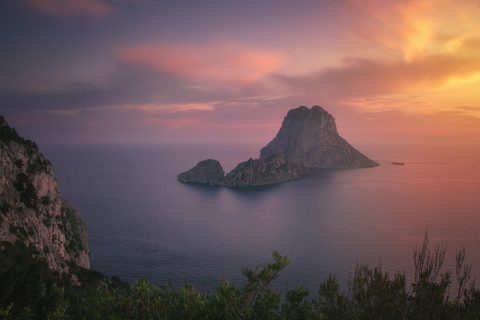
Cala Xarraca
A quiet, horseshoe-shaped cove on the undeveloped north coast, split into several small bays by rocky outcrops. Known for natural clay deposits near the shoreline that locals use as a free mud mask. Far fewer crowds and beach clubs than the south and west coast — bring your own shade and supplies.
Tips for Beaches & Coastal Areas
- Rental cars sell out fast in high season — Cala Comte also has seasonal bus service: P4 connects it with Sant Antoni from May through October.
- Beach club sunbeds at Ses Salines and Comte often require a minimum spend in peak summer.
- For sunset at Cala d'Hort, arrive at least an hour early to get a chiringuito table facing Es Vedrà.