Mallorca's skyline is defined by La Seu Cathedral rising over Palma Bay, while inland and along the coast, royal palaces, hilltop castles, and dramatic natural landmarks trace the island's Moorish, Christian, and geological history.
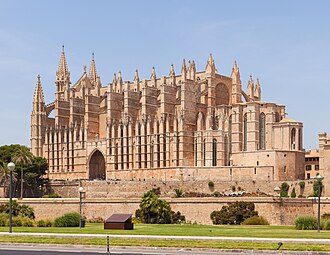
La Seu (Palma Cathedral)
This towering Gothic cathedral, The mosque was consecrated after the 1229 conquest; construction of the present cathedral began later in the 13th century, dominates Palma's seafront skyline. Its interior holds the world's largest Gothic rose window and a striking canopy over the altar designed by Antoni Gaudí, plus a chapel remodeled by artist Miquel Barceló. Climb to the rooftop terraces for close-up views of the flying buttresses and Palma Bay. Best photographed from Parc de la Mar at sunset, when the honey-colored stone glows against the water.
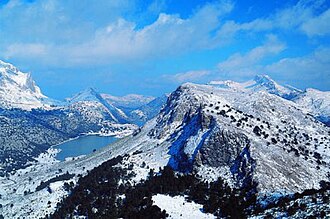
Serra de Tramuntana
This UNESCO World Heritage mountain range stretches 90 km along Mallorca's northwest coast, shaped by centuries of dry-stone terracing, water channels, and olive groves. The range shelters villages like Deià and Sóller and reaches its highest point at Puig Major (1,445m, closed to public access). Winding roads and the famous Sa Calobra hairpin descent make it as thrilling to drive as to hike. A defining feature of the island's identity beyond its beaches.
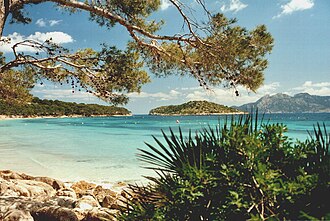
Cap de Formentor
The dramatic rocky peninsula at Mallorca's northeastern tip, reached via a serpentine cliffside road with sweeping viewpoints such as Mirador Es Colomer. The lighthouse at the very end sits 200m above crashing waves, looking toward Menorca on clear days. The road itself, lined with pine forest and limestone cliffs, is considered one of the most scenic drives in Spain. Arrive early morning to avoid tour bus crowds at the main viewpoints.
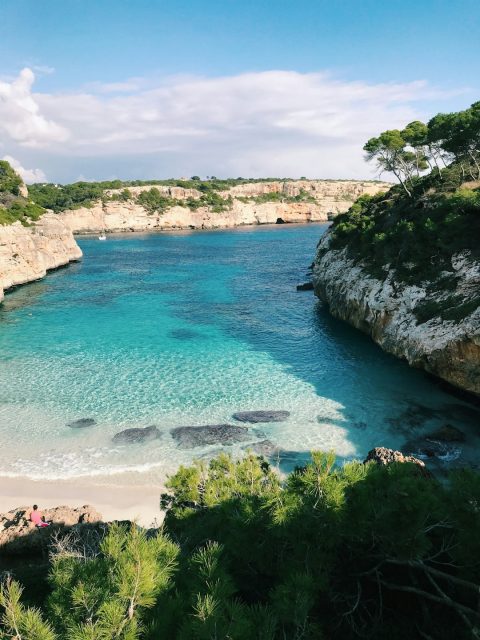
Palau de l'Almudaina
Facing the cathedral, this former Moorish alcazaba was converted into a royal residence after the Christian conquest of 1229 and remains an official residence of the Spanish royal family. Visitors can tour Gothic royal chambers, Arab baths, and courtyards blending Islamic and Christian architecture. The Patio de Armas offers one of the best angles for photographing the cathedral. English guided tours run once daily, at noon, Tuesday–Sunday.
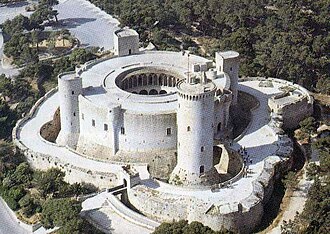
Bellver Castle
This rare circular Gothic castle, built in the early 14th century on a pine-covered hill above Palma, once served as a royal residence and later as a military prison. Its unusual round design and central courtyard set it apart from typical medieval fortresses. The rooftop walkway delivers panoramic views over Palma Bay and the Tramuntana mountains. The castle also houses the City History Museum. A pleasant uphill walk or short taxi ride from the old town.
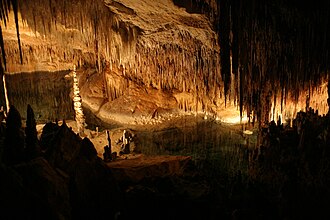
Coves del Drac (Caves of Drach)
Near Porto Cristo, these underground limestone caves stretch over a kilometer and contain Lake Martel, one of the world's largest underground lakes. Visitors follow a prescribed route in timed groups; the visits are not guided.live classical music boat concert on the lake itself. Discovered in their current tourist form in the 19th century, Interior temperatures vary between 17°C and 20°C throughout the year. Book ahead in summer as tour groups fill up quickly.
Tips for Landmarks & Monuments
- Visit La Seu Cathedral right at opening (10 AM) to avoid cruise-ship crowds
- Drive the Sa Calobra road in the morning – it gets congested with tour buses by midday
- Check the ticket prices and any free-entry days for Bellver Castle
- Book Coves del Drac tickets online in July/August, when slots sell out by early afternoon
- Formentor has vehicle restrictions from 15 May–18 October 2026, 10:00–22:00; ordinary rental cars cannot access the lighthouse road then.