Beyond the postcard landmarks, Valencia keeps a quieter side: modernist market halls, a bomb shelter dug beneath the city during the Spanish Civil War, a neoclassical garden almost nobody visits, and a former factory turned contemporary art space. These spots reward travelers willing to wander a few streets off the well-trodden route.
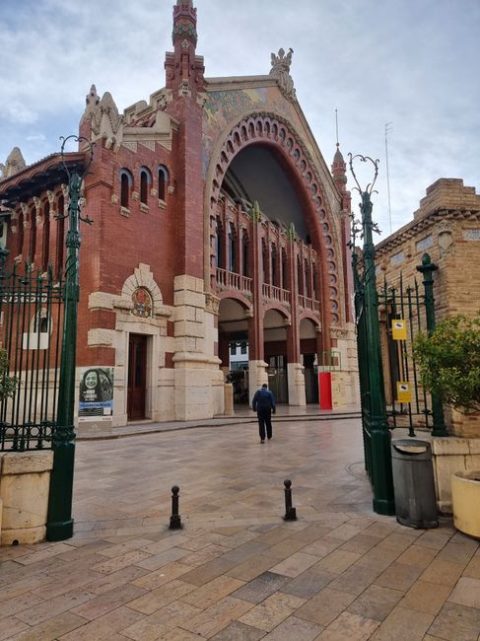
Mercado de Colón
While every visitor lines up for the Central Market, this 1916 modernist market hall designed by Francisco Mora sits largely overlooked in the elegant Ensanche district. Wrought-iron columns, stained glass, and ceramic tile work rise over a sunken plaza, and the building was beautifully restored in the early 2000s into a mix of cafes, wine bars, and gourmet stalls rather than a purely functional market. It is one of the most photogenic interiors in the city, yet tour groups rarely make it here. Come for a quiet coffee or an evening vermouth beneath the vaulted glass roof, away from the crowds of the old town. The surrounding streets of the Ensanche neighborhood are also worth a slow wander for their Belle Epoque facades.
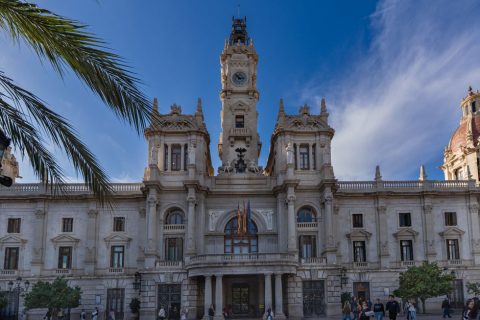
Bombas Gens Centre d'Art
Tucked behind an unassuming Art Deco facade in the Benicalap district, this former pump factory now houses one of Spain's most respected private contemporary art foundations. The building itself, all curved glass brick and industrial steel, is worth the trip on its own, and exhibitions rotate between photography, video installation, and painting presenting immersive digital-art exhibitions (it was renamed Bombas Gens Centre d'Arts Digitals in 2024). Because it sits outside the historic center, it draws mostly locals and art students rather than tourists, giving galleries a rare sense of calm. A ground-floor cafe with a leafy courtyard makes a good pause point. Check the website before visiting, since the museum periodically closes between exhibition installs.
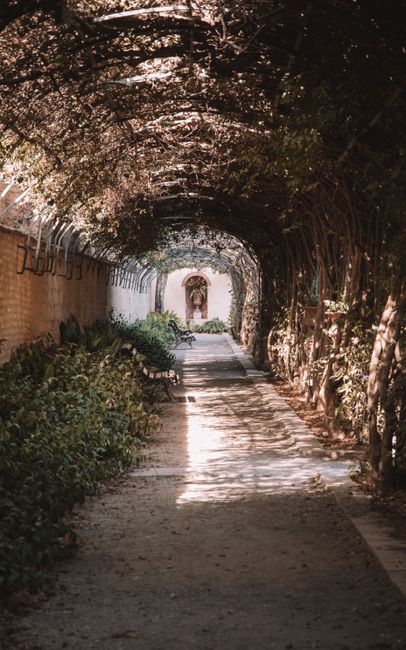
Jardines de Monforte
A short walk from the Turia riverbed but rarely mentioned alongside the city's bigger parks, this 19th-century neoclassical garden was designed as a private estate before passing to the city. Clipped hedges, marble statuary, fountains, and a small pavilion give it a formal, almost Italianate feel that contrasts with the wilder public gardens elsewhere in Valencia. Because it is gated and easy to miss from the street, it stays peaceful even on busy weekends, making it a favorite quiet spot among local retirees rather than visitors. Bring a book and claim a bench under the pergola. The garden is compact, so it pairs well with a stroll through the neighboring Turia riverbed park on the same outing.
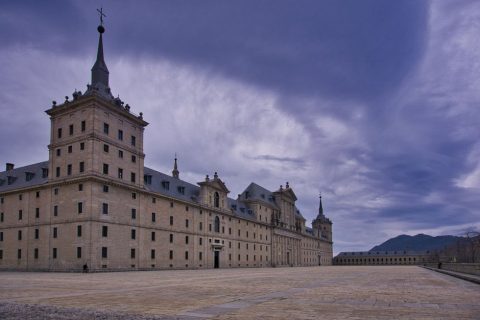
Real Colegio Seminario del Corpus Christi
Known locally as the Iglesia del Patriarca, this 16th-century seminary church hides a small museum courtyard that most guidebooks skip entirely. Beyond the sober facade lies a Renaissance cloister and a modest gallery holding works attributed to Caravaggio, El Greco, and Juan de Juanes, displayed with none of the crowds found at the city's larger art museums. A curious ritual takes place most weekdays at noon, when water is poured over the courtyard's sloped stone floor as a symbolic remembrance tied to the building's founder. The dim, incense-scented interior and gilded altarpiece make for an atmospheric few minutes away from the midday sun. Entry is inexpensive and rarely requires waiting in line.
Tips for Hidden Gems
- Most of these sites are free or very cheap, but check opening days ahead.
- Combine Mercado de Colón with a walk through the Ensanche district's modernist architecture for a low-key afternoon.
- Bombas Gens sits a short taxi or metro ride from the center, best paired with a visit to the nearby Turia riverbed park.
- Visit Jardines de Monforte on a weekday morning for the quietest experience.