Kauai's landmarks are carved by 5 million years of erosion, wind, and surf, from a canyon that rivals the mainland's grandest to a blowhole that has been drawing crowds for over a century.
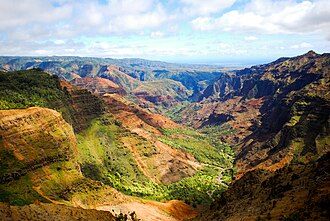
Waimea Canyon State Park
Mark Twain reportedly dubbed this the "Grand Canyon of the Pacific" — a 14-mile-long, 3,600-foot-deep gorge of red, orange, and green cliffs carved by the Waimea River. Multiple roadside lookouts along Waimea Canyon Drive offer sweeping views without any hiking required, while trails like Canyon Trail and Cliff Trail lead to waterfall overlooks for those wanting a closer look. On clear days, visibility stretches to the Pacific on one side and Kauai's rugged interior on the other.
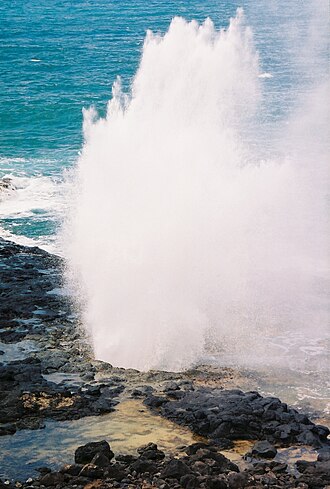
Spouting Horn
At this lava-shelf blowhole near Poipu, incoming waves force seawater through a lava tube, launching a geyser-like spray up to 50 feet into the air accompanied by a deep, moaning roar from a second smaller opening. Legend holds the sound is a trapped mo'o (lizard spirit) still crying out. A short paved path and safety railing make it an easy stop, with best spray typically at high tide or during south swells.
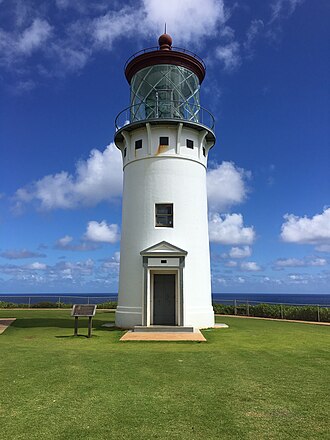
Kilauea Point Lighthouse
Built in 1913 to guide steamships between Hawaii and Asia, this white 52-foot lighthouse sits on Kauai's northernmost point and once housed the largest clamshell lens ever made. It anchors the Kilauea Point National Wildlife Refuge, where nesting seabirds wheel around the cliffs below. The lighthouse building itself is viewable via short guided tours, and the surrounding bluffs offer some of the island's best whale-watching in winter.
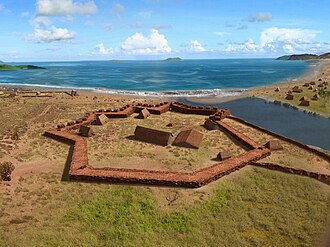
Russian Fort Elizabeth State Historical Park
The star-shaped stone ruins near Waimea are the remains of a fort built in 1817 by the Russian-American Company under Georg Anton Schäffer, who briefly allied with a local chief in a failed bid to seize Kauai for Russia. Abandoned within a few years, the site is one of the few tangible traces of Russian colonial ambition in Hawaii. Interpretive signage along the walking loop explains the fort's short, strange history.
Tips for Landmarks & Monuments
- Waimea Canyon lookouts fill up by mid-morning — arrive before 9am or after 3pm for parking and clearer skies
- The refuge is currently closed to the public for post-hurricane repairs; its reservation system is unavailable.
- Spouting Horn spray is unpredictable; the county keeps visitors well back of a fenced overlook for safety