Each Bavarian neighborhood tells its own story, from hipster havens and student quarters to royal districts and working-class areas transformed into creative hubs. These districts reveal authentic local life beyond tourist centers.
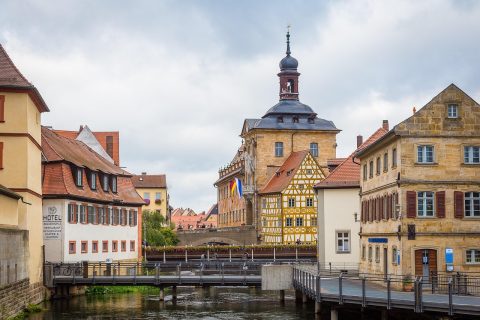
Bamberg Old Town
An entire UNESCO World Heritage neighborhood preserving medieval urban layout. This exceptionally preserved town features over 1,000 listed buildings spanning Romanesque to Baroque periods. Little Venice (Klein Venedig) showcases colorful fishermen's houses along the Regnitz River. The Old Town Hall built on a bridge creates iconic photo opportunity. Seven hills each crowned with churches earn Bamberg nickname 'Franconian Rome'. Unique smoked beer (Rauchbier) culture thrives in traditional breweries. Winding cobblestone lanes reveal hidden gardens, courtyards, and beer cellars. Cathedral Quarter contains magnificent Romanesque cathedral with Bamberg Rider sculpture.
Kunstareal (Munich Museum Quarter)
Munich's museum district concentrating world-class art institutions within walking distance. The area encompasses the three Pinakothek galleries, Museum Brandhorst, Lenbachhaus, and several others. Königsplatz nearby features neoclassical architecture housing Glyptothek and State Antiquities Collection. The district's planned layout creates harmonious cultural landscape. Cafés and restaurants cater to museum visitors. The Technical University borders the area, adding academic atmosphere. Free museum entry on Sundays makes culture accessible. The neighborhood transforms during Long Night of Munich Museums when institutions stay open until 2am with special programs.
Schwabing (Munich)
Munich's bohemian quarter with artistic heritage stretching back to when Kandinsky, Klee, and Mann lived here. The Leopoldstrasse forms the main artery lined with cafés, bookshops, and bars. The English Garden borders the district, making it perfect for combining culture with nature. Historic artists' cafés like Café Münchner Freiheit preserve intellectual atmosphere. The neighborhood balances university students with affluent residents. Former revolutionary spirit now manifests in independent boutiques, galleries, and nightlife. Saturday's Elisabethmarkt offers authentic market experience. Residential streets reveal beautiful Jugendstil (Art Nouveau) architecture.
Glockenbach & Gärtnerplatz (Munich)
Munich's trendiest neighborhood and LGBTQ+ hub with village-like atmosphere despite central location. The Gärtnerplatztheater anchors the district with opera, musicals, and dance. Narrow streets reveal independent boutiques, vintage shops, and design studios. Countless bars, cafés, and restaurants create vibrant nightlife. Sunday flea market at Mariahilfplatz attracts bargain hunters. Former working-class area has transformed into creative quarter while maintaining authentic character. The Isar River provides green escape. This walkable neighborhood rewards exploration with hidden courtyards, street art, and innovative cuisine from experimental restaurants.
Tips for Neighborhoods & Districts
- Neighborhoods reveal authentic Bavarian life beyond tourist attractions
- Visit local markets to experience genuine community atmosphere
- Evening exploration shows neighborhoods at their liveliest
- Many neighborhoods have their own festivals and events
- Combine neighborhood walking with stops at local cafés and bakeries