Bavaria's public spaces pulse with life, from grand squares hosting festivals to charming pedestrian streets lined with cafés and shops. These urban hearts showcase Bavarian social culture and architectural heritage.
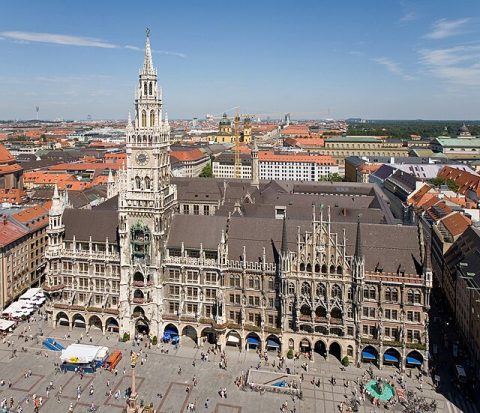
Marienplatz (Munich)
Munich's central square and heartbeat since 1158. The New Town Hall's neo-Gothic facade dominates with its famous Glockenspiel performing at 11am and 12pm daily (also 5pm in summer). Crowds gather to watch mechanical figures reenact historical events. The Old Town Hall marks the square's eastern end. St. Peter's Church tower offers the best city views. Viktualienmarkt food market sits adjacent. Major events, Christmas markets, and spontaneous celebrations occur here. Underground shopping passages and S-Bahn/U-Bahn station make this Munich's most accessible point. Street performers and beer gardens animate the square year-round.
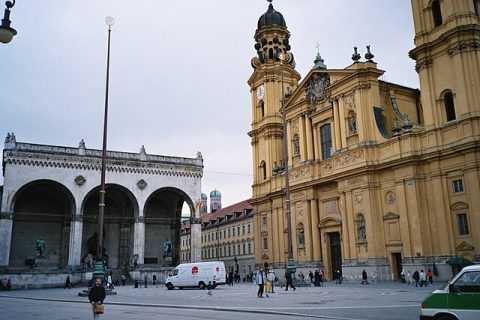
Odeonsplatz (Munich)
Munich's most elegant square, featuring the Theatinerkirche's yellow Baroque facade and the Feldherrnhalle loggia modeled after Florence's Loggia dei Lanzi. The Residenz palace borders the square. The Hofgarten (Court Garden) offers peaceful green space with central pavilion. Historical significance includes its role in Hitler's failed 1923 Beer Hall Putsch. Today, open-air concerts and cultural events animate the square. Luxurious shopping along adjacent streets attracts fashion enthusiasts. Café Tambosi, Munich's oldest café, provides perfect people-watching. The square connects Munich's old town to Ludwigstrasse and the museum district.
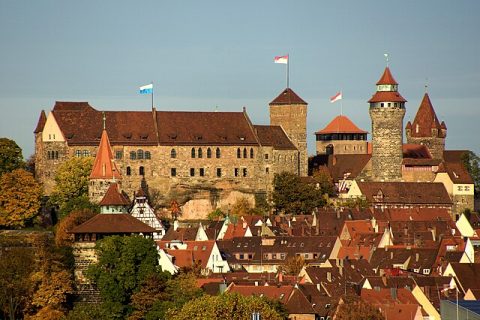
Hauptmarkt (Nuremberg)
Nuremberg's main market square, hosting Germany's most famous Christmas market (Christkindlesmarkt). The Gothic Schöner Brunnen (Beautiful Fountain) features intricate 19th-century replica of medieval original with 40 figures representing worldview of Holy Roman Empire. Touch the golden ring for luck. The Frauenkirche church overlooks the square with its mechanical clock performing at noon. Daily markets sell fresh produce, flowers, and regional specialties. The square's history includes dark chapters - it stands on the former Jewish quarter destroyed in 1349 pogrom. Today it's a vibrant gathering place for festivals, markets, and celebrations year-round.
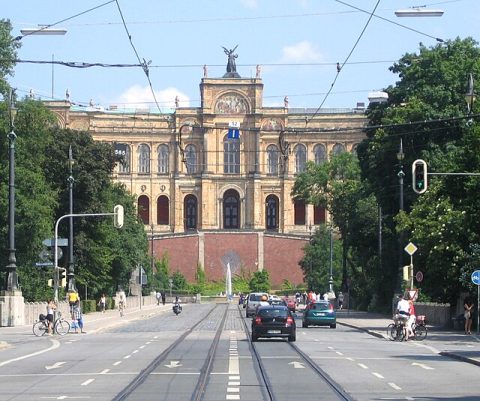
Maximilianstrasse (Munich)
Munich's most luxurious boulevard, stretching from Altstadt to the Maximilianeum parliament building. This prestigious street showcases King Maximilian II's unique architectural style blending Gothic and Renaissance elements. High-end boutiques (Prada, Bulgari, Gucci) line elegant arcades. The Kammerspiele theater and exclusive Hotel Vier Jahreszeiten represent cultural sophistication. The street hosts fashion shows and cultural events. Five-star restaurants and designer flagships attract international clientele. The boulevard culminates at the Isar River with views of the neo-Renaissance Maximilianeum. Window shopping here offers glimpses of Munich's wealthy lifestyle.
Tips for Squares & Streets
- Visit Marienplatz at 11am or 12pm for the Glockenspiel performance
- Nuremberg's Hauptmarkt transforms into magical Christmas market in December
- Many squares host seasonal events - check local calendars
- Cafés around squares offer perfect spots for people-watching
- Evening strolls reveal different ambiance with atmospheric lighting