Thassos blends its ancient Greek and Byzantine past with dramatic natural monuments carved from the island's famous marble. These sites anchor the island's identity as both a historical treasure and a geological wonder.
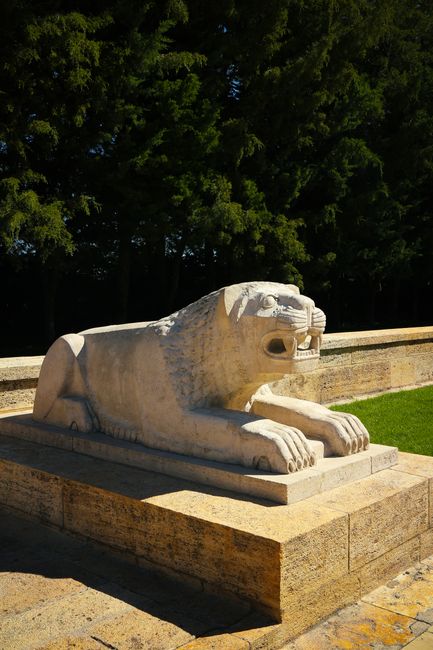
Marble Lion Monument (Tomb of the Lion)
A weathered 4th-century BC marble lion statue perched on a hilltop above Limenas, believed to mark the tomb of a wealthy citizen or hero. Discovered by a British expedition in 1864, the statue was originally polychrome and would have been visible from ships approaching the ancient port. Reaching it requires a short uphill walk from the coastal road, rewarded with sweeping views over the Aegean. It's a quiet, little-visited spot that captures Thassos's understated approach to its own antiquities.
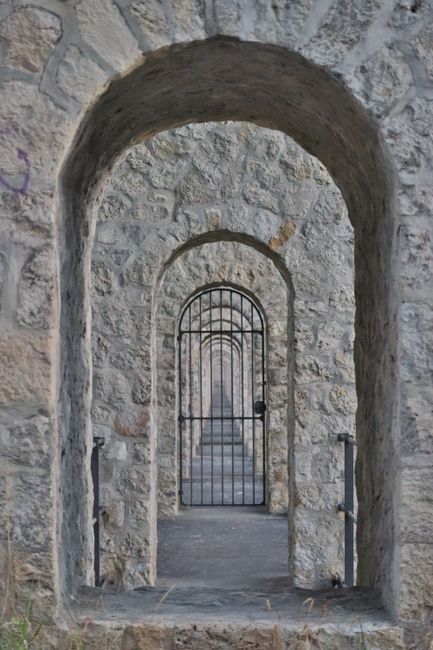
Ancient Walls and Gate of Parmenon
Remnants of the 7.5km ancient city walls that once encircled Thasos, dating to the 5th century BC and later reinforced in Byzantine times. The best-preserved section, the Gate of Parmenon, still bears the sculptor's inscribed signature. Following the wall path up to the acropolis links several monuments together and offers panoramic views of Limenas and the harbor below.
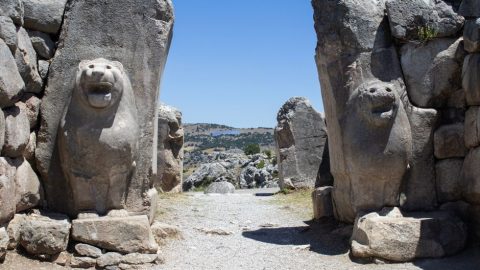
Gate of Silenus (Zeugma Gate)
One of the ancient city's most striking surviving gates, decorated with a relief carving of Silenus, the mythological companion of Dionysus, shown holding a wine cup. The relief is a rare example of figurative sculpture integrated directly into fortification architecture. It sits along the ancient wall circuit near the agora, making it easy to combine with a broader walk through the archaeological area.
Tips for Landmarks & Monuments
- Combine the Lion Monument, ancient walls, and Gate of Silenus into one morning walking loop from Limenas
- Wear sturdy shoes — paths are uneven stone and gravel
- Bring water; there's little shade along the wall circuit
- Most sites are unfenced and free to visit at any hour