Delhi's skyline is shaped by millennia of empire — Mughal mausoleums, British colonial edifices, and post-independence icons all stand within a single city, making it one of the world's richest concentrations of monumental architecture.
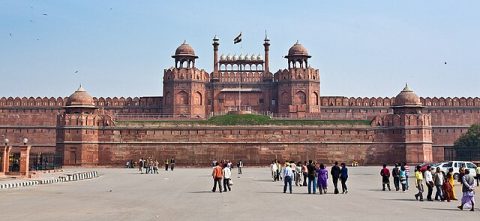
Red Fort (Lal Qila)
The Red Fort is Delhi's most iconic landmark — a UNESCO World Heritage Site Construction began in April 1639 and was completed in 1648. Its massive red sandstone ramparts enclose palaces, audience halls, and gardens. The Diwan-i-Aam and Diwan-i-Khas showcase the pinnacle of Mughal craftsmanship. India's Prime Minister addresses the nation from its ramparts on Independence Day every August 15.
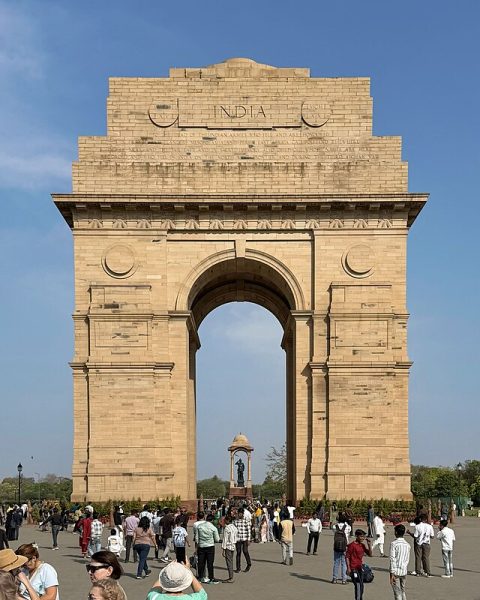
India Gate
India Gate is a 42-metre war memorial designed by Edwin Lutyens, erected in 1931 to It commemorates Indian war dead from World War I and the Third Anglo-Afghan War; the Ministry of Defence reports over 83,000 dead. The National War Memorial site gives 13,516 names, it stands at the eastern end of Kartavya Path surrounded by lawns that become a beloved evening promenade. Beautifully illuminated at night, it is best visited after sunset for the most dramatic effect.
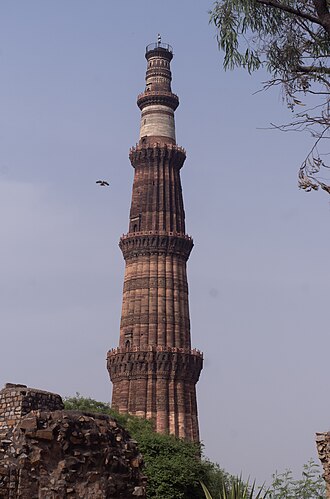
Qutub Minar
It is 72.5 metres high, Qutub Minar is the tallest brick minaret in the world and a UNESCO World Heritage Site. UNESCO dates construction of the minaret to 1199–1503; avoid assigning its completion to Aibak alone, its five tapering storeys are ornately carved with Quranic verses. The complex also contains the Iron Pillar of Delhi — a 4th-century metallurgical marvel that has never rusted — and the ruins of India's first mosque, Quwwat-ul-Islam.
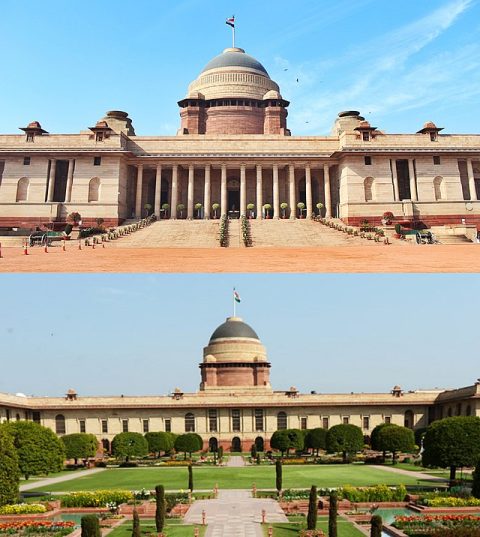
Rashtrapati Bhavan
The official residence of India's President, Rashtrapati Bhavan has 340 rooms and is one of the world's largest heads-of-state residences. Designed by Lutyens and completed in 1929, it blends Baroque, classical, and Indian elements. Its Its public opening is seasonal and can also occur outside spring; in 2026 it opened in winter and again in August–September. Check the President’s visitor portal for current dates, showcasing geometric layouts, fountains, and over 70 varieties of roses.
Tips for Landmarks & Monuments
- Hire an ASI-approved guide at the Red Fort ticket counter for deeper historical context.
- India Gate lawns are best visited at dusk — street food stalls serving kulfi and chaat appear as the sun sets.
- Qutub Minar complex is least crowded on weekday mornings before 9 am.
- Combine Rashtrapati Bhavan garden visits (Feb–Mar) with a stroll down Kartavya Path.