Bologna's architectural heritage showcases centuries of history through its iconic towers, grand palaces, and Renaissance structures that define the city's distinctive skyline and character.
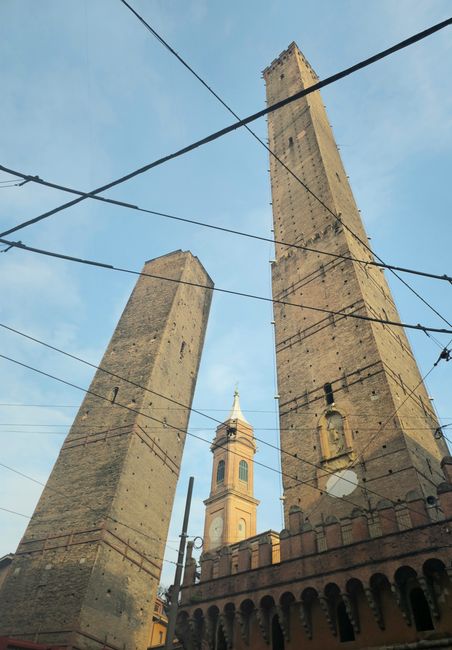
Le Due Torri (Two Towers)
The Two Towers are Bologna's iconic medieval symbols. The 97-meter Torre degli Asinelli (1109-1119) offers spectacular panoramic views after climbing 498 steps, showcasing terracotta rooftops and distant mountains. The adjacent Torre Garisenda leans noticeably and inspired Dante's Divine Comedy. Built by noble families as power symbols, these towers define Bologna's skyline. The steep climb rewards visitors with unforgettable vistas over the historic center.
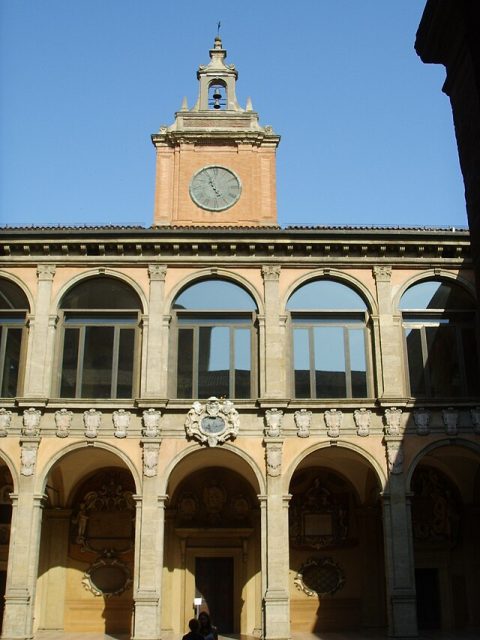
Archiginnasio of Bologna
The Archiginnasio served as the University of Bologna's main building (1563-1803) and now houses an 850,000-volume municipal library. Its crown jewel is the Teatro Anatomico (1637), an exquisite wooden anatomical theater with carved physician statues and a marble dissection table topped by figures called 'gli spellati' (the skinned ones). Over 6,000 student coats of arms decorate the corridors, creating a unique chronicle of university history.
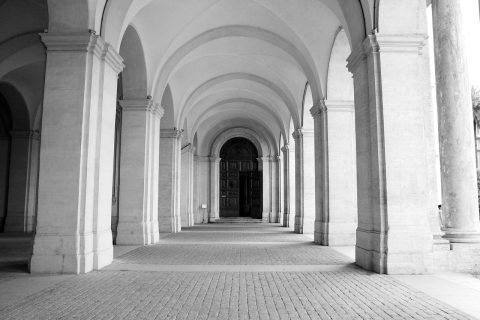
Palazzo Comunale (City Hall)
Palazzo Comunale, Bologna's city hall since 1336, dominates Piazza Maggiore's western side. The complex houses Sala Borsa, a stunning library over Roman ruins visible through glass floors, and ornate rooms like Sala Rossa and Sala Farnese with Renaissance frescoes. The Collezioni Comunali d'Arte museum displays important paintings and decorative arts. The courtyard features Pope Gregory XIII's bronze statue, and a terracotta Madonna adorns the facade.
Tips for Landmarks & Monuments
- The Asinelli Tower is currently closed to the public, and the Garisenda Tower is not accessible.
- The Teatro Anatomico requires timed tickets – book online in advance during peak season
- The Asinelli Tower is currently closed to the public. – the wooden steps can be steep and narrow
- Many palaces offer free entry on specific days – check the Bologna Welcome website for updated schedules
- Photography is generally allowed but flash may be prohibited in certain areas