Plan your trip to Bologna
- How long
- 1-2 days: the porticoes, Piazza Maggiore and the Two Towers, and a long lunch.
- Best for
- Food lovers: Italy's food capital, with a UNESCO-listed system of porticoes and a famous university.
- Skip it if
- You want big-name sights: Bologna is about eating and strolling.
If you only do three things
- Piazza Maggiore and the Basilica of San Petronio.
- Climb the Asinelli Tower (book ahead).
- The Quadrilatero market district and a tagliatelle al ragù lunch.
A one-day route
- Morning: Piazza Maggiore, San Petronio and the Neptune Fountain.
- Midday: Lunch in the Quadrilatero.
- Afternoon: The Archiginnasio and the Teatro Anatomico; the Asinelli Tower.
- Evening: Aperitivo and dinner near the University Quarter.
Before you go
- Bologna Airport connects to the station by the Marconi Express.
- Book the Asinelli Tower climb ahead.
- The porticoes make walking easy in the rain.
- Check current prices and free-entry days.
Prices, opening status and transport in this plan checked against official sources on 1 October 2026.
Things to do in Bologna
Bologna's architectural heritage showcases centuries of history through its iconic towers, grand palaces, and Renaissance structures that define the city's distinctive skyline and character.
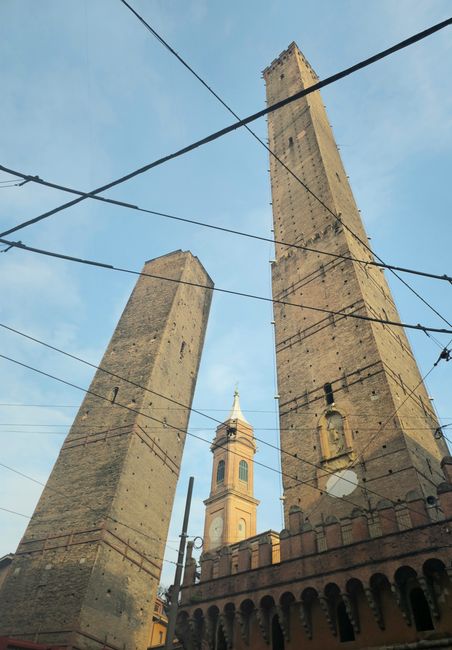
Le Due Torri (Two Towers)
The Two Towers are Bologna's iconic medieval symbols. The 97-meter Torre degli Asinelli (1109-1119) offers spectacular panoramic views after climbing 498 steps, showcasing terracotta rooftops and distant mountains. The adjacent Torre Garisenda leans noticeably and inspired Dante's Divine Comedy. Built by noble families as power symbols, these towers define Bologna's skyline. The steep climb rewards visitors with unforgettable vistas over the historic center.
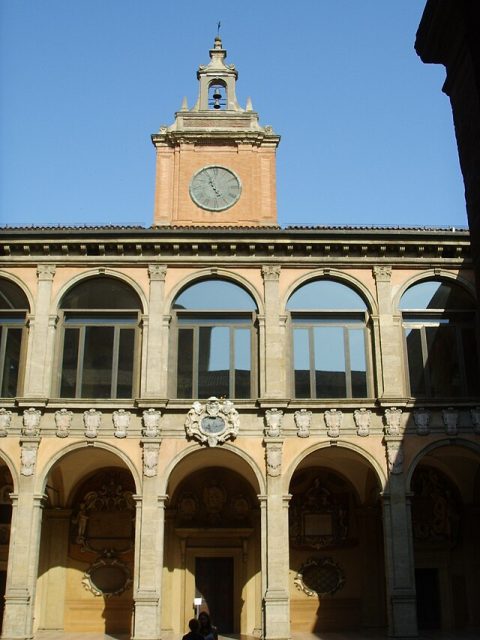
Archiginnasio of Bologna
The Archiginnasio served as the University of Bologna's main building (1563-1803) and now houses an 850,000-volume municipal library. Its crown jewel is the Teatro Anatomico (1637), an exquisite wooden anatomical theater with carved physician statues and a marble dissection table topped by figures called 'gli spellati' (the skinned ones). Over 6,000 student coats of arms decorate the corridors, creating a unique chronicle of university history.
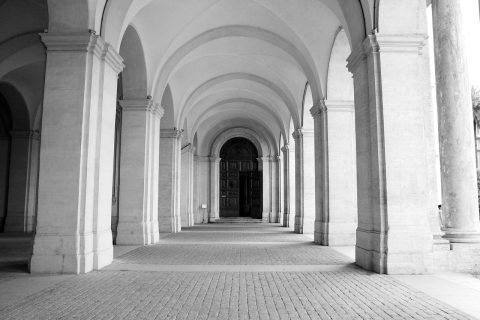
Palazzo Comunale (City Hall)
Palazzo Comunale, Bologna's city hall since 1336, dominates Piazza Maggiore's western side. The complex houses Sala Borsa, a stunning library over Roman ruins visible through glass floors, and ornate rooms like Sala Rossa and Sala Farnese with Renaissance frescoes. The Collezioni Comunali d'Arte museum displays important paintings and decorative arts. The courtyard features Pope Gregory XIII's bronze statue, and a terracotta Madonna adorns the facade.
Tips for Landmarks & Monuments
- The Asinelli Tower is currently closed to the public, and the Garisenda Tower is not accessible.
- The Teatro Anatomico requires timed tickets – book online in advance during peak season
- The Asinelli Tower is currently closed to the public. – the wooden steps can be steep and narrow
- Many palaces offer free entry on specific days – check the Bologna Welcome website for updated schedules
- Photography is generally allowed but flash may be prohibited in certain areas
Bologna's museums showcase an impressive range of collections from medieval art and Renaissance masterpieces to modern innovations, reflecting the city's role as a cultural and intellectual center throughout history.
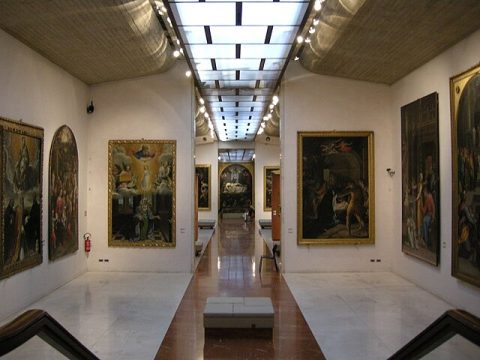
Pinacoteca Nazionale di Bologna
The National Art Gallery houses Italy's finest collections of 13th-18th century paintings, specializing in the Bolognese School. Masterpieces include Raphael's 'Ecstasy of Saint Cecilia', exceptional works by the Carracci family, and Guido Reni's powerful religious compositions. The 30 chronologically arranged rooms trace Italian painting evolution through Renaissance and Baroque periods, with particular strength in Emilian art showcasing Bologna's profound influence on Western painting.
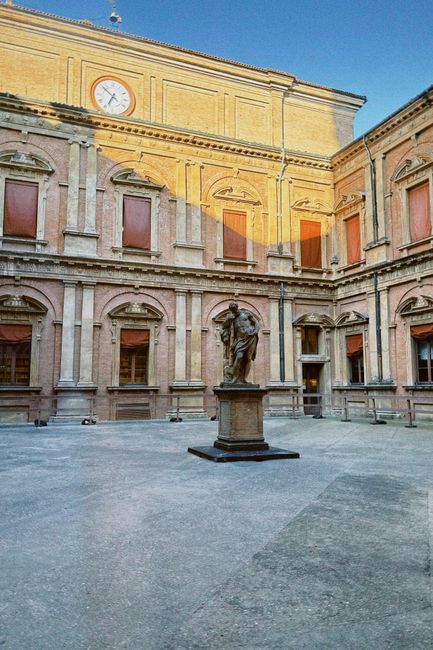
MAMbo - Museum of Modern Art
MAMbo occupies a converted industrial bakery, showcasing Italian art from 1945 onward. The permanent collection features works by Giorgio Morandi, Lucio Fontana, Piero Manzoni, and Arte Povera artists across 9,500 square meters. The dedicated Morandi Museum displays the Bolognese master's contemplative still lifes. Located in the creative Manifattura delle Arti district, MAMbo hosts ambitious exhibitions, performances, and cultural programs representing Bologna's contemporary art scene.
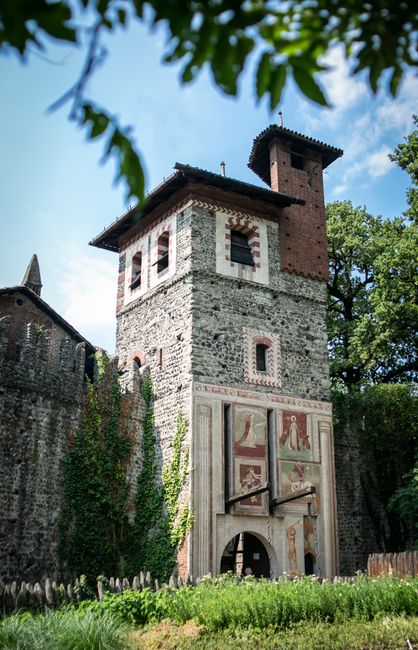
Museo Civico Medievale
The Medieval Civic Museum in Palazzo Ghisilardi-Fava documents Bologna's medieval and Renaissance periods through exceptional artifacts. Collections include bronze sculptures by Giambologna, illuminated manuscripts, medieval weapons, decorative arts, and intricate ivory carvings. The tomb monument of Rolandino de' Passaggeri exemplifies Gothic sculpture. Interactive displays contextualize medieval life, making this essential for understanding Bologna's historical development and artistic heritage during its golden age.
Tips for Museums & Galleries
- First Sunday of the month often features free admission to state museums
- Consider purchasing a Bologna Welcome Card for discounted or free museum entry
- Many museums close on Mondays – always verify opening times before visiting
- Audio guides are available at major museums and greatly enhance the experience
- The MAMbo bookshop is excellent for contemporary art publications and design objects
Bologna's churches and religious complexes represent architectural masterpieces spanning Byzantine, Romanesque, Gothic, Renaissance, and Baroque periods, housing priceless artworks and serving as spiritual centers for centuries.
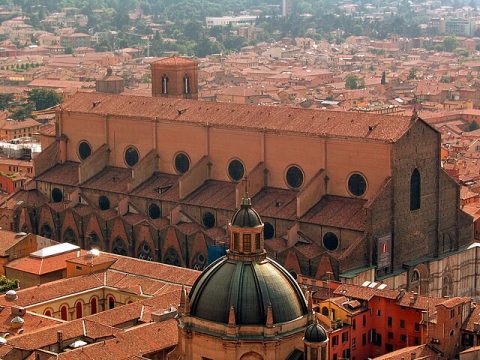
Basilica of San Petronio
The Basilica of San Petronio dominates Piazza Maggiore as one of the world's largest churches (132m long, 66m wide). Construction began in 1390 to rival St. Peter's. The striking incomplete marble facade contrasts finished lower sections with exposed brick above. Inside, 22 chapels feature works by Giovanni da Modena and Lorenzo Costa. The world's largest sundial (1655) stretches 67.7 meters. Here, Pope Clement VII crowned Charles V in 1530.
Basilica of Santo Stefano (Seven Churches)
The Basilica of Santo Stefano complex, known as 'Sette Chiese' (Seven Churches), comprises interconnected medieval structures creating a unique architectural ensemble (5th-13th centuries). Four main buildings remain: the Church of the Crucifix, octagonal Church of the Holy Sepulchre (modeled after Jerusalem), Courtyard of Pilate with its 8th-century basin, and Church of Vitale and Agricola (Bologna's oldest, 5th century). The tranquil Benedictine Cloister enhances the mystical atmosphere.
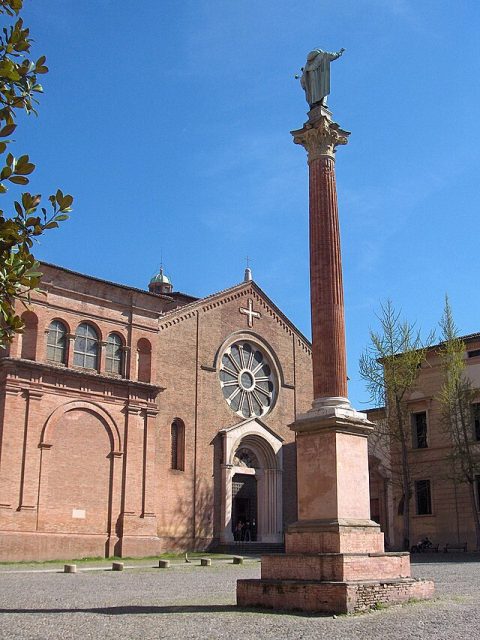
Basilica of San Domenico
The Basilica of San Domenico is the mother church of the Dominican Order worldwide and burial site of Saint Dominic (died 1221). The Arca di San Domenico shrine ranks among Italy's finest sculptural ensembles, begun by Nicola Pisano and featuring contributions from young Michelangelo (three figures at age 19) and Niccolò dell'Arca. The church displays works by Guido Reni, Ludovico Carracci, and Filippino Lippi, plus King Enzo's tomb.
Tips for Religious Sites
- Modest dress is required – shoulders and knees must be covered
- Churches typically close during lunch hours (approximately 12:30-15:30) and during Mass times
- Entry to churches is generally free, though donations are appreciated and some museum sections require tickets
- Photography without flash is usually permitted but be respectful during religious services
- Visit Santo Stefano in the late afternoon when golden light filters through the ancient buildings
Bologna's historical sites reveal layers of civilization from Roman times through the medieval period, with archaeological remains, ancient fortifications, and well-preserved urban structures that tell the story of the city's evolution.
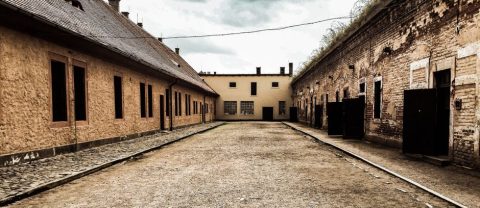
Jewish Ghetto & Museum
Bologna's Jewish Quarter near Via dell'Inferno preserves centuries of Jewish heritage (established 1556). The Jewish Museum in Palazzo Pannolini chronicles 2,000 years of Jewish presence through multimedia exhibits, ritual objects, and Holocaust testimonies. Archaeological remains beneath reveal medieval Jewish homes. Walking tours highlight the former Great Synagogue site, ghetto gates, and memorial plaques, documenting both persecution and resistance efforts that saved many lives during Nazi occupation.
Tips for Ancient & Historical Sites
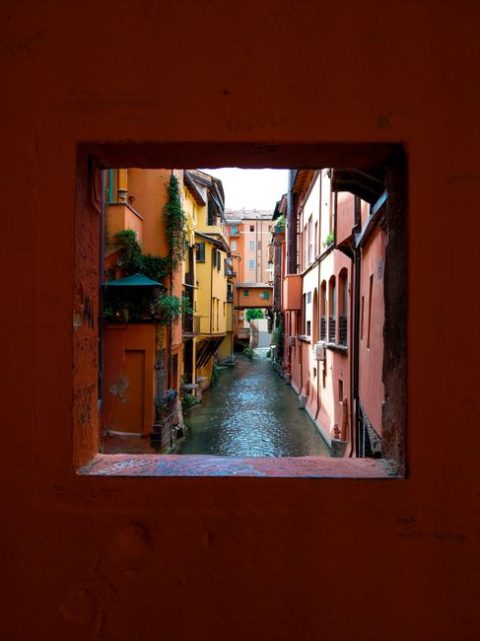
- Guided tours of the hidden canals and underground Bologna are available through Bologna Welcome
- The window on Via Piella is small and can be crowded – visit early morning or late afternoon
- Combine a visit to the Jewish Museum with a walk through the historic ghetto neighborhood
- Archaeological sites occasionally open for special Heritage Days events
Bologna's magnificent squares and porticoed streets form the social and architectural heart of the city, where daily life unfolds beneath kilometers of historic arcades that have earned UNESCO World Heritage status.
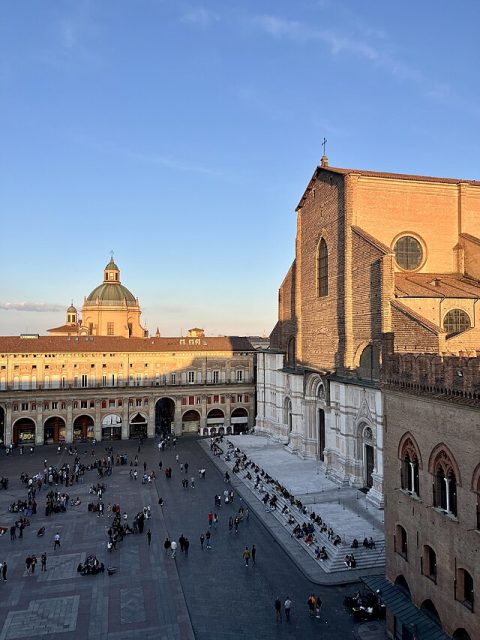
Piazza Maggiore
Piazza Maggiore, Bologna's civic center since the 13th century, is surrounded by medieval and Renaissance landmarks: the massive Basilica of San Petronio, Palazzo Comunale, Palazzo dei Banchi, and Palazzo del Podestà. The vast trapezoidal space hosts markets, gatherings, and the evening passeggiata. Throughout the day, it transforms from morning cafes to student lounging to evening crowds. Summer brings outdoor cinema and concerts, making it Bologna's vibrant heart.

The Porticoes of Bologna (UNESCO)
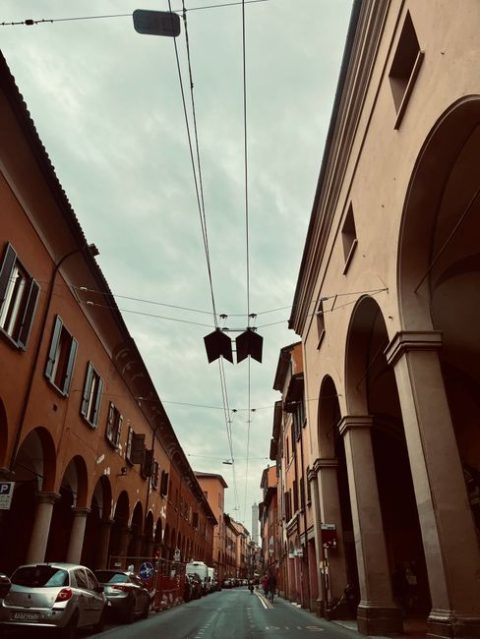
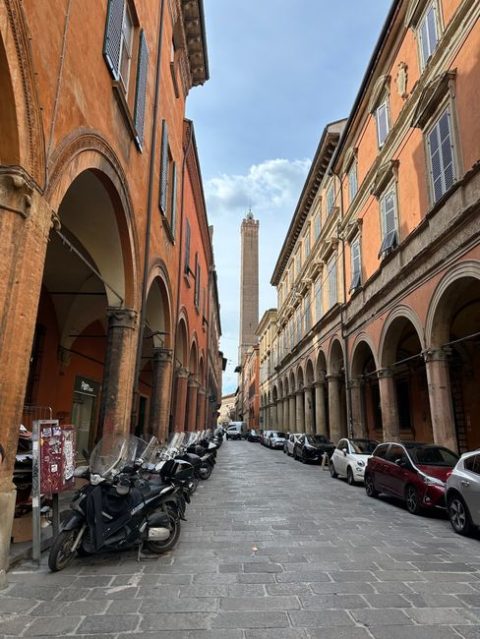
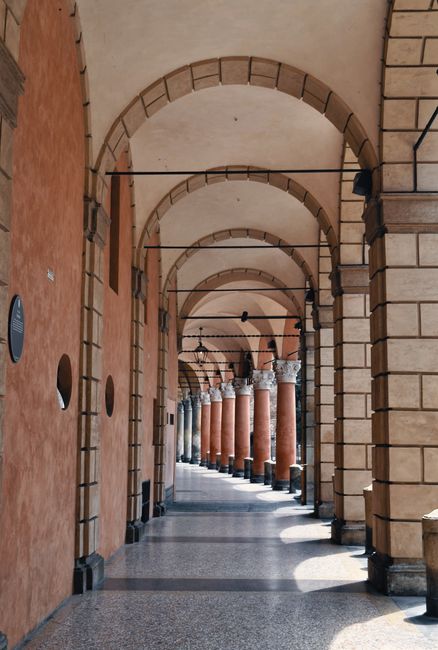
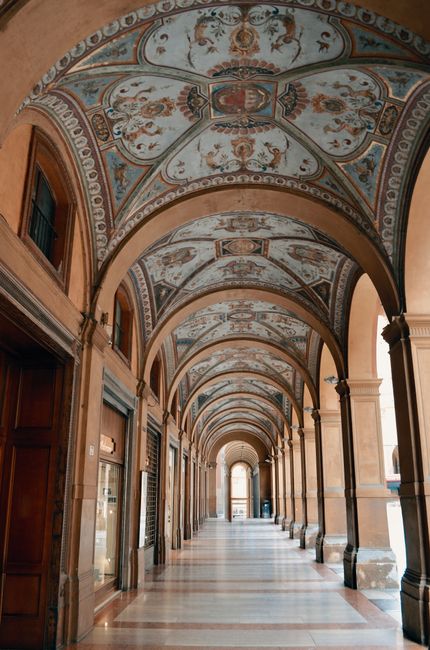
Bologna's porticoes form the world's most extensive covered walkways 62 kilometers total, 38km in the center earning UNESCO World Heritage status (2021). Beginning in the Middle Ages as expanded living space, they became universal through city statutes. Styles range from medieval wooden posts to baroque arches. The Portico di San Luca stretches 3.8km uphill with 666 arches. These covered streets create unique urban rhythm, enabling social life regardless of weather.
Quadrilatero Market District
The Quadrilatero, Bologna's historic market district since the Middle Ages, features medieval streets named after ancient trades: Via Pescherie Vecchie (Fish), Via Drapperie (Cloth), Via Clavature (Nails). Today it remains a vibrant food market with vendors selling Parmigiano-Reggiano, prosciutto, fresh pasta, and regional wines. Traditional shops like Tamburini operate alongside artisan boutiques, wine bars, and trattorias, creating authentic Bolognese gastronomic atmosphere.
Tips for Squares & Streets
- Visit the Quadrilatero market weekday mornings (9am-1pm) for the full authentic experience
- The Portico di San Luca pilgrimage walk takes 1-2 hours uphill – wear comfortable shoes and bring water
- Evening in Piazza Maggiore is perfect for people-watching – grab gelato and sit on San Petronio's steps
- Many shops in the Quadrilatero close on Sunday afternoons and Mondays
- Download a porticoes walking map from Bologna Welcome to explore different architectural styles
Bologna's neighborhoods each possess unique character, from the scholarly atmosphere of the university quarter to the bohemian creativity of emerging districts, offering diverse experiences within the compact historic center.
University Quarter (Via Zamboni)
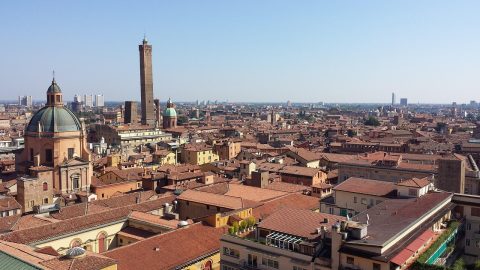
The University Quarter along Via Zamboni pulses with energy from the world's oldest university (founded 1088). Historic palaces house departments, libraries, and the Museum of Palazzo Poggi displaying scientific instruments and anatomical waxworks. Piazza Verdi serves as the social hub with cafes and student gatherings. The area embodies Bologna as 'La Dotta' (The Learned), blending intellectual tradition with contemporary youth culture, street art, and bohemian atmosphere.
Manifattura delle Arti
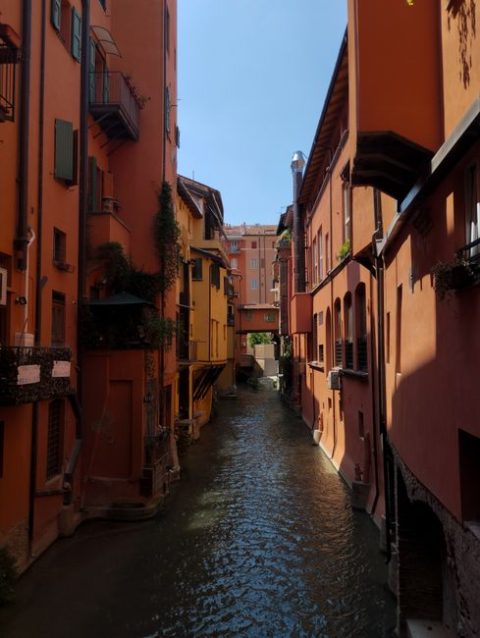
The Manifattura delle Arti district transformed former tobacco factories into a thriving creative quarter northwest of the center. Anchored by MAMbo museum, it includes Cineteca di Bologna, DumBO creative space, street art, craft breweries, and the Cassero LGBT Center. Industrial architecture hosts contemporary art, design markets, outdoor screenings, and cultural events. This area showcases Bologna's urban regeneration, balancing preservation with contemporary innovation and inclusive culture.
Tips for Neighborhoods & Districts
- Thursday and Friday evenings are best for experiencing university quarter nightlife
- Visit Manifattura delle Arti on weekend afternoons when markets and events are most active
- Many university buildings are open to the public – courtyards and some museums are accessible
- Student areas offer the city's best value dining – look for 'menu fisso' (fixed price menus)
- Check the Cineteca di Bologna schedule for classic film screenings in original languages
Bologna offers surprising green spaces within and around the historic center, from hilltop parks with panoramic views to botanical gardens preserving centuries of scientific study.
Giardini Margherita
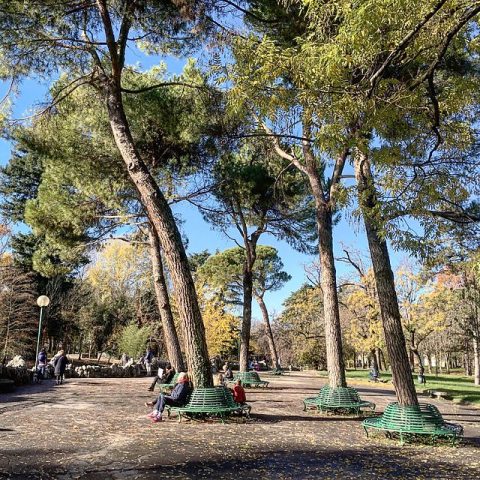
Giardini Margherita, Bologna's largest park (26 hectares, created 1879), provides essential green space southeast of the center. Features include a romantic landscape with artificial lake, winding paths, mature trees, skate park, sports courts, and Chalet dei Giardini café. On weekends, locals picnic, rent pedal boats, and enjoy outdoor activities. Summer hosts concerts and Cinema Sotto le Stelle screenings, making this Bologna's beloved outdoor living room.
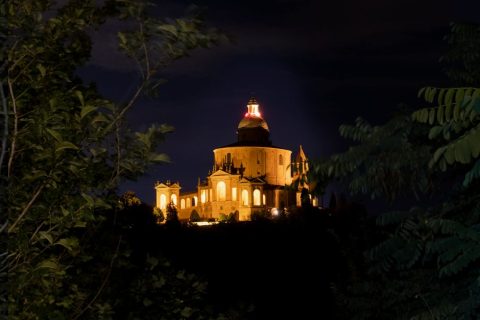
Parco di San Michele in Bosco
Parco di San Michele in Bosco sits atop Colle della Guardia hillside, offering spectacular panoramic views over Bologna's rooftops, towers, and the Po Valley. This elevated park surrounds a former monastery (now Rizzoli Institute) with terraced gardens, centuries-old trees, and stone walls. The observation terrace delivers breathtaking sunset vistas on clear days, views extend to the Adriatic Sea. A favorite local escape providing cool breezes and perspective on Bologna's medieval form.
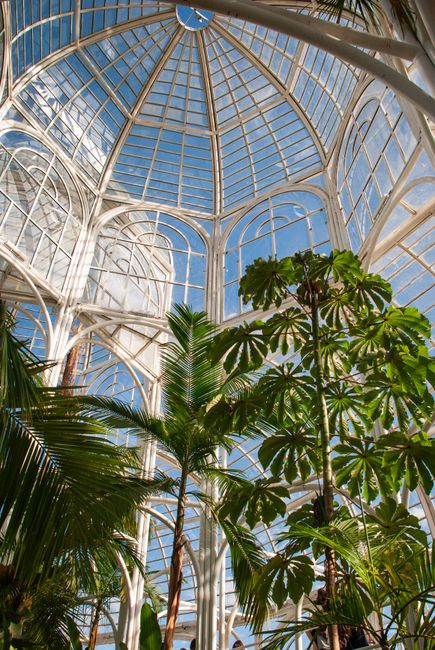
Orto Botanico (Botanical Garden)
The Orto Botanico (1568) is one of Italy's oldest university botanical gardens, established for studying medicinal plants. This 2-hectare garden contains over 5,000 species in thematic sections: medicinal plants, systematic beds, geographical zones, and 19th-century greenhouses. Ancient trees, aquatic plants, and the Ulisse Aldrovandi Library with rare botanical texts showcase four centuries of scientific contribution. A peaceful oasis demonstrating plant biodiversity and conservation.
Tips for Parks & Gardens
- Giardini Margherita is perfect for picnics – grab supplies from the Quadrilatero market
- The Botanical Garden has limited opening hours – check ahead, typically afternoons on weekdays
- Bus #30 reaches San Michele in Bosco from the city center
- Summer evenings in the parks feature free events – check Bologna Welcome for schedules
- Bring mosquito repellent for evening park visits in warmer months
Bologna's public spaces feature magnificent fountains and sculptures that serve as landmarks, meeting points, and symbols of the city's artistic heritage and civic identity.
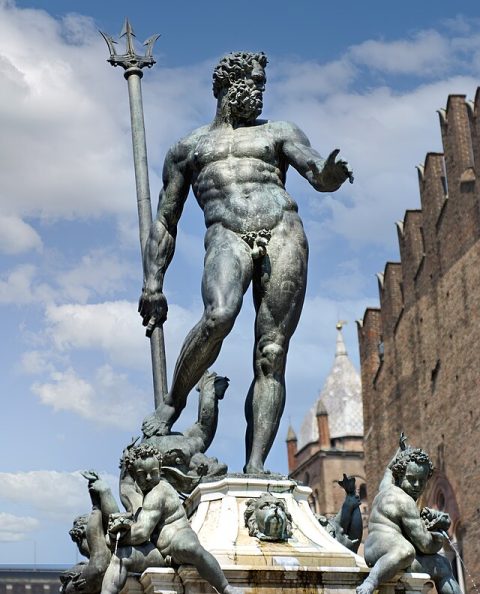
Fountain of Neptune
The Fountain of Neptune by Flemish sculptor Giambologna (1563-1566) is Bologna's iconic baroque monument. The imposing 3-meter bronze Neptune commands attention with his extended arm gesture symbolizing authority. Four cherubs riding water-spouting dolphins and four sirens squeezing their breasts scandalized clergy but delighted the public. This Renaissance masterwork brilliantly combines classical mythology with baroque dynamism, becoming Bologna's signature landmark and gathering point. Recently restored to original luster.
Tips for Fountains & Public Art
- The fountain is beautifully illuminated at night – perfect for evening photography
- Walk around the entire fountain to appreciate Giambologna's 360-degree composition
- Look for the hidden thumb trick – stand at a specific angle where Neptune's thumb appears positioned suggestively
- The fountain area can be very crowded – early morning offers the best photo opportunities
Bologna's compact historic center is highly walkable, but the city offers efficient public transportation and excellent regional rail connections for exploring beyond the medieval core.
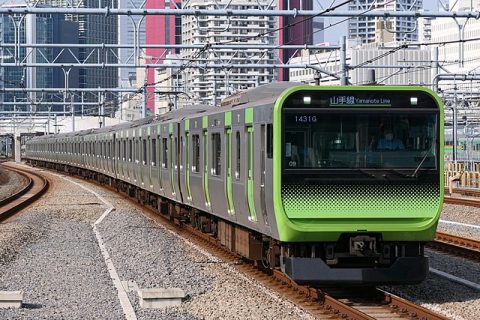
Public Transportation
Bologna's compact historic center (2km radius) is best explored on foot beneath UNESCO porticoes. Public buses (TPER) serve the city key routes include #20 (station-center), #25 (peripheral areas), #30 (San Michele viewpoint). Single tickets €1.50, day pass €6. Purchase at tobacco shops before boarding.
Bologna Centrale offers high-speed connections: Florence (37min), Milan (1hr), Venice (1.5hrs), Rome (2.5hrs). Airport (6km): Marconi Express monorail (€9.50, 7min) to the station.
Tips for Transportation
- Download the TPER app for real-time bus tracking and mobile tickets
- The historic center has Limited Traffic Zones (ZTL) – don't drive there without permission
- Consider renting bicycles – Bologna has good bike lanes and bike-sharing systems
- Book high-speed trains in advance for significant discounts (up to 50% off)
- Most major sites are within 15-20 minutes walking from Piazza Maggiore
Bologna offers unique experiences from hands-on cooking classes to specialized tours that reveal the city's culinary traditions, artisan crafts, and hidden histories.
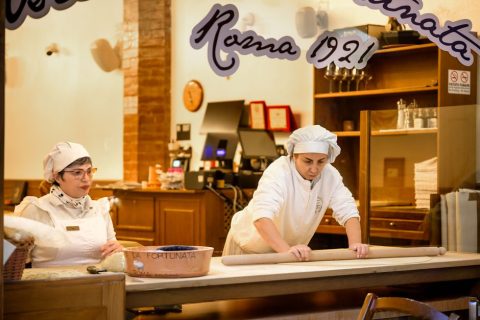
Food Tours & Cooking Classes
Bologna's reputation as 'La Grassa' (The Fat) makes food experiences essential. Food walking tours through Quadrilatero market (3-4hrs) include tastings of mortadella, Parmigiano-Reggiano, balsamic vinegar, pasta, and wines. Cooking classes teach authentic pasta-making (tagliatelle, tortellini) in historic settings, typically including market visits and meal enjoyment. Specialized experiences feature mortadella tastings, balsamic vinegar education, wine tours, and cheese aging cellar visits transforming visitors into temporary Bolognesi understanding food as identity.
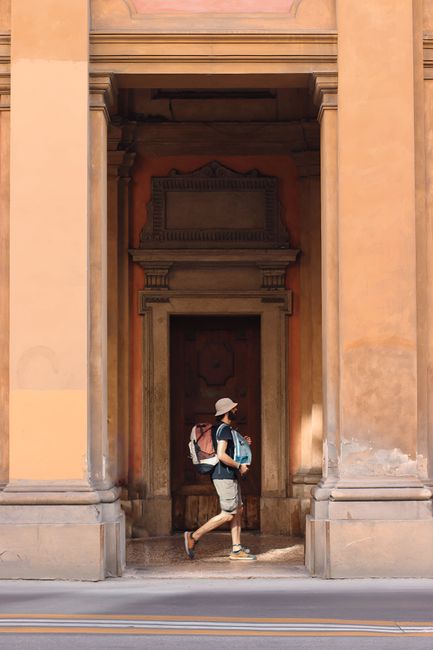
Guided Walking Tours
Bologna Welcome offers guided walking tours by licensed experts including comprehensive historic center tours (2-3hrs) and specialized themes: 'Underground Bologna' (Roman ruins, crypts, canals), 'Jewish Bologna', 'University Quarter', 'Porticoes Tour' (UNESCO heritage), and 'Street Art'. Evening options include 'Bologna by Night' and 'Ghost and Legends' tours. Group tours €15-25; private tours offer customization. Architecture tours access normally closed courtyards and palazzos, providing context that transforms sightseeing into understanding.
Tips for Tours & Activities
- Book cooking classes well in advance – popular classes fill weeks ahead
- Morning food tours work best – markets are most vibrant and shops fully stocked
- Bologna Welcome office in Piazza Maggiore provides tour bookings and information
- Many tours include generous tastings – skip breakfast beforehand
- Private tours offer flexibility for special interests or mobility needs
Bologna's central location and excellent rail connections make it an ideal base for exploring nearby UNESCO sites, medieval towns, culinary destinations, and coastal cities throughout Emilia-Romagna and beyond.
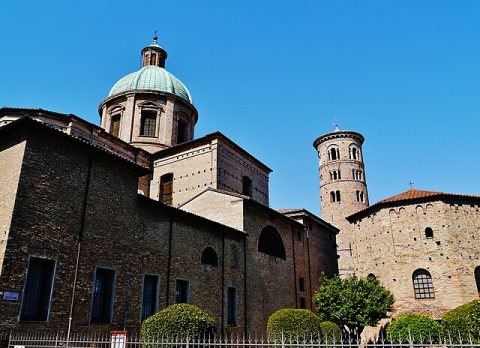
Ravenna
Ravenna (75min east) preserves the world's finest Byzantine mosaics eight UNESCO monuments. The Basilica of San Vitale and Mausoleum of Galla Placidia dazzle with 6th-century mosaics in brilliant golds and blues. Sant'Apollinare Nuovo, Baptistry of Neon, and Sant'Apollinare in Classe showcase different Byzantine artistry aspects. Dante Alighieri spent his final years here; his tomb honors Italy's greatest poet. Ravenna's compact center allows visiting all major sites in one day.
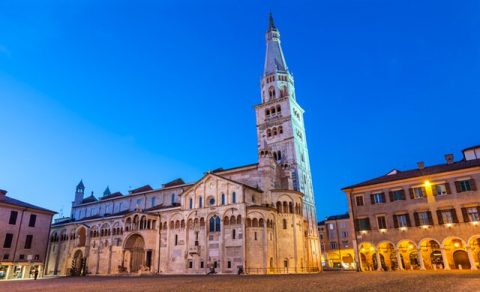
Modena
Modena (30min by train) combines UNESCO Romanesque architecture, automotive legends, and exceptional cuisine. The Cathedral, Torre Ghirlandina, and Piazza Grande earned World Heritage status. Famous for Traditional Balsamic Vinegar DOP visit acetaie for production tours. Home to Ferrari, Maserati, Lamborghini museums. Osteria Francescana (3-Michelin-star) and traditional trattorias serve regional specialties. The refined historic center makes Modena perfect for combining culture, gastronomy, and automotive passion.
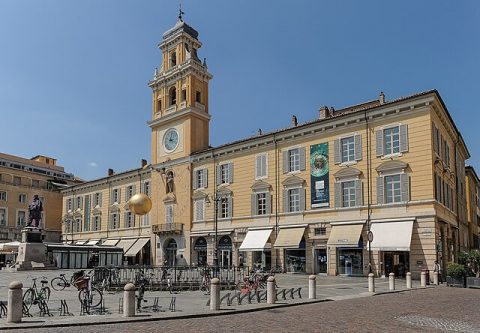
Parma
Parma (50min northwest) is the birthplace of Parmigiano-Reggiano and Prosciutto di Parma. Artistic treasures include the pink marble Baptistery and Cathedral with Correggio's revolutionary 'Assumption' dome fresco. Teatro Regio maintains opera traditions. Visit Parmigiano-Reggiano dairies and prosciutto aging facilities in Langhirano. Food museums document cheese and ham production. Parma combines elegant streets, refined cuisine, and artistic legacy for an essential culinary pilgrimage.
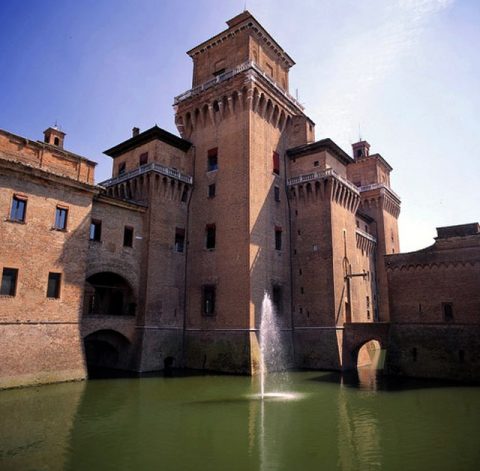
Ferrara
Ferrara (30min northeast) showcases Renaissance urban planning UNESCO World Heritage city. The massive Castello Estense (1385) features moated fortress with frescoed chambers. Cathedral of San Giorgio displays Romanesque-Gothic architecture. The Palazzo dei Diamanti (8,500 diamond-shaped stones) houses art exhibitions. Cycling is preferred rent bikes to explore 9km city walls converted to parkland. Ferrara's well-preserved architecture and bike-friendly streets create distinctive Renaissance atmosphere unmatched in Italy.
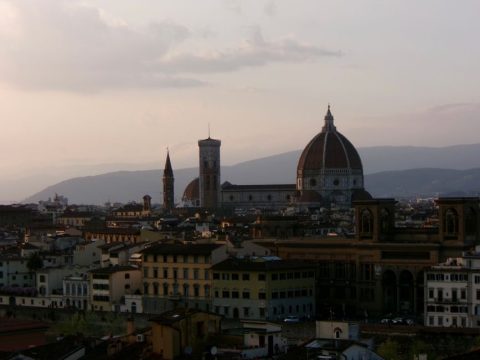
Florence & Venice
Bologna's position on Italy's main north-south high-speed rail corridor makes even Florence and Venice feasible day trips, though both deserve longer visits. Florence lies just 37 minutes south by Frecciarossa train, allowing morning departures to explore Renaissance masterpieces at the Uffizi Gallery, Michelangelo's David at the Accademia, the Duomo complex, and Ponte Vecchio before evening returns to Bologna.
Venice sits 90 minutes northeast, with frequent trains arriving at Santa Lucia station directly on the Grand Canal. A day allows experiencing St. Mark's Basilica, the Doge's Palace, Rialto Bridge, and wandering atmospheric calli (narrow streets) and discovering hidden campi (squares). While rushed, both cities' proximity means spontaneous visits based on weather or interest become possible when staying in Bologna.
These excursions demonstrate Bologna's strategic advantages – lower accommodation costs than Florence or Venice, authentic local atmosphere, excellent cuisine, and central location allowing exploration of Italy's artistic capitals while maintaining a base in a real, working Italian city rather than tourist-dependent destinations. Multi-day rail passes or advance booking secures the best fares for these longer day trips.
Tips for Day Trips & Excursions
- Book train tickets in advance on Trenitalia or Italo for discounts up to 60%
- Regional trains are cheaper than high-speed but take longer – choose based on your schedule
- Many day trip destinations are best explored by bike – rentals available at train stations
- Combine Modena with a balsamic vinegar producer visit for authentic experiences
- Purchase combination tickets for multiple Ravenna mosaic sites to save money
- Consider guided day tours from Bologna including transportation for hassle-free experiences
Practical Information
Essential information for planning your Bologna visit, including optimal timing, local customs, and practical tips for navigating the city like a local.
When to Visit Bologna
Spring (April-June): ideal temperatures 15-25°C, blooming gardens, festivals including Bologna Children's Book Fair. Fall (September-October): pleasant 18-25°C, harvest season, food festivals, university returns. Summer (July-August): hot 28-35°C, porticoes provide shade, outdoor cinema, many close for Ferragosto. Winter (November-March): 0-10°C, fewer crowds, Christmas markets, authentic atmosphere, cozy trattorias. Best times: April-June and September-October for perfect balance.
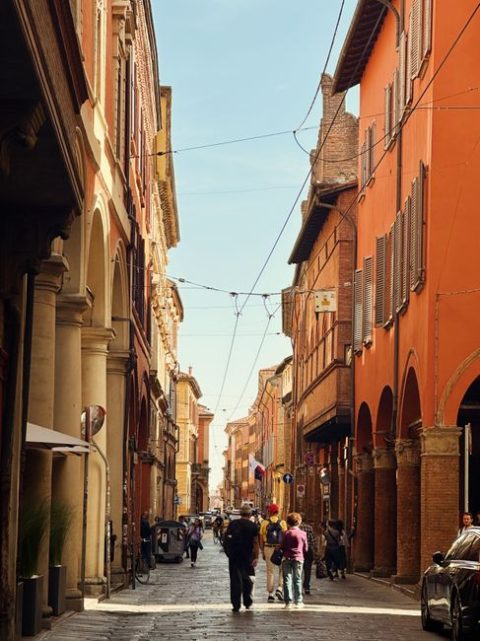
Essential Practical Tips
Money & Costs
Euro (€). Budget €10-15 casual meals, €25-40 trattorias, €3-5 coffee/pastry. ATMs widely available; cards accepted though cash preferred at markets.
Language
Italian official. English spoken at tourist sites. Basic Italian appreciated. Bolognese dialect differs from standard Italian.
Tipping
Coperto (€2-3) usually included. Additional 5-10% for excellent service appreciated but not mandatory.
Safety
Very safe. Watch pickpockets at stations/markets. Emergency: 112.
Hours
Shops: 9:30-13:00, 15:30-19:30 (closed Sunday/Monday morning). Restaurants: lunch 12:30-14:30, dinner 19:30-22:30. Many close 2-3 weeks in August.
Etiquette
Greet with 'Buongiorno'/'Buonasera'. Dress modestly for churches. No cappuccino after 11am. Wait to be seated at restaurants.
Tips for Practical Information
- Download offline maps before arrival – WiFi is available at cafes but data roaming can be expensive
- Purchase a Bologna Welcome Card for museum discounts and public transport (24h/48h/72h options)
- Book accommodation early during trade fair periods (check Bologna Fiere calendar) when prices spike
- Many churches and smaller museums have irregular hours – always verify before making special trips
- The historic center is largely pedestrianized – comfortable walking shoes are essential for cobblestones
- Learn the phrase 'mi scusi' (excuse me) for navigating crowded porticoes
Bologna eases into the holidays with a mix of old and new traditions rather than one single blockbuster market. The medieval Piazza Santo Stefano hosts one of Italy's oldest nativity and craft markets, while the wider historic center glows each December under the F-Light art installations. Expect porticoed streets strung with lights, roasted chestnuts, and a laid-back, local feel rather than the alpine-style wooden chalets found further north.
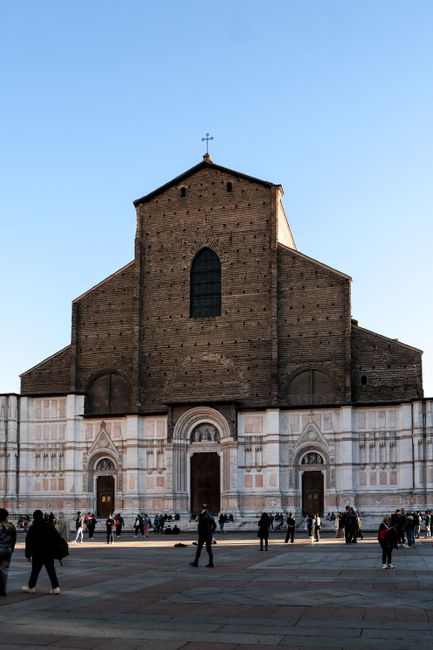
Mercatino di Natale di Piazza Santo Stefano
Tucked among the seven churches of one of Bologna's most atmospheric squares, this nativity and handicraft market is among the oldest Christmas traditions in the city, running roughly from early December through early January 2026. Stalls sell hand-carved presepi (nativity figures), regional ceramics, wooden toys, and holiday sweets like torrone and panettone. Because the square itself is a medieval architectural complex, browsing here doubles as sightseeing, and the market stays low-key and pedestrian-friendly compared to larger European markets. Evenings are especially pleasant, when the porticoes are lit and the crowds thin out. It is a short walk from Piazza Maggiore, making it easy to combine with other holiday sights in one outing. Vendors are mostly local artisans, so it is a good stop for distinctive, non-mass-produced gifts and souvenirs.
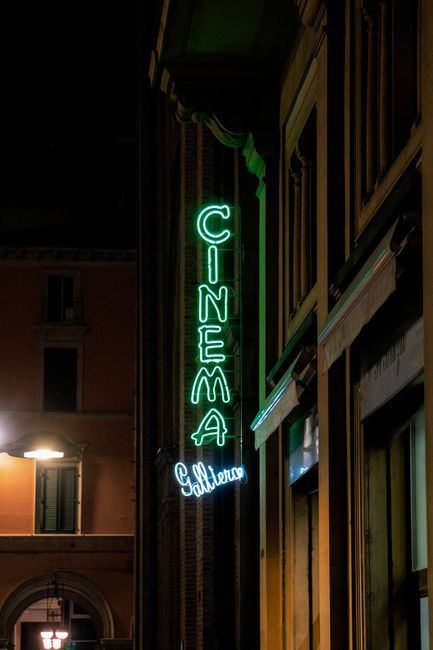
F-Light Bologna Light Art Festival
Each winter, contemporary light-art installations transform the porticoes, towers, and piazzas of central Bologna into an open-air night gallery, typically illuminated from early December 2026 into early January 2027. Works by international artists are projected onto historic facades and hung along arcades, turning an ordinary evening stroll into a self-guided art walk. The route usually links Piazza Maggiore, the Two Towers, and nearby streets, so it can be combined easily with a visit to the Piazza Santo Stefano market. It is free to view, unticketed, and works well after dinner since the installations are designed for after-dark viewing. Photography is a major draw, and the event has become a signature part of Bologna's winter identity since it began in the mid-2010s. Dress warmly, as much of the route is outdoors.
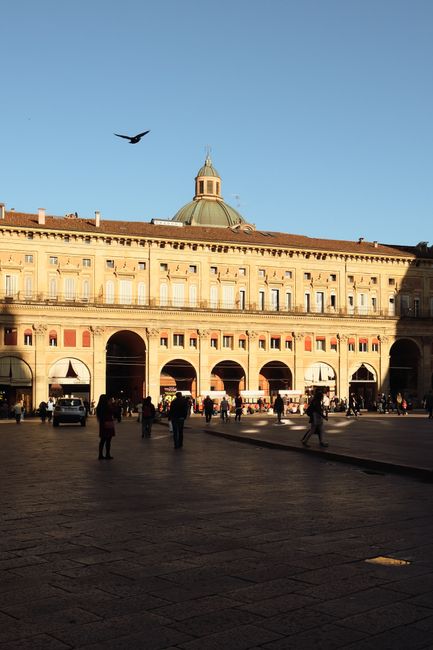
Piazza Maggiore Christmas Tree and Nativity Scene
Bologna's grand main square gets its seasonal centerpiece each year: a large illuminated Christmas tree alongside a life-size nativity scene set against the backdrop of the Basilica di San Petronio. The display generally goes up in late November and stays through early January 2026/2027, anchoring the city's holiday atmosphere. Surrounding streets, especially Via Indipendenza, are strung with festive lighting and lined with shop windows dressed for the season. The square often hosts small holiday events, concerts, or a market village nearby, making it the natural starting point for an evening out. It is completely free to visit and works well as a quick stop rather than a long outing. Combine it with a walk under the porticoes toward the Two Towers to see the wider holiday decorations across the historic center.
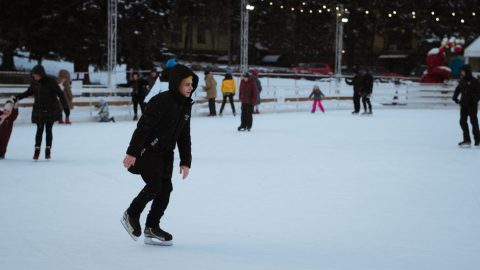
Winter Ice Skating Rink
During the holiday season, Bologna typically sets up a temporary open-air ice rink in one of its central squares or gardens as part of the city's winter events program, generally open from early December through January. It is a popular family activity in the evenings and on weekends, with skate rental available on-site and surrounding food stalls selling mulled wine, hot chocolate, and holiday snacks. Exact placement can shift slightly year to year depending on the season's official program, so it is worth checking local listings closer to your visit. The rink is usually paired with festive lighting and sometimes a small market or food village nearby. It is a good low-cost option for travelers with kids looking for a break from museum-heavy sightseeing. Sessions are typically timed, so arriving a little early is recommended on busy weekend evenings.
Tips for Christmas Market
- Bologna does not have one single famous Christmas market like Vienna or Strasbourg — plan around several smaller events (Piazza Santo Stefano market, F-Light, Piazza Maggiore) instead of one destination.
- Confirm exact 2026 opening dates and rink locations closer to your trip, as city-run holiday programs are announced in autumn each year.
- The historic center is very walkable, so an evening visiting the tree, lights, and market can easily be done on foot in one outing.
- Bring warm layers for outdoor evening events, as December temperatures in Bologna are often near freezing.
- Reserve restaurant tables in advance around Piazza Maggiore during December weekends, as the area gets busy with holiday visitors.
When the museums close, Bologna does not go quiet. The university population keeps a dense cluster of bars, wine cellars, and clubs buzzing well past midnight, especially around Via del Pratello and Via Zamboni. Expect cheap spritz, live jazz, and a student-driven energy that runs later than in most Italian cities.
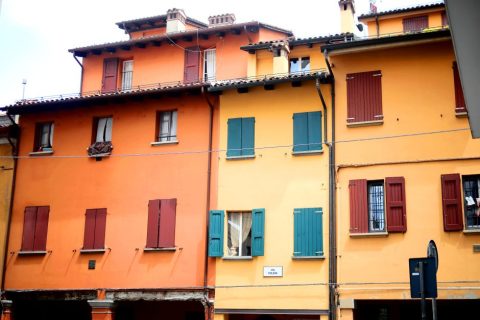
Via del Pratello Bar Crawl
Via del Pratello is Bologna's unofficial nightlife spine, a narrow cobbled street lined with small bars, wine shops, and craft beer spots that spill drinkers onto the pavement every night of the week. It has a scruffy, unpolished feel compared to the postcard center, which is exactly its appeal. Locals gather here from early evening for an aperitivo and often stay well past 2am, moving between venues with a glass in hand. Expect natural wine bars, tiny cocktail counters, and the occasional impromptu street performer. Weekends get loud and crowded, so arrive early if you want a seat rather than standing room. It is a good street to just wander rather than plan, since the best spot is often whichever one has the liveliest crowd outside it that particular night.
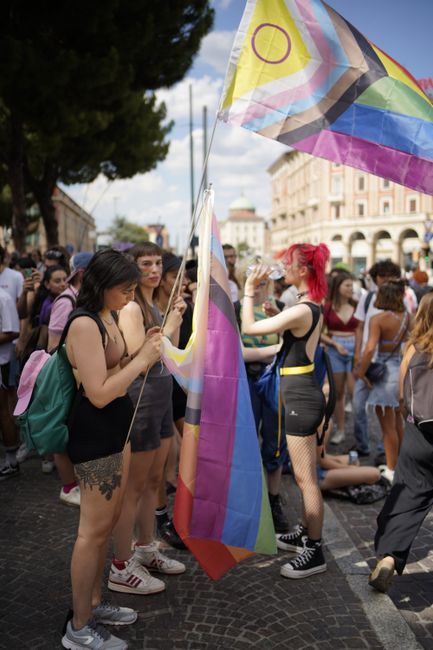
Cassero LGBTQ+ Club
One of Italy's oldest and most established LGBTQ+ cultural centers and clubs, Cassero has been a fixture of Bologna's alternative nightlife scene for decades. Housed in a repurposed venue with a large dance floor, it hosts themed club nights, drag performances, and touring DJs across electronic and pop genres. The crowd is famously mixed and welcoming regardless of orientation, and the atmosphere leans more toward genuine dance-floor abandon than see-and-be-seen posturing. Doors typically open late, with the energy building well after midnight. It occasionally hosts daytime cultural events and exhibitions too, tying into Bologna's long history as a progressive, left-leaning city. Check the current program before going, since nights vary between club sets, live acts, and community events.
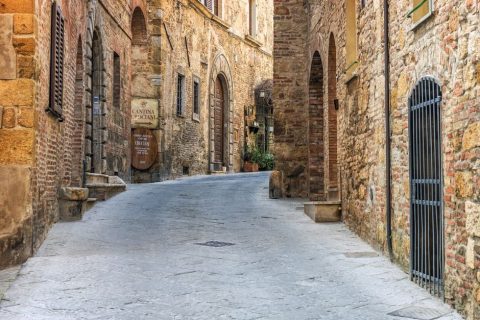
Cantina Bentivoglio
Bologna's most storied live jazz club, set in a vaulted cellar space that once served as storage for a noble family's wine. Nightly sets feature Italian and touring jazz musicians in an intimate room where the audience sits close enough to see fingers move on the keys. The venue doubles as a restaurant, so many visitors settle in for a full dinner of tortellini and regional wine before the music starts. It draws a mix of tourists and serious local jazz devotees, giving it a warmer, less exclusive feel than the name might suggest. Reservations are strongly recommended on weekends, since tables near the stage fill quickly. It is a good option for a calmer, seated alternative to the standing-room bars nearby.
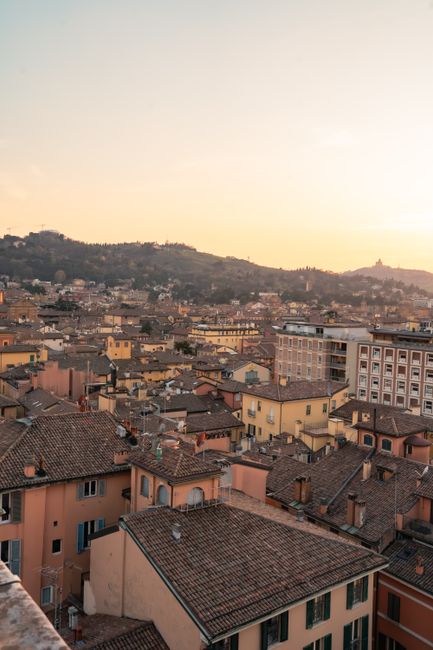
Rooftop Aperitivo at Hotel Corona d'Oro Terrace
Bologna has fewer sweeping rooftop bars than Rome or Milan, but a handful of hotel terraces near the center offer evening aperitivo with views over the terracotta rooftops and, on clear evenings, the hills beyond. These spots favor a quieter, more grown-up crowd than the student bars of Pratello, with proper cocktail menus and small plates of local cured meats and cheese. Sunset is the prime window, when the light turns the brick towers a deep orange. Many terraces require nothing more than showing up and finding a table, though the more popular ones fill fast in summer. It is a relaxed way to bookend a day of sightseeing before heading out for a livelier night elsewhere in the city.
Tips for Nightlife & Entertainment
- Via del Pratello gets loud on weekend nights; weeknights are calmer if you prefer conversation over crowds
- Book a table at Cantina Bentivoglio in advance for weekend jazz sets
- Many bars offer an aperitivo buffet with the price of a drink, a cheap way to cover dinner before a night out
- Public transport winds down after midnight, so plan a taxi or short walk back to your accommodation
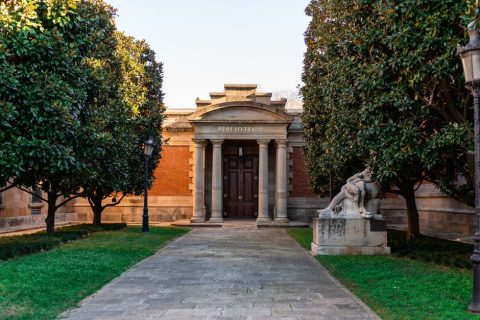
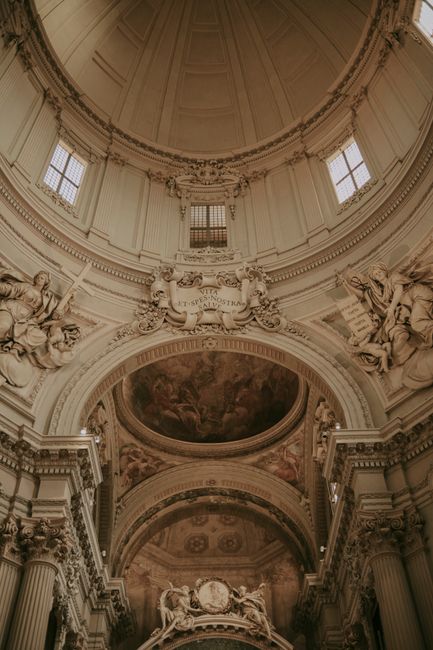
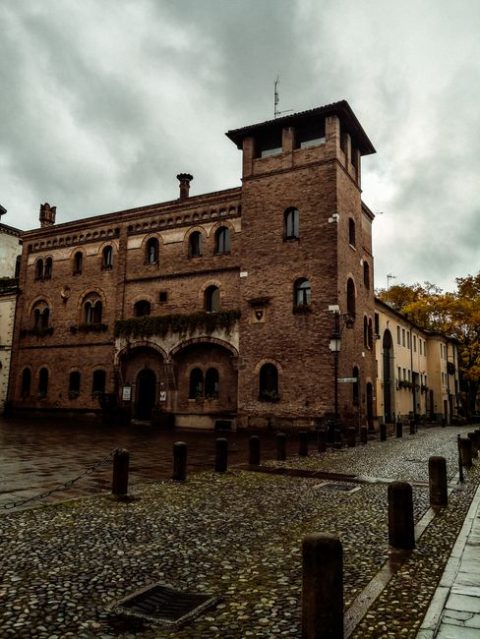
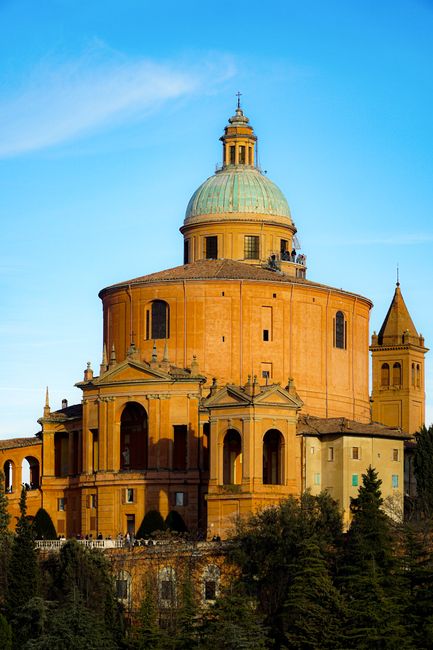
Bologna rewards young explorers with hands-on museums, leafy parks, and a food-themed adventure park just outside town. Between piazza strolls, these stops give children room to run, touch, and play while parents get a breather.
Explora - Il Museo dei Bambini di Bologna
This is Bologna's dedicated childrens science museum, built entirely around hands-on play for ages 0 to 12. Rooms are split by age group, letting toddlers splash in water tables while older kids experiment with pulleys, light, and simple machines. Everything is designed to be touched, climbed on, or taken apart, with staff on hand to turn each station into a mini lesson without it ever feeling like school. There is a soft-play area for the youngest visitors and rotating themed exhibits that keep repeat visits fresh. It sits just outside the historic center, making it an easy add-on to a day of sightseeing when little legs need a change of pace. Weekday mornings are noticeably quieter than weekends, when local families crowd in for birthday parties and workshops. Strollers fit throughout, and there is a small cafe area for snack breaks.
FICO Eataly World
A short drive from central Bologna, this sprawling food-themed park turns Italian agriculture into an interactive playground. Kids can watch cheese being made, meet farm animals grazing in outdoor paddocks, ride bikes through orchard displays, and join short cooking workshops sized for small hands. The scale is huge, so it works best as a half-day or full-day outing rather than a quick stop, and a paid entry ticket covers rides like the vineyard train and go-karts modeled on tractors. Dozens of food stalls mean picky eaters and adventurous ones alike find something to try, from fresh pasta to gelato made on site. Strollers and wheelchairs move easily across the flat, covered walkways, and there are indoor sections for rainy days. It suits families who want a break from museums and churches in favor of open space and edible entertainment.
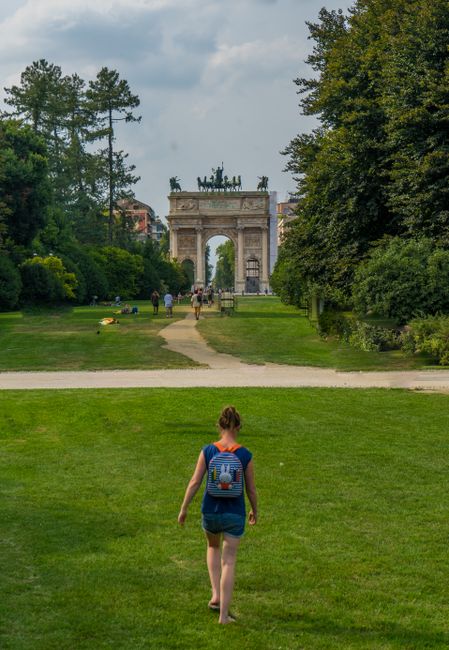
Parco della Montagnola
Perched on a hill right beside the train station, this historic park is the most central green space for a quick play break in Bologna. A grand double staircase leads up to shaded gravel paths, a fenced playground with slides and climbing structures, and open lawns where kids can simply run around. Weekends often bring a small funfair with a carousel and bumper cars set up near the entrance, and the terraces offer good people-watching along with distant rooftop views. Benches and a cafe kiosk make it easy for parents to linger while children burn off energy between sightseeing stops. Because it sits directly above the station, it is a natural stop when arriving or leaving by train, or when killing time before a connection. Evenings can attract a different crowd, so daytime visits are best for families.
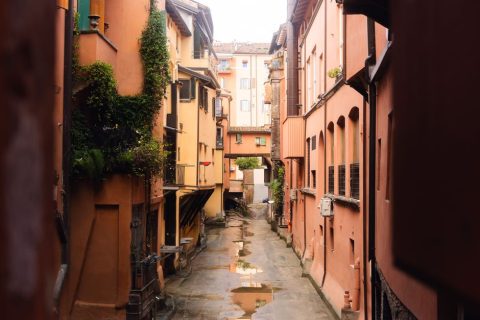
Giardino del Guasto
Tucked into the university quarter, this small terraced garden is a favorite neighborhood playground among Bologna families and students alike. Built over what was once a quarry, its sunken, tiered lawns create natural amphitheater-style seating around a central play area with swings and slides. It has a relaxed, local feel rather than a touristy one, and its compact size makes it easy to supervise younger children while older siblings explore the stepped levels. The surrounding streets are lined with casual cafes and pizza-by-the-slice spots, useful for a quick lunch before or after playtime. Because it sits close to Via Zamboni, it pairs naturally with a break from the university area rather than requiring a special trip. Late afternoons are lively with local kids fresh out of school, giving visiting children an easy way to mix with residents.
Tips for With Kids
- Pack a light change of clothes for splash areas at Explora and the Montagnola playground.
- Book FICO Eataly World workshops a day ahead, as the popular sessions for kids fill up fast.
- Combine Montagnola park with a train station arrival or departure to save extra travel time.
- Midweek mornings are quieter at every stop, especially Explora, which fills with birthday groups on weekends.
Bologna keeps a lively calendar year round, from its landmark contemporary art fair in winter to open-air concerts, jazz nights, and a Christmas market that fills the porticoed streets. Below is a month-by-month look at the recurring events shaping a 2026 visit to the city.
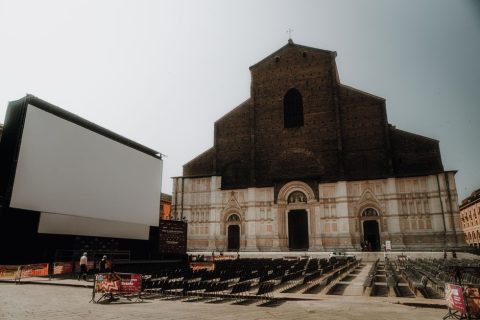
Bologna Estate Summer Festival Series
From early summer through the first cool evenings of autumn, Bologna Estate transforms parks, cloisters, and hilltop villas into an open-air stage. Running roughly from June 5 to September 20, 2026, the program mixes free concerts, outdoor cinema screenings, dance nights, and DJ sets at venues such as Giardini Margherita, Villa Ghigi, and the courtyard of Certosa. Highlights typically include a jazz-under-the-stars series in July and a world-music weekend in August, both drawing a relaxed mix of students, families, and visitors escaping the daytime heat. Most events are free or low-cost, and food trucks and pop-up bars usually set up nearby. Because the schedule spans many small venues rather than one central site, checking the weekly program board or the city's cultural office listings before heading out is the best way to catch a specific act.
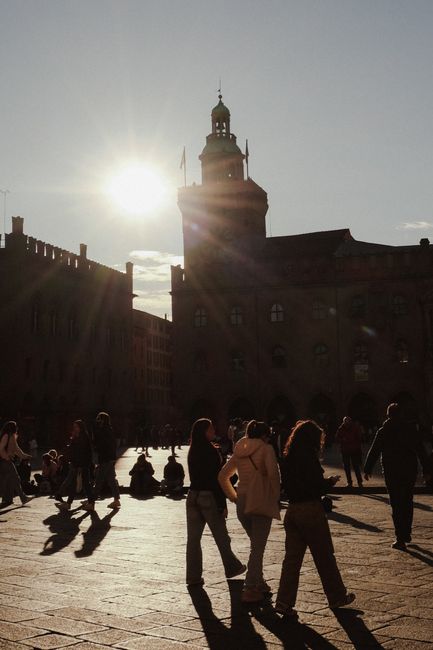
Bologna Christmas Market and New Year in Piazza Maggiore
Bologna's central square becomes a glowing hub of holiday activity as wooden chalets selling mulled wine, roasted chestnuts, and handmade gifts fill Piazza Maggiore from late November through Epiphany. In 2026, expect the market to open around November 28 and run through January 6, 2027, with a towering illuminated tree and a life-size nativity scene as the square's centerpiece. The season peaks on December 31, when a free open-air concert and countdown draw thousands under the Two Towers before a midnight fireworks display over the historic center. Surrounding streets stay lively with festive lights strung along the porticoes well into January. Arriving by early evening secures a good spot near the stage on New Year's Eve, and warm layers are essential for the outdoor crowds.
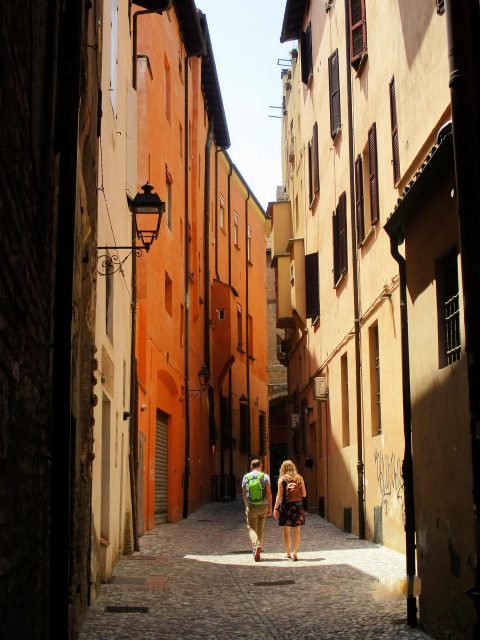
Arte Fiera Bologna
Italy's oldest and most prestigious contemporary and modern art fair takes over the pavilions of BolognaFiere every winter, drawing galleries and collectors from across Europe. In 2026 the fair is expected to run from January 30 to February 1, with a preview day for accredited visitors on January 29. Halls are organized into thematic sections spanning post-war masters, emerging artists, and photography, while satellite exhibitions pop up in palazzos across the historic center under the citywide ArteFiera Off program. Even non-collectors enjoy wandering the aisles, and ticket holders often combine a fair visit with Bologna's excellent contemporary art museum, MAMbo. Expect crowds on the opening weekend, so early tickets and a mid-week visit are recommended for a calmer pace among the installations.
Cortili Aperti - Open Courtyards Weekend
Once a year the hidden inner courtyards of Bologna's noble palazzos, normally locked behind heavy doors, are thrown open to the public for a single spring weekend. For 2026 the event is scheduled for May 16-17, with volunteer guides stationed at dozens of participating buildings along Via Zamboni, Via Santo Stefano, and the university quarter. Visitors can wander through frescoed loggias, secret gardens, and Renaissance staircases that are otherwise invisible from the street, offering a rare glimpse into the private layer of a city famous for its porticoes. Many courtyards host small concerts, craft demonstrations, or student-led architecture talks over the two days. It is a favorite outing for locals as much as tourists, so plan to start early and pick up a printed itinerary map from the tourist office.
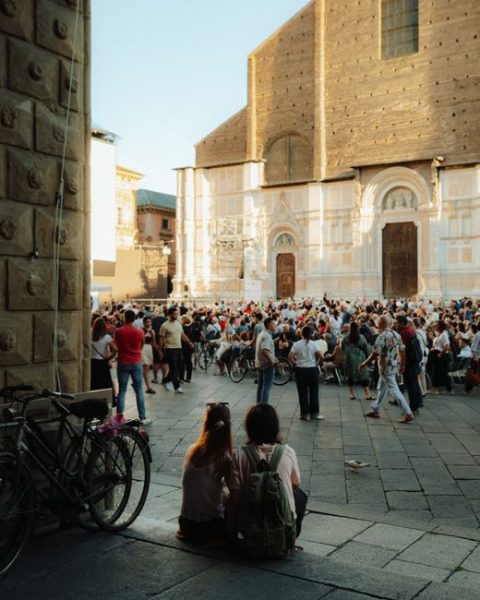
Bologna Jazz Festival
One of Italy's longest-running jazz events, the Bologna Jazz Festival fills theaters, clubs, and churches with international and Italian performers each autumn. The 2026 edition is expected to run from October 30 to November 15, with headline concerts at Teatro Duse and Auditorium Manzoni alongside smaller, more intimate sets in the jazz clubs of the university district. The program typically balances big-name touring acts with young Italian ensembles and late-night improvisation sessions that spill into nearby bars once the main shows end. Cooling autumn evenings and the city's warm porticoes make it an atmospheric time to explore Bologna between concerts. Tickets for headline nights sell out quickly, while many of the smaller club sets are pay-what-you-can or free, rewarding spontaneous festival-goers who wander from venue to venue.
Tips for Events Calendar
- Dates for most Bologna events are confirmed only a few months ahead, so check the city's official cultural calendar shortly before your trip.
- Book accommodation early if visiting during Arte Fiera or New Year's Eve, when hotel prices in the center rise sharply.
- Many summer and open-courtyard events are free, but headline jazz festival concerts and fair tickets should be purchased in advance.
- Pack for both extremes: outdoor summer events run late into humid evenings, while the December market can be damp and cold under the porticoes.
Real, highly-rated Restaurants in Bologna, sourced from Google Places (rating above 4★).
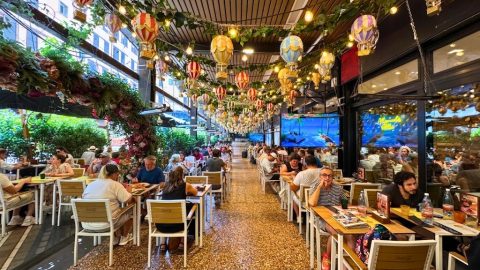
Bologna Food Gallery
Bologna Food Gallery is a highly-rated restaurant in Bologna, rated 4.8★ from 4890 reviews. Located at Galleria II Agosto 1980, 8, 40121 Bologna BO, Italy.
Opening Hours
- Monday: 7:00 AM – 11:00 PM
- Tuesday: 7:00 AM – 11:00 PM
- Wednesday: 7:00 AM – 11:00 PM
- Thursday: 7:00 AM – 11:00 PM
- Friday: 7:00 AM – 11:00 PM
- Saturday: 7:00 AM – 11:00 PM
- Sunday: 7:00 AM – 11:00 PM
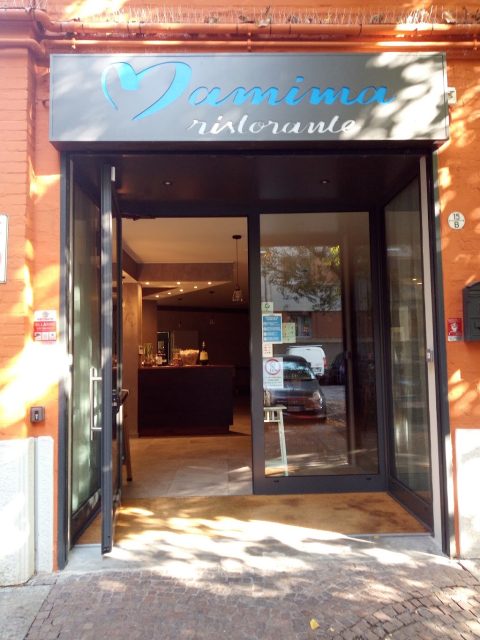
Ristorante Mamima
Ristorante Mamima is a highly-rated restaurant in Bologna, rated 4.8★ from 884 reviews. Located at Via Lodovico Berti, 15b, 40131 Bologna BO, Italy.
Opening Hours
- Monday: Closed
- Tuesday: 12:00 – 2:30 PM, 7:30 – 11:00 PM
- Wednesday: 12:00 – 2:30 PM, 7:30 – 11:00 PM
- Thursday: 12:00 – 2:30 PM, 7:30 – 11:00 PM
- Friday: 12:00 – 2:30 PM, 7:30 – 11:00 PM
- Saturday: 12:00 – 2:30 PM, 7:30 PM – 12:00 AM
- Sunday: 12:00 – 3:00 PM
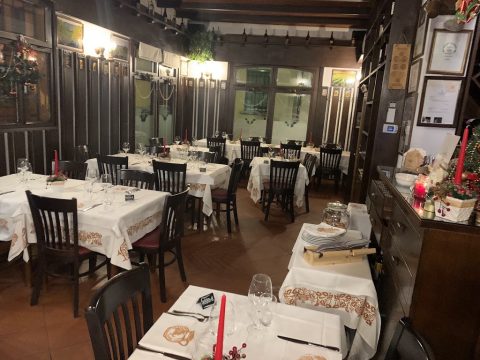
Al Sangiovese Restaurant
Al Sangiovese Restaurant is a highly-rated restaurant in Bologna, rated 4.7★ from 1442 reviews. Located at Vicolo del Falcone, 2b, 40124 Bologna BO, Italy.
Opening Hours
- Monday: 12:15 – 2:30 PM, 7:15 – 10:30 PM
- Tuesday: 12:15 – 2:30 PM, 7:15 – 10:30 PM
- Wednesday: 12:15 – 2:30 PM, 7:15 – 10:30 PM
- Thursday: 12:15 – 2:30 PM, 7:15 – 10:30 PM
- Friday: 12:15 – 2:30 PM, 7:15 – 10:30 PM
- Saturday: 12:15 – 2:15 PM, 7:15 – 10:15 PM
- Sunday: Closed
Explore Bologna on the Map
Bologna shines in spring (April-June) and fall (September-October) when temperatures are comfortable, festivals abound, and the city pulses with student energy. These shoulder seasons offer the perfect balance of pleasant weather, manageable crowds, and authentic local atmosphere.
Spring brings blooming parks, outdoor markets at full vitality, and increasing daylight for evening strolls. Fall delivers harvest celebrations, truffle festivals, and the excitement of the new academic year. Both seasons showcase Bologna's gastronomic culture at its peak with seasonal ingredients and food events.
Summer visitors should embrace the heat with afternoon siestas and evening activities, while winter travelers enjoy authentic experiences, Christmas traditions, and hearty cuisine in cozy trattorias without tourist crowds.
Important Contacts
- Emergency Services: 112 (unified emergency number for police, fire, ambulance)
- Police: 113
- Medical Emergency: 118
- Hospital: Policlinico Sant'Orsola-Malpighi, Via Giuseppe Massarenti, 9 - Tel: +39 051 214 9111
- Pharmacy: Look for green cross signs. 24-hour pharmacy at Bologna Centrale station
- Tourist Police: Piazza Galileo, 7 - Tel: +39 051 640 3333
- US Consulate: Florence (nearest) - Tel: +39 055 266951
- Tourist Information: Bologna Welcome, Piazza Maggiore 1/e - Tel: +39 051 658 3190
Health & Safety
EU citizens should carry European Health Insurance Card (EHIC). Non-EU visitors should have travel insurance covering medical care. Tap water is safe to drink. Pharmacies (farmacie) can provide over-the-counter medications and advice for minor ailments.
| Season | Temperature | Conditions | What to Pack |
|---|---|---|---|
| Spring (Mar-May) | 10-22°C 50-72°F | Mild, occasional rain showers, blooming gardens | Light layers, rain jacket, comfortable walking shoes |
| Summer (Jun-Aug) | 22-35°C 72-95°F | Hot and humid, occasional thunderstorms, porticoes provide shade | Light clothing, sun protection, water bottle, comfortable sandals |
| Fall (Sep-Nov) | 12-24°C 54-75°F | Pleasant, crisp mornings, harvest season, occasional fog | Medium layers, light jacket, closed shoes for rain |
| Winter (Dec-Feb) | 0-10°C 32-50°F | Cold, damp, occasional fog and rain, rare snow | Warm coat, scarf, umbrella, waterproof boots |
Tourist Passes
Bologna Welcome Card
The Bologna Welcome Card offers excellent value for tourists planning to visit multiple attractions. Available in three durations: 24 hours (€25), 48 hours (€35), or 72 hours (€45).
Benefits include:
- Free entry to 10+ museums including Pinacoteca Nazionale, MAMbo, Archaeological Museum, and Museum of Medieval History
- Discounts at 20+ additional museums and attractions
- The current card benefits list museums, a guided walking tour, the Clock Tower and bike rental; PLUS also includes the San Luca Express and City Red Bus. TPER bus travel is not listed.
- WiFi access at select locations
- Discounts at participating restaurants, shops, and tours
- Guidebook with maps and suggested itineraries
Purchase online at bolognawelcome.com or at tourist information points in Piazza Maggiore and the airport. The card pays for itself if visiting 3+ museums plus using public transport. Digital version available on smartphone for convenience.
www.bolognawelcome.comBologna Museum Pass
For museum enthusiasts spending several days, the Bologna Museum Pass provides entry to 8 civic museums for one year at €25, offering unlimited visits to: Archaeological Museum, Medieval Museum, Museum of Palazzo Poggi, Industrial Heritage Museum, Davia Bargellini Museum, European Art Museum, Morandi Museum, and Music Museum.
This pass is ideal for returning visitors or those staying longer who want to explore collections in depth without rushing. It also demonstrates that Bologna rewards slower, more contemplative tourism rather than frantic attraction-hopping.
www.museibologna.itMore about Bologna
Photo credits (29)
- Le Due Torri (Two Towers): photo by Sergio Spolti, CC BY-SA 4.0, via Wikimedia Commons
- Palazzo Comunale (City Hall): photo by Suicasmo, CC BY-SA 4.0, via Wikimedia Commons
- Archiginnasio of Bologna: photo by sailko, CC BY 2.5, via Wikimedia Commons
- Pinacoteca Nazionale di Bologna: photo by sailko, CC BY-SA 3.0, via Wikimedia Commons
- MAMbo - Museum of Modern Art: photo by Palickap, CC BY-SA 4.0, via Wikimedia Commons
- Museo Civico Medievale: photo by GFreihalter, edited by MenkinAlRire, CC BY-SA 3.0, via Wikimedia Commons
- Basilica of San Petronio: photo by No machine-readable author provided. ZeWrestler assumed (based on copyright claims)., Public domain, via Wikimedia Commons
- Basilica of Santo Stefano (Seven Churches): photo by Didier Descouens, CC BY-SA 4.0, via Wikimedia Commons
- Basilica of San Domenico: photo by Georges Jansoone, CC BY 2.5, via Wikimedia Commons
- Piazza Maggiore: photo by Nick.mon, CC0, via Wikimedia Commons
- The Porticoes of Bologna (UNESCO): photo by Ввласенко, CC BY-SA 3.0, via Wikimedia Commons
- University Quarter (Via Zamboni): photo by After Anthony van Dyck, Public domain, via Wikimedia Commons
- Manifattura delle Arti: photo by Velthur, CC BY-SA 4.0, via Wikimedia Commons
- Giardini Margherita: photo by Lorenzov79, CC BY-SA 3.0, via Wikimedia Commons
- Orto Botanico (Botanical Garden): photo by Daderot., CC BY-SA 3.0, via Wikimedia Commons
- Fountain of Neptune: photo by Didier Descouens, CC BY-SA 4.0, via Wikimedia Commons
- Public Transportation: photo by MaedaAkihiko, CC BY-SA 4.0, via Wikimedia Commons
- Modena: photo by Interncraq, CC BY-SA 4.0, via Wikimedia Commons
- Ravenna: photo by Zairon, CC BY 4.0, via Wikimedia Commons
- Parma: photo by Città di Parma, CC BY-SA 2.0, via Wikimedia Commons
- Ferrara: photo by Nbisi, CC BY-SA 4.0, via Wikimedia Commons
- Florence & Venice: photo by Gaspar van Wittel, Public domain, via Wikimedia Commons
- Biblioteca Salaborsa: photo by Palickap, CC BY-SA 4.0, via Wikimedia Commons
- Chiesa di Santa Maria della Vita: photo by Zairon, CC BY-SA 4.0, via Wikimedia Commons
- Certosa di Bologna Monumental Cemetery: photo by Patafisik, CC BY-SA 4.0, via Wikimedia Commons
- Palazzo Poggi Museum: photo by Benoit Soubeyran, CC BY-SA 4.0, via Wikimedia Commons
- FICO Eataly World: photo by Gianni Careddu, CC BY-SA 4.0, via Wikimedia Commons
- Parco della Montagnola: photo by sailko, CC BY-SA 3.0, via Wikimedia Commons
- Giardino del Guasto: photo by Ugeorge, CC BY-SA 3.0, via Wikimedia Commons


.jpg)


.jpg)


_-_Fontana_del_Nettuno.jpg)


.jpg)

.jpg)


_abc2.jpg)

.jpg)

