Beyond the postcard sights, Naples hides a stranger, quieter city of ossuaries, forgotten tunnels, and workshops frozen in time. These spots reward curiosity over checklists and are usually shared among locals rather than tour groups.

Pio Monte della Misericordia
A working charitable institution since 1602, this small octagonal church still funds hospitals and aid programs, and above its altar hangs Caravaggios Seven Works of Mercy, painted in 1607 and never moved from its original setting. Unlike works relocated to major museums, this canvas remains exactly where the artist intended it, illuminated by natural light from the church's oculus. Upstairs, a modest picture gallery displays portraits of the noble founders and rotating loans, making the whole visit feel intimate rather than institutional. Entry is inexpensive and lines are essentially nonexistent compared to the citys headline museums. Art historians consider this one of Caravaggios most important surviving works, and seeing it in situ, in the hushed, incense-scented church he painted it for, is a very different experience from a gallery wall.
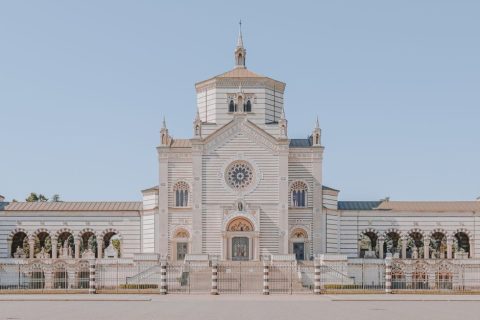
Cimitero delle Fontanelle
A vast cave ossuary in the Sanità district holding an estimated 40,000 skulls and bones, stacked in eerie rows after plague and cholera epidemics overwhelmed the citys cemeteries. From the 1800s onward, Neapolitans practiced an unofficial cult here called anime pezzentelle, adopting anonymous skulls, cleaning them, and praying for the souls in exchange for favors or lottery numbers. The Church suppressed the ritual in the 1960s, but The cemetery reopened to the public on April 18, 2026, after restoration work; check its official booking information before visiting. Its cavernous tuff-stone halls stay cool year-round and feel utterly removed from the sunny streets outside. Photography is allowed, and the mood is contemplative rather than macabre once you understand the devotional history behind the bones.
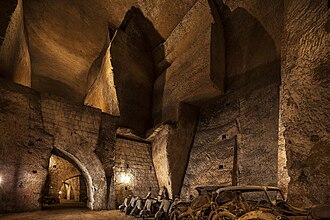
Galleria Borbonica
Carved in 1853 as an escape route for the Bourbon king from the Royal Palace to the barracks, this tunnel network was later used as a WWII air-raid shelter and, for decades after, as a dumping ground for impounded vintage cars and motorbikes. Guided tours now lead visitors through cisterns, narrow passageways, and chambers still littered with rusted Fiats and statues abandoned mid-restoration. It is deeper and less crowded than the citys more famous underground circuit, with sections reachable only by boat through flooded cisterns on adventure-style tours. The temperature drops noticeably below ground, so a light jacket helps even in summer. It is a favorite with visitors who enjoy urban exploration and layered history over polished museum displays, and standard tickets require advance online booking due to limited group sizes.
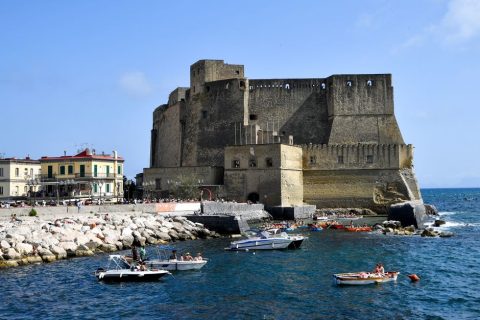
Ospedale delle Bambole
Tucked into a courtyard near Via San Biagio dei Librai, the Hospital of the Dolls has been repairing broken toys and antique dolls since the late 1800s, now run by the fourth generation of the same family. Shelves and glass cases overflow with disembodied porcelain heads, glass eyes, marionettes, and puppets awaiting or recovering from surgery, giving the tiny shop a charmingly eccentric, almost theatrical atmosphere. It functions as both a working repair workshop and an informal museum, and the current owners are happy to chat about the trade's history if things are quiet. It is an easy stop while wandering the historic center's side streets and offers a completely different texture from the grand churches and palaces nearby. Children and adults alike tend to find it equally fascinating, if a little uncanny, and entry to browse is free.
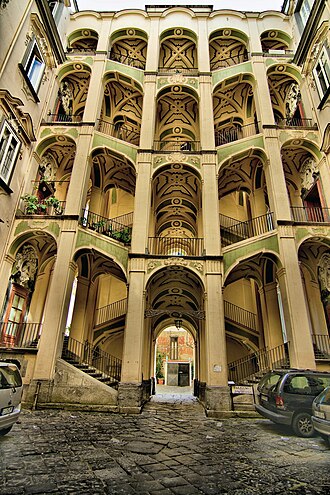
Palazzo dello Spagnolo
Built in 1738 in the Sanità district, this palace is famous for its dramatic double-flight staircase, a theatrical piece of Neapolitan Baroque engineering designed to be seen as much as climbed. The so-called ala a doppia rampa opens into the courtyard like a stage set, and its crossing arches have made it a favorite backdrop for photographers and film crews, including several Italian productions, yet it remains largely overlooked by first-time visitors. The building is still partly residential, so visits are generally limited to the courtyard and staircase rather than the private apartments above. It sits an easy walk from the Fontanelle Cemetery, making the two easy to pair into one Sanità-focused outing. Morning light through the stairwell's arches offers the best conditions for photos, and admission to view the staircase is free.
Tips for Hidden Gems
- Combine Palazzo dello Spagnolo, the Fontanelle Cemetery, and the street art in nearby Sanità into one half-day loop, as they sit within walking distance of each other.
- Galleria Borbonica tours often sell out on weekends, so reserve online a few days ahead, especially for the boat-access route.
- Pio Monte della Misericordia is easiest to appreciate in the late morning when natural light best hits the Caravaggio canvas.
- The Ospedale delle Bambole keeps modest, irregular hours, so check locally or call ahead before making a special trip.