Malé's spiritual landmarks trace the Maldives' journey from Buddhist kingdom to Islamic sultanate. From centuries-old coral-stone mosques carved with intricate lacquer work to the golden dome that dominates the skyline, these sites anchor the nation's identity as 100% Sunni Muslim since the 12th century.
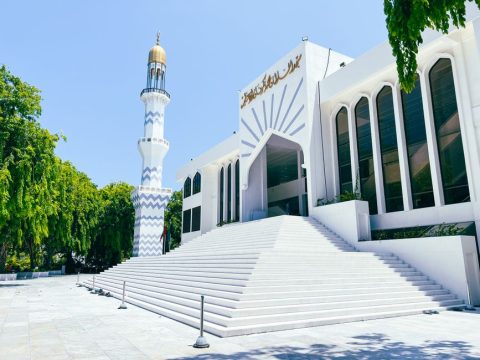
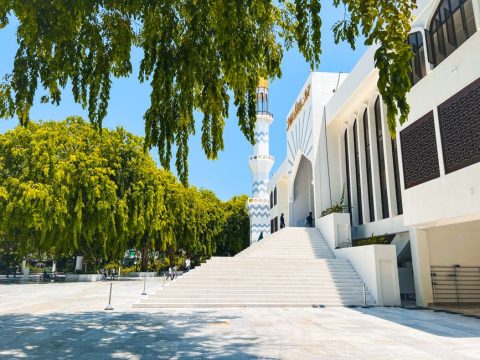
Grand Friday Mosque (Islamic Centre)
Malé's most photographed landmark, this golden-domed mosque was completed in 1984 as a gift funded largely by international Islamic donors, and it remains the largest mosque in the Maldives, holding up to 5,000 worshippers. The gleaming dome dominates the city's low-rise skyline and is visible from the sea long before the island itself comes into view. Marble floors, calligraphy panels, and a soaring minaret give the interior a cool, hushed grandeur that contrasts with Malé's crowded streets outside. Non-Muslim visitors can usually admire the exterior and courtyard, though interior access is limited to prayer times and modest dress is required.
Old Friday Mosque (Hukuru Miskiy)
Built in 1656 from intricately carved coral stone, this is the oldest surviving mosque in the Maldives and one of the finest examples of Islamic coral craftsmanship anywhere, currently on UNESCO's tentative World Heritage list. Panels of Arabic calligraphy and floral lacquer-work cover the interior walls, while the surrounding cemetery holds elaborately carved coral tombstones marking sultans and nobles. The adjoining minaret, added later, is built from coral blocks bound with lime. Restoration work has stabilized the fragile coral structure, but conservation is ongoing given the material's vulnerability to humidity and salt air.

Medhu Ziyaarath
Standing beside the Old Friday Mosque, this small domed shrine marks the tomb of Abu al-Barakat Yusuf al-Barbari, the North African scholar credited with converting the Maldivian king to Islam in 1153, ending the islands' Buddhist era. The modest coral-and-timber structure is one of the few remaining pieces of the original 12th-century religious complex. It is not open for entry, but visitors can view the exterior and appreciate its role as the symbolic starting point of Maldivian Islamic history, tucked into the same historic compound as the older mosque.
Tips for Religious Sites
- Dress modestly — shoulders and knees covered — before approaching any mosque, and remove shoes at the entrance
- Non-Muslims are generally welcome in mosque courtyards but should avoid entering during prayer times (five times daily)
- Photography is usually fine outside; always ask permission before photographing worshippers
- Visit the Old Friday Mosque's cemetery quietly — the carved headstones are historic grave markers, not tourist props