With no cars-first infrastructure and streets barely wide enough for two motorbikes, Malé runs on a mix of ferries, dhonis, and a landmark bridge connecting it to the airport and its satellite islands.
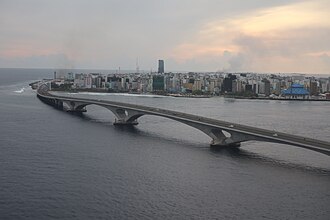
Sinamalé Bridge
Opened in 2018 and funded by China, this 1.4km bridge was the Maldives' first, linking Malé to the airport island of Hulhulé and onward to Hulhumalé. Before it existed, every trip to the airport required a boat. Buses and taxis now cross regularly, and the views along the way — open ocean on both sides — are some of the best free scenery in the greater Malé area. It fundamentally changed daily life in the capital by ending its total dependence on ferries.

Velana International Airport
The Maldives' main gateway sits on its own island, Hulhulé, a short bridge or ferry ride from central Malé. Famous for a runway that appears to float on the ocean, it also hosts a seaplane terminal that whisks arriving guests directly to remote resort atolls — watching seaplanes take off and land is a minor spectacle in itself. Most visitors transit through quickly, but the terminal's waterfront setting is worth a glance if you have time between connections.
Malé Public Ferry Terminal
The hub for inter-island travel, this harborside terminal runs scheduled ferries to Villingili, Hulhumalé, and outlying atoll islands, alongside speedboat operators serving local islands like Maafushi. It's chaotic but functional, and riding a public ferry is the cheapest way to see the surrounding lagoon and get a sense of how Maldivians actually get around, away from resort speedboat transfers.
Tips for Transportation
- Public ferries are far cheaper than resort speedboats but run on fixed schedules — check times in advance
- Malé taxi fares are fixed; agree on the fare before the ride.
- Walking is often faster than a taxi for short hops within central Malé given the narrow streets