Seville’s calendar is anchored by two legendary spring events, but the city keeps celebrating all year with neighborhood verbenas, flamenco showcases, and a slow build into Christmas lights. Below are the key 2026 dates for planning a visit around Seville at its most alive.
Semana Santa: Holy Week Processions
Every Holy Week (the week before Easter Sunday; 21-28 March in 2027), Seville transforms as more than 60 religious brotherhoods carry ornate pasos (floats) of Christ and the Virgin Mary through narrow streets to the Cathedral, accompanied by penitents in tall conical hoods and the mournful wail of saeta songs. This is one of the most important religious and cultural events in Spain, drawing enormous crowds who line the processional routes for hours. Good Friday (Madrugá) overnight processions, including the revered Cristo del Gran Poder and the Macarena, are the emotional peak. Expect packed bars, shifted restaurant hours, and streets closed to traffic. Arrive early to claim a spot near Plaza del Salvador or Calle Sierpes, and check the official itinerary (nazarenos.es) for each brotherhood’s route and timing, since sequences run continuously from afternoon into the early morning hours.
Feria de Abril: April Fair
About two weeks after Easter, for six days (13-18 April in 2027), the Real de la Feria fairground fills with over a thousand striped casetas (private and public marquee tents), strings of paper lanterns, and the nonstop rhythm of Sevillanas dancing. Locals dress in flamenco gowns and traditional riding costumes, parading on horseback and in horse-drawn carriages through the fairgrounds each afternoon before the party continues late into the night. Many casetas are private, but a good number of public ones welcome visitors for sherry, fried fish, and dancing. The fair officially opens with the alumbrado, when thousands of lights are switched on at midnight. It is loud, joyful, and utterly unique to Seville, best experienced by wandering the Real and soaking in the atmosphere rather than trying to see it all in one night.
Vela de Santa Ana: Triana Summer Festival
Held each year in late July (21-26 July in 2027), this is Seville’s oldest neighborhood festival, celebrated in Triana on the west bank of the Guadalquivir in honor of the patron saint of the parish church of Santa Ana. Streets fill with open-air dance floors, food stalls serving fried fish and grilled sardines, and live music that runs well past midnight, all with a distinctly local, unpolished charm compared to the citywide Feria. It is a favorite among residents precisely because it stays under the radar for many tourists. Wander along Calle Betis for river views and DJ booths, or head deeper into Triana’s ceramic-tiled lanes for smaller neighborhood parties. Evenings are cooler and far more comfortable than daytime given Seville’s intense summer heat, so plan to arrive after sunset.
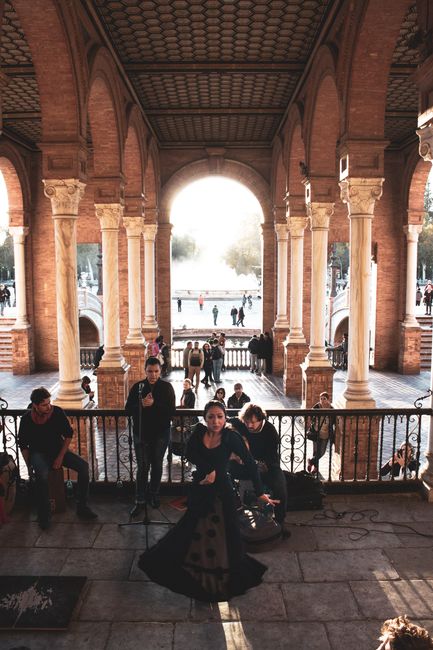
Bienal de Flamenco
Held in even-numbered years, the 2026 edition of the world’s most prestigious flamenco festival runs from 9 September to 3 October 2026 across venues including the Teatro de la Maestranza, Teatro Lope de Vega, and the Real Alcazar gardens. Leading dancers, guitarists, and cantaores converge on the city for a month of performances ranging from traditional to boldly experimental flamenco. Tickets for headline shows sell out quickly given the festival’s international reputation, so booking a few months ahead is strongly advised for marquee names. Smaller peñas (flamenco clubs) around the city often host informal fringe performances during the same weeks, offering a more intimate, less expensive alternative. This is the definitive way to experience flamenco at its highest level, in the art form’s spiritual home.
Tips for Events Calendar
- Book flights and hotels many months ahead for Semana Santa and Feria de Abril, when prices in Seville spike sharply and rooms sell out.
- During Semana Santa, download or print a printed itinerary since street closures change daily and processions can run hours behind schedule.
- At Feria de Abril, most public casetas welcome visitors without an invitation, but many of the largest tents remain private members-only.
- Summer festivals like the Vela de Santa Ana are best enjoyed after sunset, since daytime temperatures in Seville regularly exceed 40 degrees Celsius in July.
- For the Bienal de Flamenco, buy tickets to major venue shows as soon as the program is released, and ask locally about free fringe performances in neighborhood peñas.