Dubrovnik's historic fountains and monuments served practical purposes while beautifying public spaces. These sculptural works represent centuries of artistic achievement and civic pride.
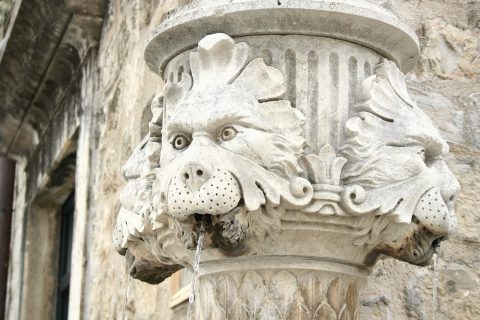
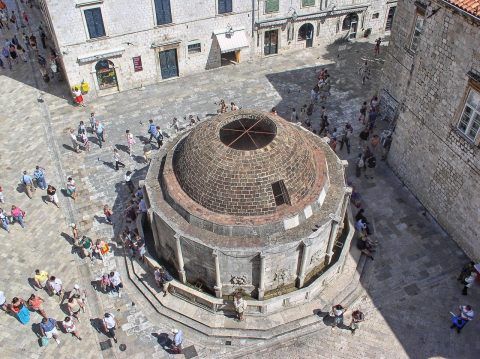
Onofrio's Large Fountain
Just inside Pile Gate, Onofrio's Large Fountain (Velika Onofrijeva Fontana) has provided fresh water since 1438. Architect Onofrio della Cava designed this 16-sided domed structure as part of Dubrovnik's sophisticated water supply system, bringing water from the Rijeka Dubrovačka spring 12km away. The fountain features carved stone masks from which water flows into basins - visitors still drink this cold, fresh water. Originally decorated with sculptures damaged in the 1667 earthquake, the fountain retains its polygonal form and practical beauty. It marks the traditional meeting point and starting location for exploring the Old Town.
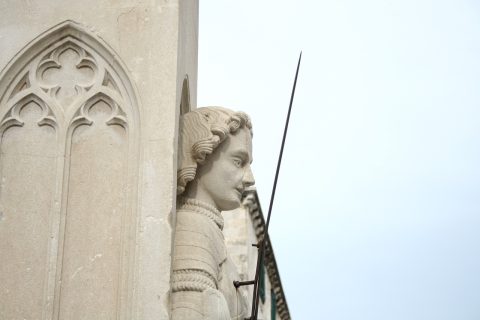
Orlando's Column
Standing in Luža Square since 1418, Orlando's Column (Orlandov Stup) depicts the legendary knight Roland (Orlando) who allegedly helped Dubrovnik defeat Saracen pirates. This carved stone figure, holding a sword and with a forearm measuring exactly 51.2cm, served as the Republic's official standard measure (the Dubrovnik ell/lakat). Government proclamations were read here, flags flew from the column during festivals, and criminals were punished at its base. The column symbolized the city's freedom and justice. During the Feast of St. Blaise, the Republic's flag still flies from this historic marker of Dubrovnik's independence and civic pride.
Onofrio's Small Fountain
Located in Luža Square near the City Bell Tower, Onofrio's Small Fountain (Mala Onofrijeva Fontana) complements its larger sibling. Built in 1446, also by Onofrio della Cava, this Renaissance fountain features elaborate stone carving with decorative reliefs and a small basin. The fountain served the eastern end of the Old Town with drinking water from the same aqueduct system. Its ornate design includes the city's coat of arms and showcases the Republic's commitment to both functionality and artistic beauty in public works. The fountain stands adjacent to historical buildings including the Church of St. Blaise.
Tips for Fountains & Public Art
- The water from Onofrio's fountains is safe to drink - bring reusable bottles to refill
- Fountains are popular photo spots - visit early morning for shots without crowds
- These monuments tell stories - hire a local guide to learn fascinating historical details
- Orlando's Column features prominently in city celebrations and ceremonies
- Look for historical plaques near monuments explaining their significance