Leipzig hosts one of Germany's oldest and largest Christmas markets, tracing its roots to 1458, when it spreads across the historic city center from the Markt square to Augustusplatz, Naschmarkt and Nikolaikirchhof.
Expect timber stalls, mulled wine, roasted almonds, and Leipzig's own Stollen alongside a Finnish village and a medieval-themed corner, all set against the illuminated old town.
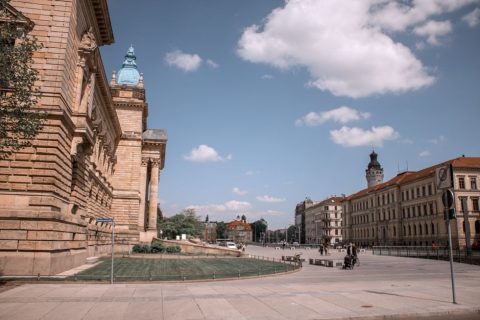
Leipziger Weihnachtsmarkt (Markt Square)
The heart of Leipzig's Christmas season, this market fills the historic Markt square and surrounding streets with over 300 wooden stalls across its market areas, making it one of the largest and oldest Christmas markets in Germany. In 2026 it runs from 24 November to 23 December (only the Markt section on the last day). Highlights include a towering decorated spruce, a nativity scene, a carousel, and stalls selling mulled wine (Glühwein), roasted chestnuts, and handmade wooden ornaments. The market backs onto the Old Town Hall and radiates into Naschmarkt and Augustusplatz (where the The 2026 market information lists Finnish and South Tyrolean villages on Augustusplatz; check the current event details for attractions and locations. Evenings are especially atmospheric, with lights reflecting off the surrounding Renaissance facades. It is a free, walk-in market with no ticket required, though some food and drink stalls take cash only.

Finnish Christmas Village (Augustusplatz)
Since the 1990s, a dedicated Finnish Christmas Village has occupied part of Augustusplatz, Leipzig's largest square, next to the main Weihnachtsmarkt. Wooden cabins staffed by Finnish vendors The official 2026 listing confirms a Finnish village, but I could not verify this specific inventory, giving this corner a distinctly Scandinavian feel. It typically runs on the same schedule as the main market, from late November to 23 December. The setting near the Gewandhaus concert hall and opera house adds a grand backdrop, and a Ferris wheel nearby offers views over the illuminated square. Families often stop here for warm food and a break from the busier Markt stalls. It is a pleasant, less crowded alternative for browsing gifts. Entry is free and stalls accept both cash and card at most stands.
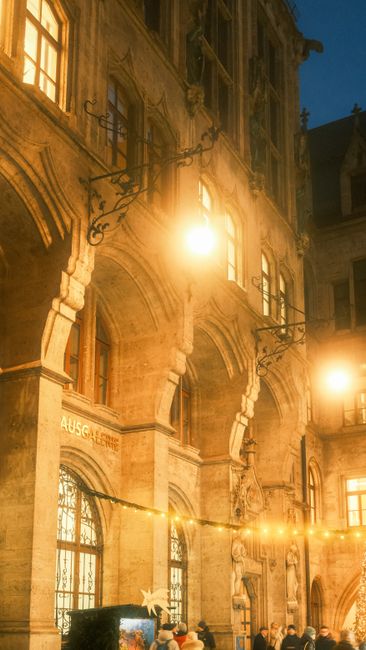
Medieval Christmas Market (Naschmarkt)
On the Naschmarkt behind the Old Town Hall, the medieval market Alt Leipzig recreates a medieval encampment with costumed traders, open fire pits, and handcrafted goods like leather, pottery, and forged ironwork. It runs concurrently with the main Weihnachtsmarkt, 24 November to 22 December in 2026, and offers a quieter, more rustic contrast to the bustling main square just steps away. Visitors can sample flame-grilled meats, spiced wine served in clay mugs, and honey mead while musicians play period instruments. St. Nicholas Church, famous for the 1989 Monday demonstrations, is a few minutes' walk away (its churchyard has the Feuerzangenbowle pyramid). It is a good stop for something atmospheric and less commercial than the central stalls. No entry fee, cash preferred at most vendors.
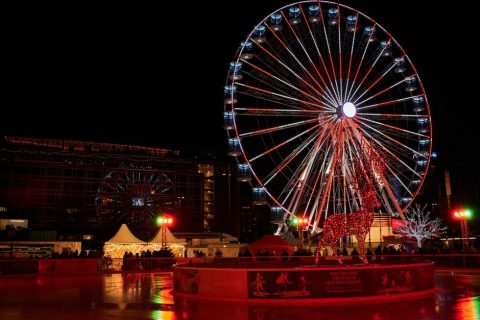
Christmas Ferris Wheel (Augustusplatz)
During the Christmas market (24 November to 22 December in 2026), a Ferris wheel on Augustusplatz gives short rides with views over the illuminated square, the Gewandhaus and the Opera House, next to the Finnish Christmas Village. Nearby stalls sell hot chocolate and mulled wine. For ice skating, the separate Leipziger Eistraum rink comes to Augustusplatz from January to March. Weekday evenings mean shorter queues.
Tips for Christmas Market
- The main market traditionally runs late November to December 23 each year; markets close for Christmas Eve, so plan visits before December 24.
- Try Leipziger Stollen, the city's own version of the German Christmas fruitcake, sold fresh at several bakery stalls.
- Evenings after dusk (from around 4-5pm in December) are the most atmospheric time to visit, with all lights and stalls lit.
- Markets are cash-friendly but many larger stalls now accept card; keep some small change for smaller vendors.
- Augustusplatz and the Markt square are a 5-minute walk apart, so the whole market area is easily covered on foot.