Long before it became a beach destination, Halkidiki was home to a Classical Greek city-state and the birthplace of one of antiquity's most influential philosophers, alongside a cave that rewrote part of the human fossil record.
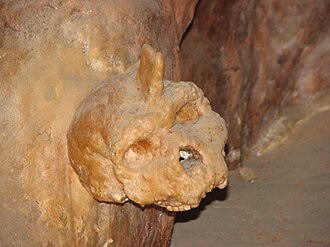
Petralona Cave
Discovered in 1959, this limestone cave near the village of Petralona yielded a fossilized human skull estimated at several hundred thousand years old, one of the most important paleoanthropological finds in Europe, alongside stalactite formations and fossilized animal bones. A short guided walkway loops through the illuminated chambers, and an on-site anthropological museum displays casts and finds from the excavation.
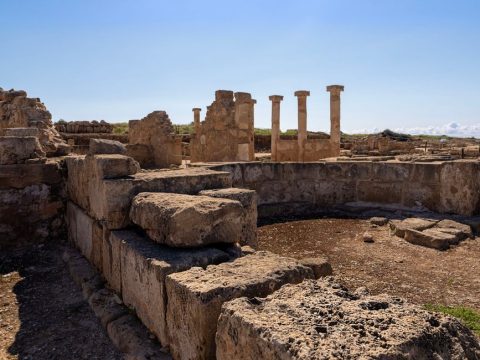
Ancient Olynthos
One of the best-preserved examples of a Classical Greek grid-planned city, Olynthos was destroyed by Philip II of Macedon in 348 BC and never rebuilt, leaving its street layout and house foundations largely undisturbed for archaeologists. The site's mosaic-floored houses offer a rare, direct look at how ordinary (if wealthy) Greek families lived in the 4th century BC, rather than just its temples and public buildings.
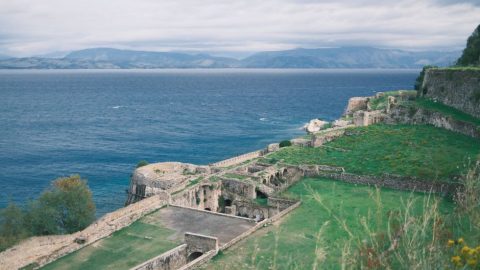
Ancient Stageira
The birthplace of Aristotle, Stageira sits on a pine-forested headland with ruins spanning Archaic to Byzantine periods, including a marketplace, fortification walls, and a small harbor below. A modern park dedicated to the philosopher stands nearby in Stagira village, but the actual archaeological site is far quieter and gives sweeping views over the Aegean.
Tips for Ancient & Historical Sites
- Petralona Cave keeps a constant cool temperature, bring a light jacket even in summer
- Combine Olynthos with a stop in nearby Nikiti or the Sani beaches, it sits on the way to Sithonia
- Ancient Stageira has minimal shade, visit in the morning during summer