Cornwall's landmarks range from Arthurian legend to Tudor coastal defenses, shaped by centuries as England's most exposed and fiercely independent frontier. Perched on wind-battered cliffs and tidal islands, these sites have inspired storytellers for a thousand years.
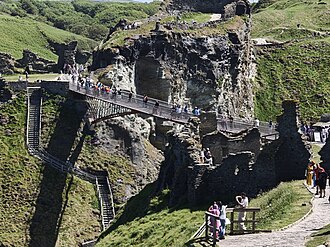
Tintagel Castle
A dramatic clifftop ruin famously linked to the legend of King Arthur's birthplace, split across the mainland and a rugged headland connected by a striking modern footbridge. The 13th-century castle ruins are atmospheric enough on their own, but the setting - sheer cliffs, crashing waves, and Merlin's Cave beneath - is what draws visitors. English Heritage manages the site with interpretive panels separating documented history from legend.
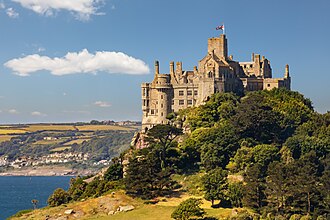
St Michael's Mount
A tidal island crowned by a medieval castle and priory, reachable on foot via a cobbled causeway at low tide or by boat when the sea covers it. Still home to the St Aubyn family, the castle interior features period rooms, armor, and gardens carved into the rock face. The dramatic reveal of the island rising from Mount's Bay as you approach makes this one of Cornwall's most photographed sights.
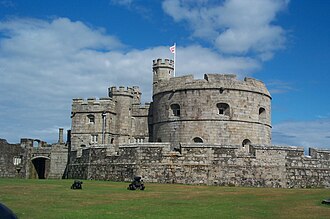
Pendennis Castle
An artillery fort built by Henry VIII to defend the strategically vital Carrick Roads estuary, standing guard over Falmouth alongside its sister fort St Mawes across the water. Visitors can explore the Tudor gun deck, WWII observation post, and underground tunnels used through both World Wars. Panoramic views stretch across Falmouth Harbour and out to the open Atlantic.
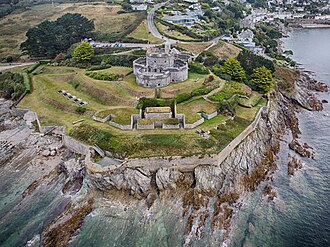
St Mawes Castle
The best-preserved of Henry VIII's coastal artillery forts, built as a clover-leaf shaped defense to work in tandem with Pendennis Castle across the Fal estuary. Unlike its larger sister, St Mawes saw little combat and survives remarkably intact, with decorative Tudor stonework rare among military architecture of the period. A short ferry ride from Falmouth makes it an easy half-day pairing.

Bodmin Jail
A former 18th-century prison turned atmospheric visitor attraction, with cells, gallows, and immersive exhibits recounting 250 years of crime and punishment in Cornwall. Interactive displays and dramatic lighting recreate the harsh conditions inmates faced, including public executions once held outside its walls. The site also houses a hotel and event space within the restored buildings.
Tips for Landmarks & Monuments
- Check tide times before visiting St Michael's Mount - the causeway is only walkable at low tide
- Book Tintagel and St Michael's Mount online in summer to guarantee entry slots
- Wear sturdy footwear - Tintagel involves steep steps and uneven coastal paths
- English Heritage/National Trust membership pays off quickly if visiting multiple sites