Grodno boasts an exceptional collection of architectural landmarks spanning centuries, from medieval fortifications to baroque palaces, making it one of Belarus's most historically rich and visually compelling cities.
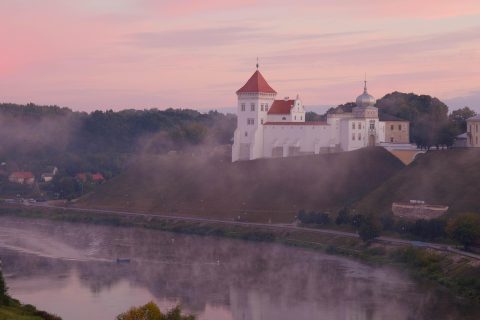
The Old Castle is Grodno's most iconic landmark, founded in the 11th century and rebuilt in Renaissance style in the 16th century under King Stefan Batory. Perched dramatically above the Neman River, it houses the Grodno State History and Archaeology Museum. The castle grounds reveal layers of history from Kievan Rus to the Polish-Lithuanian Commonwealth, with preserved towers, palace halls, and archaeological excavations visible on-site.
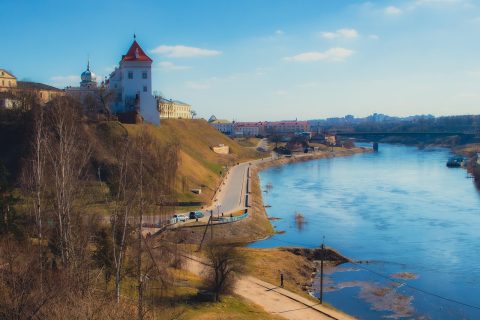
Built in 1734–1751 as a royal summer residence for Polish King Augustus III, the New Castle is a striking example of Saxon Baroque architecture. The palace witnessed the last session of the Polish-Lithuanian Commonwealth Sejm in 1793. Today it serves as a museum with partially restored 18th-century interiors. It faces the Old Castle across a scenic courtyard, creating a unique historical ensemble above the river.
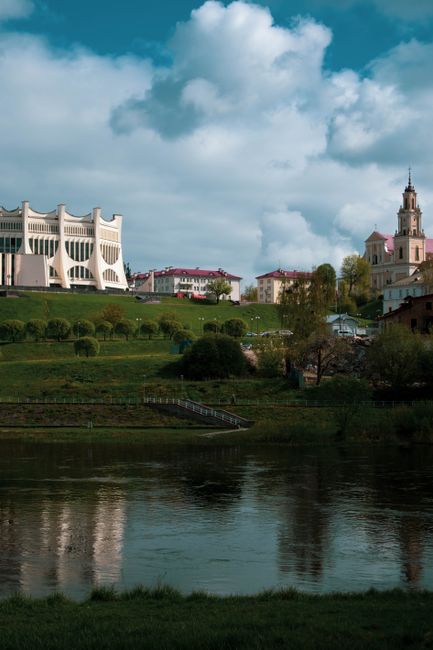
Grodno's Regional Drama Theatre occupies one of the city's most striking neoclassical buildings on the central square. Built in the early 20th century, it remains an active cultural venue staging Belarusian, Russian, and international productions. The grand facade with imposing columns is a beloved city symbol and a popular photography landmark in the historic center.
Tips for Landmarks & Monuments
- Visit the Old and New Castles together — they are within walking distance on the same hill.
- Arrive early morning for castle views over the Neman River with minimal crowds.
- Combined tickets for both castles offer better value than individual entry fees.
- Check museum seasonal hours before visiting as they vary throughout the year.