Grodno's distinct neighborhoods reveal different layers of the city's history, from the medieval castle hill and baroque merchant quarters to the 19th-century artisan suburb across the Neman River.
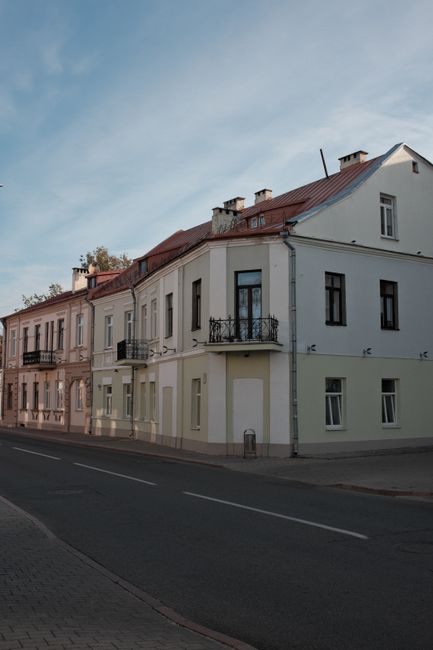
Grodno's historic center is one of the best-preserved old towns in Belarus, with a dense concentration of baroque, Renaissance, and neoclassical buildings in a compact, walkable area. Centered on the castle hill and descending to the Neman River, it encompasses the major churches, museums, historic merchant houses, and restaurants. Unlike many Belarusian cities devastated in WWII, Grodno's core survived largely intact, preserving its pre-war urban character.
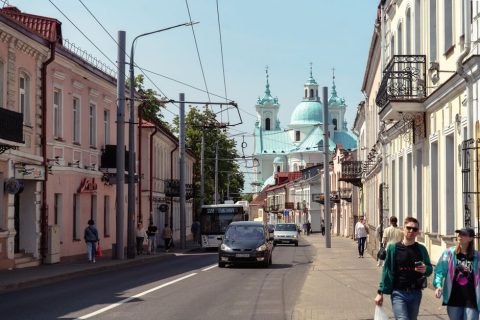
The Forstadt district, just across the Neman River from the old town, preserves a fascinating collection of 19th and early 20th-century wooden and brick residential architecture. This former artisan quarter with its narrow streets, historic Orthodox church, and traditional buildings offers a quieter, more authentic glimpse of pre-Soviet provincial life — increasingly popular with photographers and off-the-beaten-path explorers.
Tips for Neighborhoods & Districts
- The old town is very walkable — comfortable shoes are essential for cobblestone streets.
- Explore side streets beyond the main tourist circuit for hidden architectural gems.
- The Forstadt district across the river is an excellent half-day exploration away from crowds.