Grodno is celebrated for its extraordinary concentration of religious buildings from multiple faiths and centuries, reflecting its complex multicultural identity as a former jewel of the Polish-Lithuanian Commonwealth.
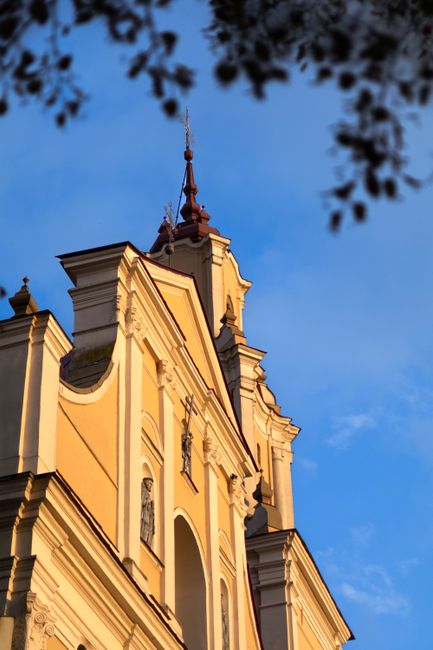
The crown jewel of Grodno's religious architecture, this Jesuit baroque cathedral was built between 1647 and 1705 and is considered one of the finest baroque churches in the entire region. Its soaring twin towers dominate the old town skyline. The interior features stunning painted ceilings, gilded altars, and an exceptional 17th-century pipe organ — one of the largest working historic organs in Eastern Europe — the subject of regular acclaimed concerts.
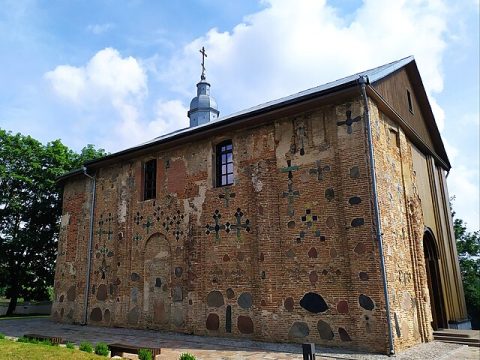
The Kalozha Church is one of the most precious surviving monuments of ancient Rus architecture, built circa 1160 and considered a candidate for UNESCO World Heritage status. This small, austere Orthodox church features unique decorative ceramic inserts in its walls. Its dramatic position on an eroding riverbank cliff, partially collapsed over centuries, makes it one of Belarus's most atmospheric and historically significant sites.
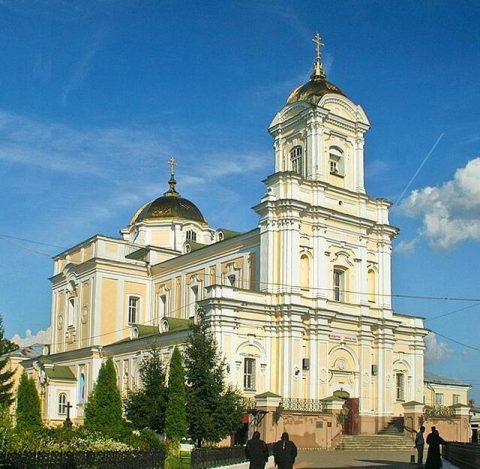
This imposing 16th-century Bernardine complex comprises a Gothic-Renaissance church and monastery — one of the oldest such ensembles in Belarus. The Church of the Assumption of the Virgin Mary features a striking blend of architectural styles accumulated over centuries. The monastery buildings partially serve as a school, while the church remains an active Catholic parish with preserved period frescoes and historic interiors.
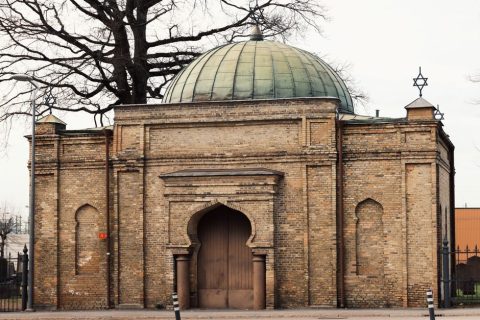
Grodno was once home to one of the largest Jewish communities in Eastern Europe. The site of its 16th-century Great Synagogue — once among the most magnificent in the region — stands as a poignant memorial after its WWII destruction. A small restored synagogue still serves the remaining community. The surrounding streets preserve fragments of the historic Jewish quarter with memorial plaques marking significant sites.
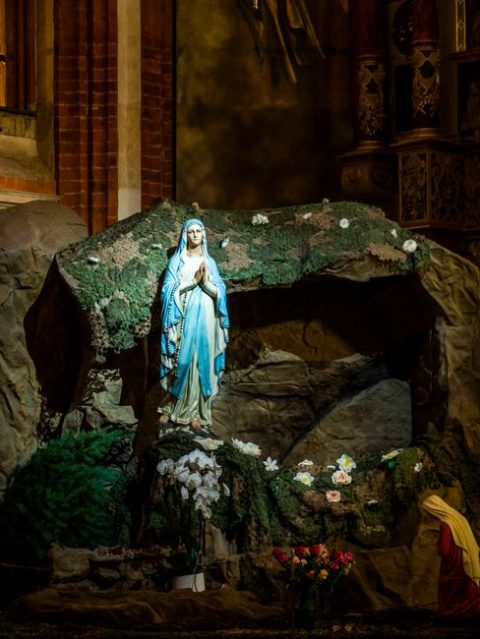
This grand Russian Orthodox cathedral, built in the late 19th century during the Russian Imperial period, represents Grodno's Orthodox heritage with imposing golden domes and elaborately decorated interiors featuring large-scale icons and gilded iconostases. It serves as the main Orthodox church of the Grodno diocese and is especially impressive when illuminated during evening hours.
Tips for Religious Sites
- Dress modestly when visiting churches — shoulders and knees must be covered.
- The Farny Cathedral organ concerts are a highlight — check the schedule and book in advance.
- Visit Kalozha Church at sunset for dramatic golden-hour views over the Neman River.
- Many churches are active places of worship — be respectful and quiet during services.
- The old town's concentration of churches makes a self-guided walking tour extremely rewarding.