Beyond museums, Weimar preserves significant historical sites that witnessed both enlightenment and darkness, from elegant palaces to the sobering Buchenwald Memorial.
Buchenwald Memorial
Located 10 km north of Weimar, Buchenwald stands as a stark reminder of Nazi atrocities. Between 1937-1945, approximately 56,000 prisoners perished in this concentration camp. The Soviet Special Camp No. 2 held nearly 28,500 people from 1945 to 1950; 7,113 died. Today's memorial includes preserved barracks, the camp gate with its cynical "Jedem das Seine" inscription, watchtowers, and a comprehensive museum documenting perpetrators by name and honoring victims. The bell tower visible from Weimar serves as a constant memorial. Guided tours (book well in advance) provide essential historical context. This sobering visit is crucial for understanding the complete spectrum of Weimar's and Germany's history. Direct buses operate from the city center multiple times daily.
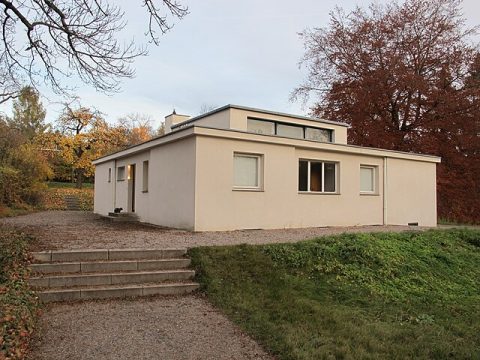
Haus am Horn
This experimental house from 1923 represents the first complete architectural project realized by the Bauhaus movement. Built for the Bauhaus exhibition, Georg Muche designed this cubic residence to demonstrate revolutionary concepts of modern living, functional design, and industrial production methods. The compact layout maximizes efficiency while maintaining livability, with built-in furniture, innovative kitchen design, and consideration for mass production. As part of the UNESCO World Heritage Site "Bauhaus and its Sites in Weimar, Dessau and Bernau," this preserved prototype house shows how Bauhaus principles translated from theory to practical residential architecture. The minimalist aesthetic and rational design influenced countless modernist buildings worldwide.
Wittumspalais (Dowager's Palace)
Built in 1767, this elegant palace served as home to Dowager Duchess Anna Amalia after a fire destroyed part of the City Palace. The Wittumspalais became the heart of Weimar's cultural salon society, where Anna Amalia hosted her famous "Round Table" gatherings. Goethe, Schiller, Herder, and Wieland regularly attended these intellectual soirées that defined Weimar Classicism. The restored interiors showcase late 18th-century aristocratic taste with period furnishings, artwork, and personal belongings. The Green Salon preserves the intimate atmosphere where Germany's greatest minds debated philosophy, literature, and art. This lesser-known gem offers unique insight into the social dynamics behind Weimar's cultural golden age.
Tips for Ancient & Historical Sites
- Buchenwald visits require emotional preparation - recommended minimum age is 14 years
- Tours at Buchenwald should be booked weeks or months in advance
- Haus am Horn is easily reached from Goethe's Garden House in Park an der Ilm (4-minute walk)