Weimar's central location in Thuringia makes it an ideal base for exploring nearby castles, historic cities, and natural landscapes, all easily accessible by public transport.
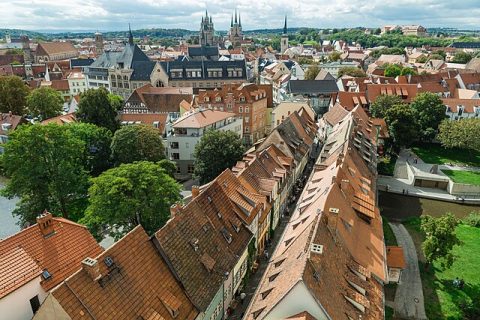
Erfurt
Just 15 minutes by train, Thuringia's capital offers one of Germany's largest preserved medieval old towns. Star attractions include the magnificent Cathedral of St. Mary where Martin Luther was ordained, the adjacent Church of St. Severus, and the unique Krämerbrücke (Merchants' Bridge) - Europe's longest inhabited bridge with shops selling handmade crafts. The beautifully preserved Old Synagogue displays a medieval Jewish treasure hoard. Erfurt's colorful half-timbered houses, lively university atmosphere, and excellent restaurants make it perfect for a full day excursion. The city suffered minimal WWII damage, preserving centuries of architecture. Combine Erfurt with Weimar for a complete Thuringian cultural experience. Easy regional train connections make this an effortless day trip.
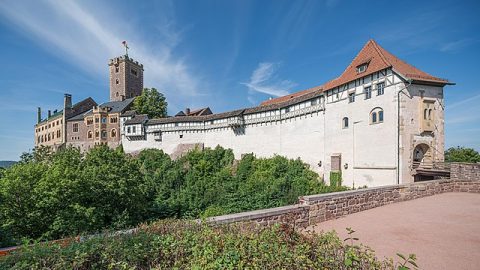
Wartburg Castle (Eisenach)
This majestic UNESCO World Heritage fortress, 50km west of Weimar, towers above Eisenach where Martin Luther translated the New Testament into German in 1521-22. The castle, founded in 1067, exemplifies medieval architecture with Romanesque palace sections, Gothic chambers, and 19th-century restorations. Luther's study room, the spectacular Festsaal (Festival Hall) with Byzantine-style mosaics, and St. Elisabeth's chambers tell centuries of German history. The castle also witnessed the legendary medieval Sängerkrieg (Minstrels' Contest) that inspired Wagner's opera Tannhäuser. Guided tours (mostly in German, English audio guides available) explore the magnificent rooms. The steep approach through forest adds dramatic atmosphere. Trains from Weimar to Eisenach take 50 minutes; from Eisenach station, take bus 10 or taxi to the castle, then climb the final 10-minute footpath.
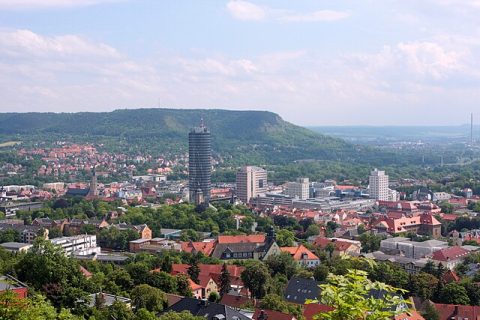
Jena
Just 20 minutes by train, this vibrant university city combines historic charm with cutting-edge optics and technology industries. Visit the world's oldest surviving planetarium (1926), climb the JenTower observation deck for panoramic views, explore the Botanical Garden founded by Goethe, and see the Phyletisches Museum showcasing evolutionary biology. The university, where Schiller taught and Hegel and Fichte lectured, shapes the city's intellectual atmosphere. Carl Zeiss and Ernst Abbe revolutionized optical science here - the Optical Museum traces this legacy. Medieval market squares, student pubs serving local beer, and the riverside Saale Valley provide pleasant strolling. Jena's youthful energy contrasts nicely with Weimar's classical elegance. Easy regional train connections make this an effortless half-day or full-day excursion.
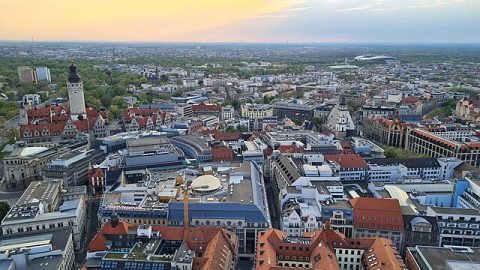
Leipzig
Saxony's second-largest city lies 1 hour northeast by train, offering world-class music heritage and dynamic urban culture. Visit the Thomaskirche where Bach served as cantor and is buried, the stunning Gewandhaus concert hall, Bach Museum, and Mendelssohn House. The city played pivotal roles in German history: the 1813 Battle of the Nations monument commemorates Napoleon's defeat, while the 1989 Monday Demonstrations helped topple East Germany's communist regime. Today's Leipzig buzzes with galleries, street art, trendy cafés in the Südvorstadt district, and the massive Hauptbahnhof (Europe's largest terminus station). The compact old town, beautiful Mädler-Passage shopping arcade, and Auerbachs Keller (Germany's second-most-famous restaurant after Goethe featured it in Faust) merit exploration. Easy hourly ICE and regional train connections.
Dornburg Palaces
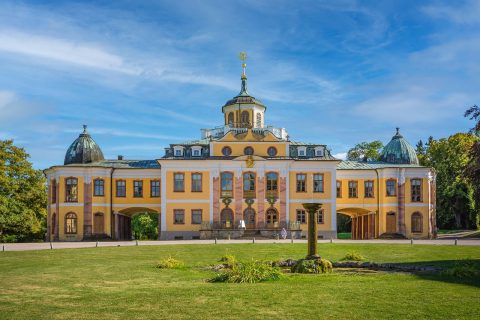
Three picturesque palaces crown a limestone cliff overlooking the Saale Valley, 30 minutes northeast of Weimar. The Renaissance Old Palace (1522), Rococo Palace (1736-1747), and Neo-Gothic Goethe Palace (named for the poet who stayed here in 1828) feature elegant interiors and magnificent terraced gardens. Goethe found inspiration and solace here after his friend Duke Carl August's death. The gardens cascade down the hillside with terraces offering spectacular valley views, flower beds, orchards, and romantic pathways. The intimate scale and peaceful setting make this lesser-known gem perfect for escaping crowds. Wine from estate vineyards can be purchased. Combine with Jena for a full day exploring the Saale Valley. Regional trains serve Dornburg station; palaces are a 15-minute uphill walk.
Thuringian Forest
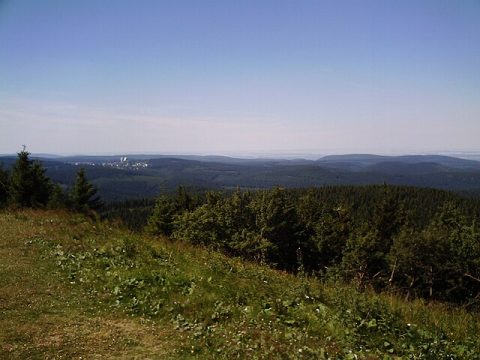
This mountain range stretching southwest of Weimar offers hiking, scenic drives, and charming villages. The Rennsteig, Germany's oldest and most famous long-distance hiking trail (170km), traverses the forested ridges. Closer destinations include Oberhof (ski resort and summer hiking base 60km south), the Großer Inselsberg mountain with observation tower, and Friedrichroda with its impressive Marienglashöhle crystal cave. Traditional glass-blowing and Christmas ornament crafts continue in forest villages. The region's dense spruce forests, mountain meadows, and half-timbered towns provide quintessential German countryside experiences. Fall foliage and winter snow transform the landscape spectacularly. Access requires rental car or organized tours, as public transport to remote areas is limited. Consider guided tours from Weimar for hassle-free exploration.
Tips for Day Trips & Excursions
- Purchase the Thüringen-Ticket (€27 for 1 person, €7 each additional, max 5 people) for unlimited regional trains throughout Thuringia - perfect for day trips
- Wartburg Castle requires several hours including travel and tour - plan for half-day minimum
- Erfurt and Jena are easily combined as both are short train rides from Weimar
- Dornburg Palaces close during winter months (November-March) but Erfurt, Jena, and Leipzig are year-round destinations
- Check Deutsche Bahn website for train schedules - regional trains run hourly to most destinations