Weimar's architectural treasures span centuries, from Renaissance palaces to modernist Bauhaus masterpieces. This compact city showcases Germany's cultural golden age with monuments dedicated to its greatest minds.
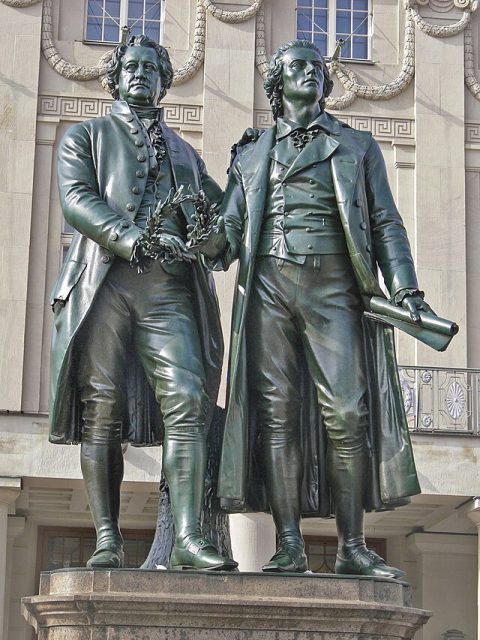
Goethe-Schiller Monument
Standing proudly in Theaterplatz, this iconic bronze monument depicts Germany's two greatest literary figures side by side. Created by Ernst Rietschel and unveiled in 1857, the sculpture represents the friendship and creative collaboration between Johann Wolfgang von Goethe and Friedrich Schiller. The monument has become the symbol of Weimar and Classical Weimar, capturing the spirit of German Enlightenment. Visitors gather here to photograph this tribute to literary genius, which serves as the perfect starting point for exploring Weimar's cultural heritage.
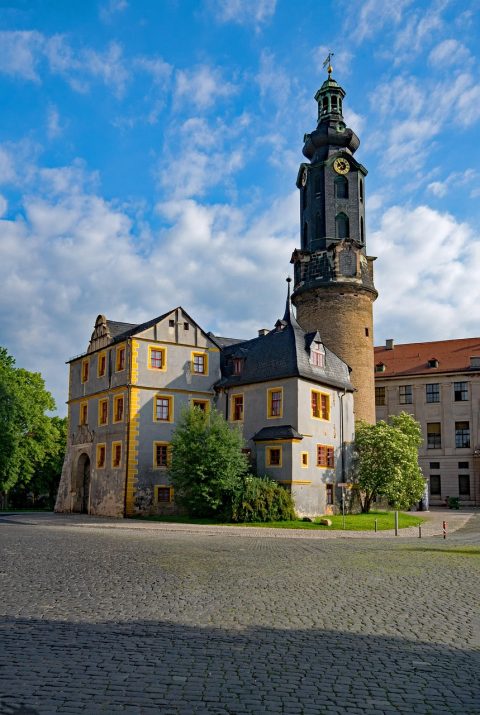
Weimar City Palace (Stadtschloss)
This impressive three-story Neoclassical palace with its distinctive colonnade faces the River Ilm. Originally a medieval fortress, it was transformed into an elegant residence in the 18th century. The palace houses the Schlossmuseum with extensive art collections including German Medieval and Renaissance works, Italian and Dutch paintings from the 16th-17th centuries, and pieces by Rubens. The Falcon Gallery from 1803 and the magnificent staircase hall are architectural highlights. Note that parts of the palace are closed for renovation, so check which areas are open, though the exterior remains a stunning sight worth photographing.
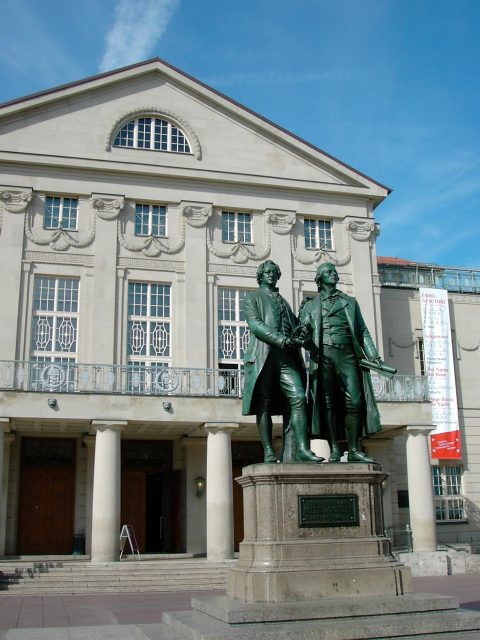
German National Theater
This historic theater on Theaterplatz holds profound significance in German history as the birthplace of the Weimar Republic. In 1919, the German National Assembly convened here to adopt Germany's first democratic constitution. The theater continues to host world-class operatic and classical music performances by the Deutsche Nationaltheater and Staatskapelle Weimar. The building's elegant architecture and its role in shaping modern Germany make it an essential stop. The adjacent Haus der Weimarer Republik museum tells the story of Germany's first democratic republic through engaging exhibits.
Tips for Landmarks & Monuments
- The Theaterplatz area is the heart of Weimar's cultural district - allow time to explore the entire square
- Visit early morning or late afternoon for the best photography lighting on the monuments
- Many landmarks are within a 10-minute walk of each other in the compact old town