Before Suceava became Moldavia's capital, the principality's earliest rulers governed from smaller courts scattered across what is now Bucovina. These archaeological remains mark the region's founding chapter, predating even the painted monasteries by over a century.
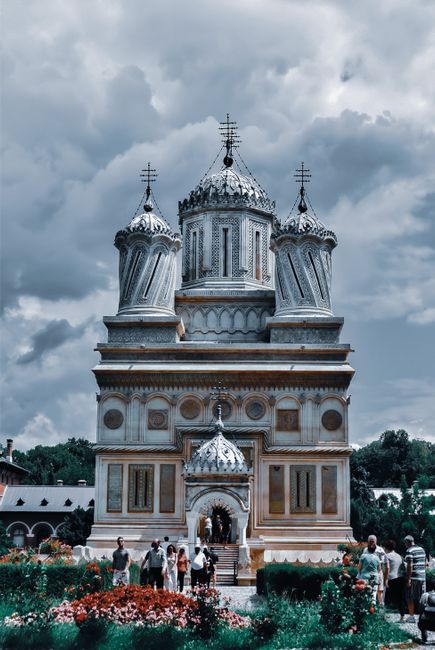
Princely Court of Suceava (Curtea Domnească)
Excavated foundations of the original royal residence in Suceava's old town, predating the hilltop fortress as the seat of Moldavia's princes. Archaeological digs uncovered building layers spanning the 14th-17th centuries, now displayed with informational panels amid the ruins. Though less visually dramatic than the fortress, the site anchors the medieval town center and is an easy stop while exploring central Suceava on foot.
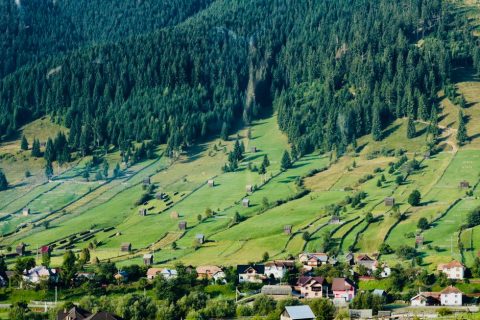
Baia - First Princely Court Ruins
Baia served as Moldavia's first capital under founding ruler Bogdan I in the mid-14th century, before the seat moved to Siret and later Suceava. Archaeological excavations have revealed the foundations of the original princely court and a Catholic church built by the town's German settlers. Little remains above ground today, but the site offers a quiet, off-the-beaten-path stop for visitors tracing the earliest history of the Moldavian state.
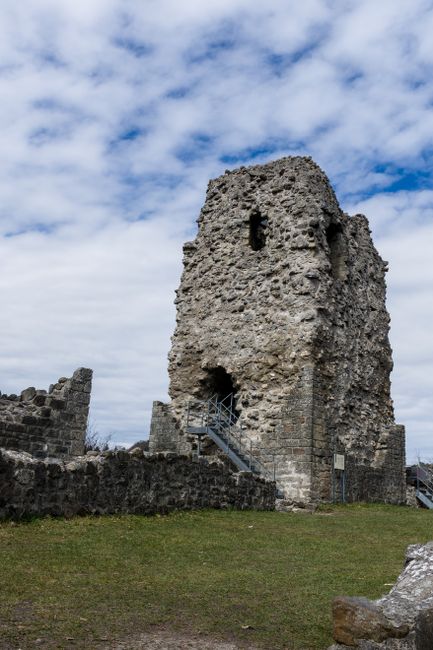
Șcheia Fortress Ruins
A 14th-century earthwork and stone fortress on the outskirts of Suceava, predating the main fortress and believed to be one of the first fortifications built to defend the emerging Moldavian capital. Excavations revealed defensive ditches and wall foundations, now a low-key archaeological site mainly of interest to history enthusiasts. Its wooded hilltop setting offers a peaceful contrast to the more visited Cetatea de Scaun nearby.
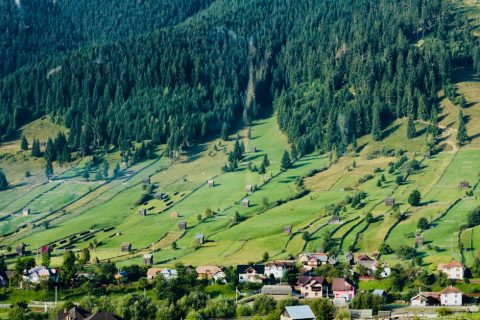
Siret - Former Medieval Capital
Moldavia's second capital after Baia, Siret briefly served as the political and religious center of the principality in the 14th century before Suceava took over. The town preserves fragments of its medieval past, including an old Armenian church and traces of the princely court, alongside a small archaeological museum. Sitting near the modern border with Ukraine, Siret marks the historic edge of Bucovina.
Tips for Ancient & Historical Sites
- These sites are for history enthusiasts rather than dramatic ruins - manage expectations versus the fortress or monasteries
- Combine with nearby stops - Baia and Șcheia are easy add-ons to a Suceava or monastery-circuit day
- Free entry at most archaeological sites; the fortress and Curtea Domnească may charge a small combined ticket