Beyond its monasteries, Bucovina's villages themselves are attractions - painted houses, black pottery workshops, and Habsburg-era railway quarters preserve crafts and architecture found nowhere else in Romania.
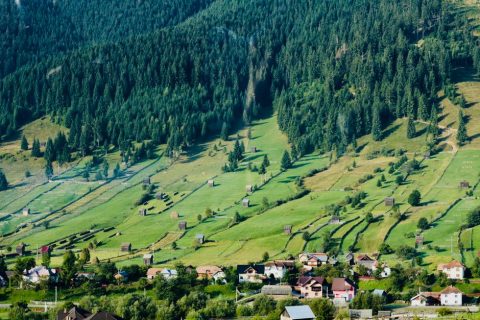
Ciocănești Painted Village
A village where nearly every house facade is hand-painted with traditional folk motifs in bright colors, a tradition revived and formalized here more than anywhere else in Romania. Homeowners repaint patterns each year, turning the entire village into an open-air gallery. Set in a scenic valley near the Bistrița River, Ciocănești is one of Bucovina's most photogenic and distinctive stops, best explored on foot along the main road.
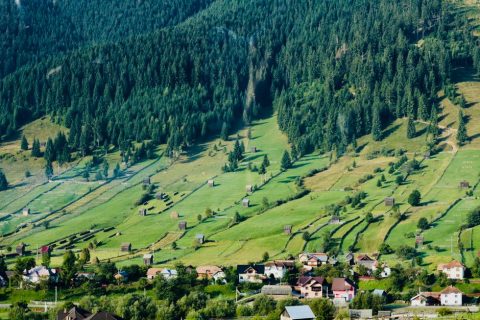
Marginea Black Pottery Village
Home to Romania's tradition of black ceramics, fired in oxygen-reduced kilns to produce a distinctive matte-black finish achieved through a smoke-firing technique passed down through generations of local potters. Several family workshops in the village welcome visitors to watch the process and buy pieces directly from the makers. The craft is registered as a form of intangible cultural heritage and remains a genuine working tradition, not a tourist recreation.
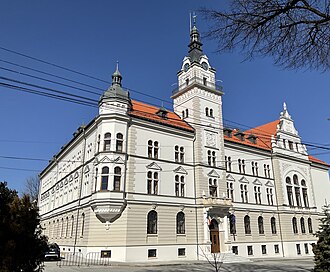
Ițcani District (Suceava)
A former railway quarter built during the Austro-Hungarian era, when Suceava's Ițcani station connected Bucovina to Vienna. The neighborhood retains elegant period villas and the restored station building, offering a visibly different architectural character from Suceava's Moldavian old town. It's a reminder that Bucovina spent nearly 150 years under Habsburg administration, leaving a distinct Central European layer on top of its medieval Romanian identity.
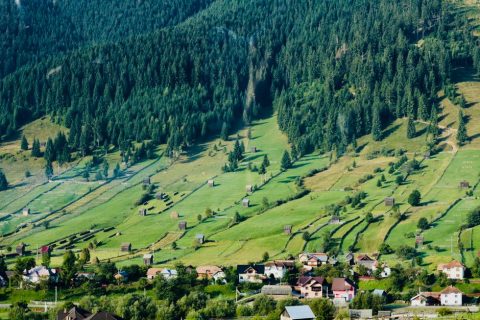
Vama Village
A rural village best known for the Painted Egg Museum and its strong tradition of ouă încondeiate (decorated eggs), alongside traditional wooden houses and small family guesthouses.
Tips for Neighborhoods & Districts
- Rent a car - these villages are only practically reachable by driving; public transport is sparse
- Respect private homes - Ciocănești's painted houses are lived-in residences, not museums; photograph from the street
- Buy directly from artisans in Marginea for authentic, fairly-priced black pottery
- Spring and early autumn are quietest for wandering these villages without tour groups