Bucovina's landmarks trace the golden age of medieval Moldavia under Ștefan cel Mare (Stephen the Great), whose fortresses, princely courts, and monuments still dominate the region's towns. These sites reveal a border principality that fought off Ottoman, Polish, and Hungarian invasions for centuries.
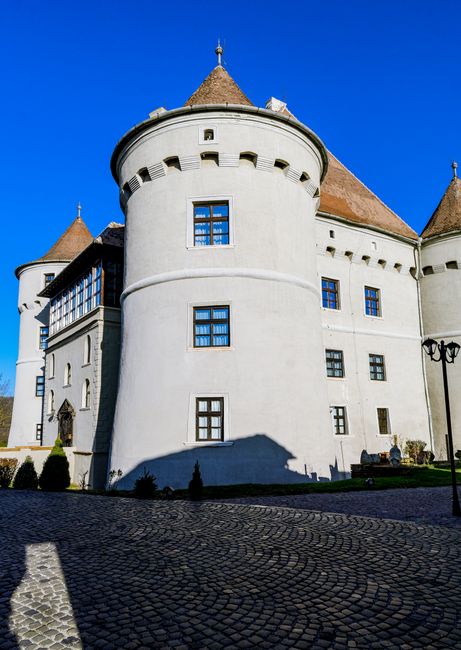
Suceava Fortress (Cetatea de Scaun a Sucevei)
The seat fortress of medieval Moldavia, built in the 14th century and massively reinforced by Ștefan cel Mare to withstand Ottoman sieges. Perched on a hill overlooking Suceava, The fortress resisted the 1476 Ottoman and 1497 Polish sieges; in 1538 it was surrendered to Suleiman I’s forces. A modern glass-and-steel walkway and restored towers let visitors explore the ramparts, dungeons, and interactive exhibits recounting Moldavia's resistance against the Ottoman Empire. Evening light shows illuminate the walls in summer.
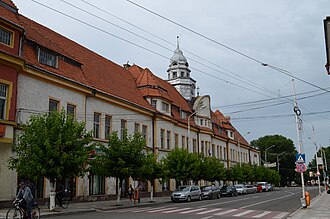
Bogdana Monastery & Princely Necropolis (Rădăuți)
Believed to be the oldest stone church in Moldavia, founded around 1359 by Bogdan I, the principality's first ruler. The church's crypt holds the tombs of Moldavia's earliest princes, carved with Gothic ornamentation rarely seen elsewhere in the region. Its plain, fortress-like exterior contrasts with the historical weight inside, making it essential for understanding how Moldavia's ruling dynasty began before the painted-monastery era.
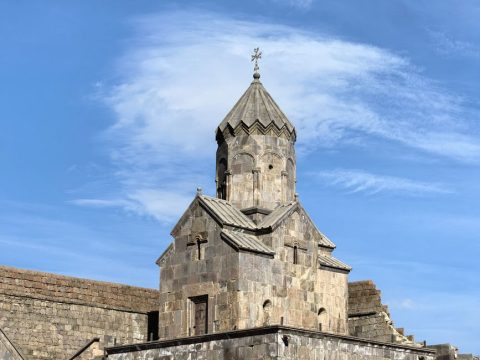
Zamca Armenian Fortified Monastery
A striking fortified monastery built by Suceava's Armenian merchant community in the 16th-17th centuries, combining monastic and defensive architecture on a hilltop outside the city. Thick stone walls and corner towers protected the church and cells during turbulent times. Now mostly in evocative ruin, it offers quiet views over Suceava and a glimpse into the multi-ethnic trading community that once thrived alongside Moldavian boyars and Saxon craftsmen.
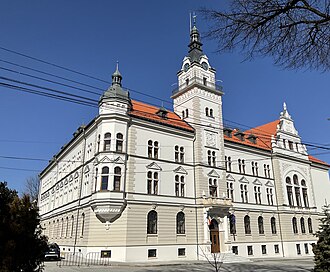
Ștefan cel Mare Equestrian Monument (Suceava)
An imposing bronze equestrian statue of Ștefan cel Mare, Moldavia's most celebrated ruler and a canonized Orthodox saint, standing near the fortress he rebuilt. The monument anchors Suceava's civic identity - nearly every painted monastery, fortress, and church in Bucovina was either founded or fortified during his 47-year reign. A short walk from the fortress park, it's a natural starting point before exploring the medieval hilltop site itself.
Tips for Landmarks & Monuments
- Combine with the fortress park - Suceava's monuments cluster within a 20-minute walk of each other
- Wear sturdy shoes - fortress ramparts and hilltop paths are uneven
- Visit late afternoon for warm light on the stone walls and fewer tour buses
- Combine tickets for the fortress and Bucovina Village Museum are sold together at some ticket points