Granada's skyline is dominated by some of Spain's most breathtaking landmarks, from the towering Alhambra fortress to the ornate Renaissance palaces below. These iconic structures tell the layered story of Moorish, Christian and Renaissance Granada.
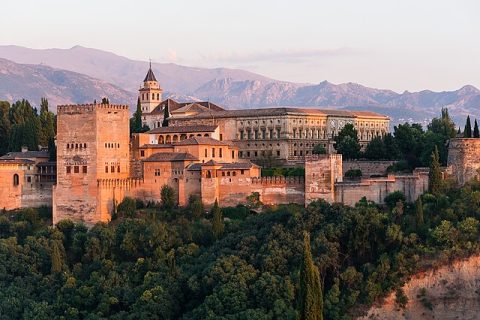
La Alhambra
The Alhambra is Spain's most-visited monument and a UNESCO World Heritage Site. This vast 13th–14th-century Nasrid palace complex crowns a forested hill above Granada. Its highlight, the Nasrid Palaces, dazzles with intricate arabesque stucco, muqarnas ceilings and reflecting pools. The Alcazaba fortress offers panoramic city views, while the Generalife gardens cascade down the hillside in terraced perfection. Book tickets weeks in advance — timed-entry slots sell out quickly, especially for the Nasrid Palaces. Evening visits offer a magical, less-crowded experience bathed in golden light.
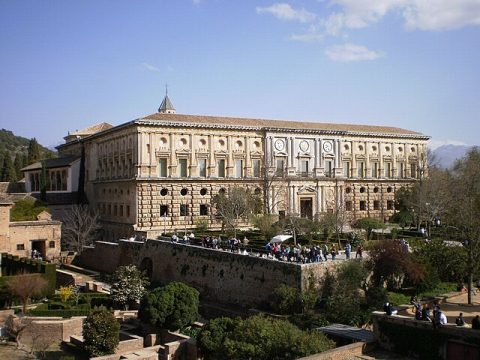
Palacio de Carlos V
Standing incongruously within the Alhambra complex, the Palacio de Carlos V is a masterpiece of Spanish Renaissance architecture designed by Pedro Machuca in 1527. Its most striking feature is the perfectly circular inner courtyard — unique in Renaissance architecture — ringed by two storeys of Doric and Ionic columns. The palace houses the Museo de la Alhambra and the Museo de Bellas Artes, The Alhambra Museum has independent free admission; Bellas Artes has separate admission, normally €1.50, with nationality-based exemptions. Despite never being fully completed, it remains one of the finest Renaissance buildings in Spain.
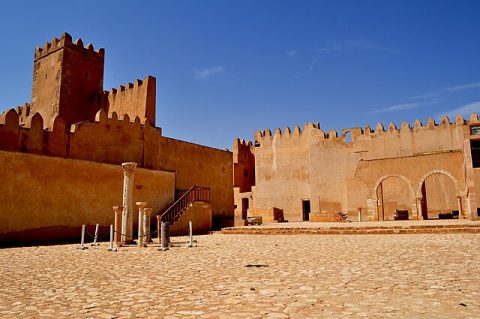
Alcazaba
The Alcazaba is the oldest part of the Alhambra complex, a military fortress dating to the 9th century and expanded by the Nasrid kings. Its watchtower, the Torre de la Vela, offers the finest panoramic views in Granada — stretching across the city to the Sierra Nevada. On clear winter days, snow-capped peaks frame the cityscape. Ringing the tower bell on January 2nd (Día de la Toma) is a centuries-old local tradition. The fortress walls and barracks reveal the scale of the medieval garrison that protected the Nasrid kingdom.
Tips for Landmarks & Monuments
- Book Alhambra tickets at least 3–4 weeks ahead, especially for the Nasrid Palaces timed entry.
- Purchase tickets only through the official website to avoid inflated reseller prices.
- Visit the Alcazaba first thing in the morning before crowds arrive at the Nasrid Palaces.
- Evening Nasrid Palaces tickets (Tuesday–Saturday) offer a quieter, atmospheric experience.