Granada's public spaces are the stage for daily life — where tapas bars overflow onto cobblestones, flamenco guitarists strum under orange trees and students debate into the night. From the grand central squares to the ancient lanes of the Albayzín, Granada's streets reward aimless wandering.
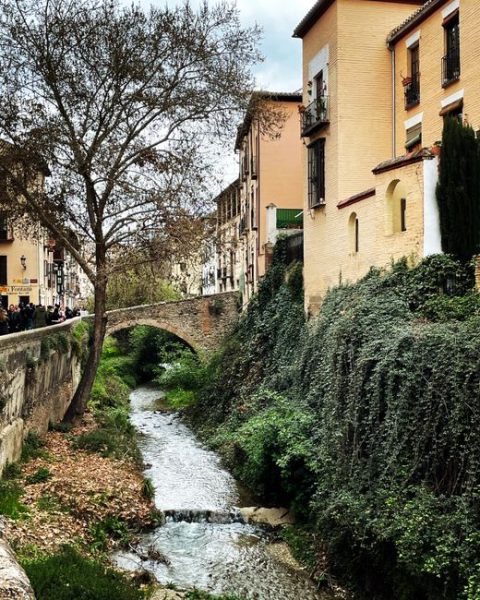
Carrera del Darro
One of Spain's most romantic streets, the Carrera del Darro follows the Río Darro as it runs between the Albayzín hill and the Alhambra hill. Medieval bridges span the river, Moorish towers rise above, and the El Bañuelo bathhouse and several Nasrid palaces line the way. The street ends at the Paseo de los Tristes, a riverside esplanade of café terraces directly below the illuminated Alhambra — the most dramatic outdoor dining backdrop in Andalusia. A must-walk at both midday and after dark.
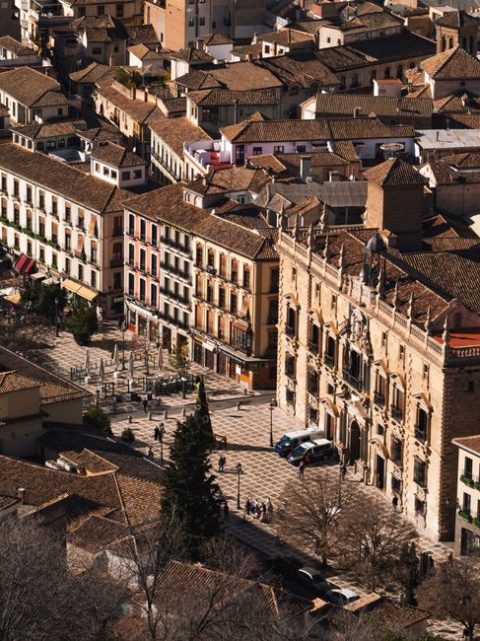
Plaza Nueva
Plaza Nueva is Granada's historic main square and the city's social heart. Built in the 16th century over the Río Darro — which still flows beneath it — the square is flanked by the Renaissance Real Chancillería (Royal Chancellery) and a string of lively bars and restaurants. It's the starting point for walks up to both the Alhambra (via Cuesta de Gomérez) and the Albayzín (via Carrera del Darro). Street performers, tapas-seekers and tourists converge here at all hours. The fountain at the centre and the surrounding terraces make it one of Andalusia's finest squares.
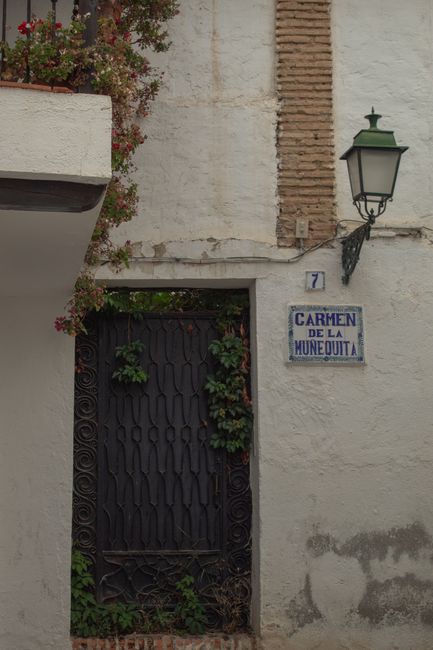
Calle Elvira & Calderería Nueva
Calle Elvira and the adjacent Calderería Nueva form Granada's most atmospheric street corridor, running from Plaza Nueva into the lower Albayzín. Calderería Nueva — nicknamed Calle de las Teterías — is lined with Moroccan tea houses (teterías), Arabic sweet shops, hookah bars and artisan stalls selling leather, ceramics and silver. The scent of mint tea and incense mingles with flamenco guitar from nearby bars. It feels transported directly from Fez. Stop into one of the traditional teterías for mint tea and pastries — a classic Granada experience.
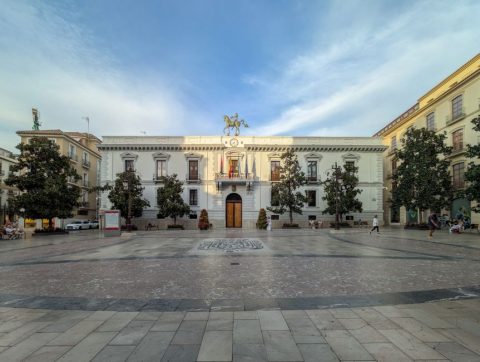
Plaza de Bib-Rambla
Plaza de Bib-Rambla was Granada's main public square during Moorish rule and the site of royal ceremonies and bullfights after the Reconquista. Today it's a pleasant flower-market square surrounded by outdoor café terraces, ideal for a mid-morning coffee or afternoon gelato. The central Neptune fountain dates to the 17th century. The square is steps from the Cathedral and Alcaicería market, making it a natural pause point on any city-centre itinerary. On weekday mornings, flower vendors fill the square with colour.
Tips for Squares & Streets
- Walk the Carrera del Darro in both directions — north in the morning light, south at dusk when the Alhambra is illuminated.
- Paseo de los Tristes terrace bars fill up quickly on warm evenings — arrive before 8 pm for a table.
- Calderería Nueva teterías are busiest in the late afternoon; mornings are quieter for authentic mint tea.