Granada's religious landscape is uniquely layered: mosques became cathedrals, churches rose over Moorish palaces, and cave churches hewn into hillsides still host flamenco. From the grand Cathedral to the whitewashed churches of the Albayzín, faith is woven into Granada's every street.
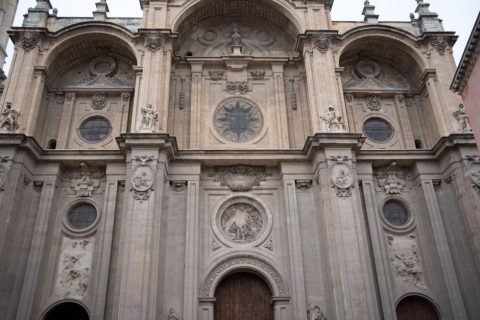
Catedral de Granada
Granada's Cathedral is one of Spain's greatest Renaissance churches, begun in 1523 on the site of the city's former Great Mosque. Its soaring interior — a nave 30 metres high — floods with light through circular windows designed by Alonso Cano. The main Baroque façade was designed by Alonso Cano in 1667. Don't miss the Capilla Mayor with its gilded altarpiece and royal portraits. An audio guide (included with entry) is highly recommended to understand the complex architectural history spanning two centuries of construction.
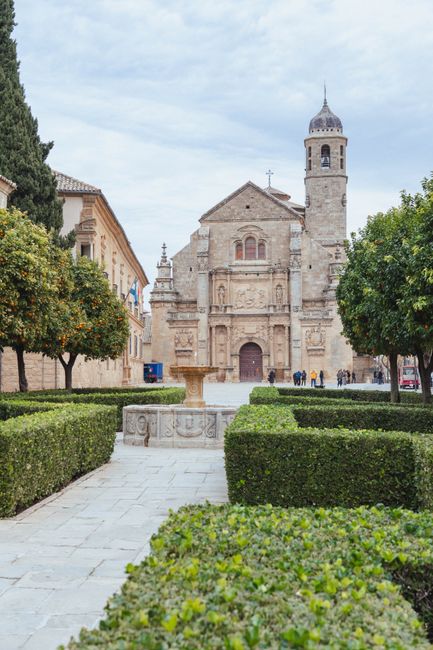
Capilla Real
The Royal Chapel is Granada's most emotionally charged monument — the final resting place of Ferdinand and Isabella, the monarchs who united Spain, funded Columbus's voyage and conquered Granada in 1492. Their elaborately carved marble mausoleum by Domenico Fancelli is a masterpiece of funerary sculpture. The adjacent sacristy displays Isabella's personal art collection (including Flemish masterworks by Rogier van der Weyden), her crown and sceptre, and Ferdinand's sword. The chapel is attached to the Cathedral but requires a separate ticket. Photography is not permitted inside.
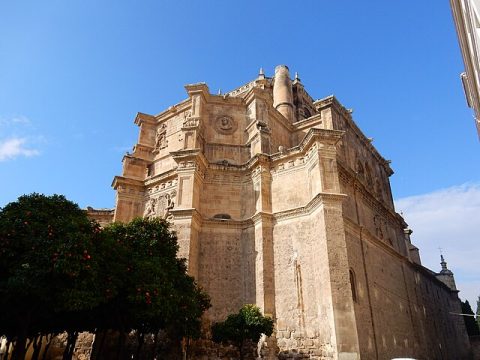
Monasterio de San Jerónimo
The Monastery of San Jerónimo, Founded in 1492, was the first Christian monastery built in Granada after the Reconquista. Its two Renaissance cloisters are exquisite — the larger one, with 36 arches on each level, ranks among the finest in Andalusia. The church interior is a Baroque extravaganza with an elaborate gilded altarpiece honouring El Gran Capitán, Gonzalo Fernández de Córdoba, who is buried here. Far fewer tourists visit compared to the Cathedral, making it a peaceful and rewarding detour just northwest of the city centre.
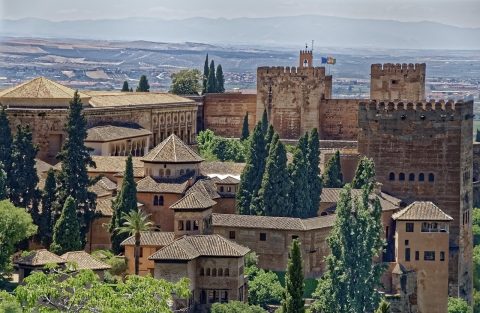
Mezquita Mayor de Granada
Inaugurated in 2003, the Mezquita Mayor de Granada stands on the Albayzín hill directly opposite the Alhambra — the most symbolically charged location imaginable. The mosque was built on the site of a Moorish palace and Independent visitors may enter the garden during visiting hours; sightseeing inside the prayer hall requires a prearranged group visit. Its minaret is modelled on the Giralda in Seville, and the rooftop garden commands arguably the best view of the Alhambra in the entire city. Entry is free. Staff are welcoming to respectful visitors of all backgrounds.
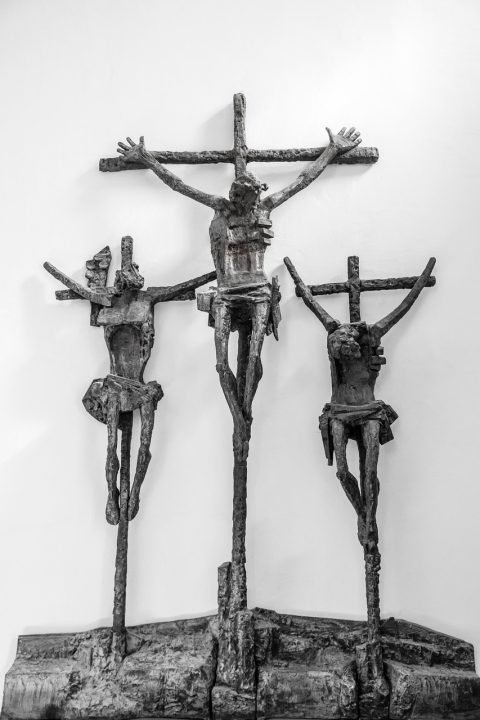
Sacromonte Abbey (Abadía del Sacromonte)
Perched high above the Sacromonte neighbourhood, this 17th-century Baroque abbey is one of Granada's lesser-known gems. Founded to house holy relics discovered in nearby caves, it commands sweeping views of the Alhambra, Albayzín and Sierra Nevada. The catacombs beneath the church, where the relics were found, can be visited on a guided tour. The abbey also houses a small museum of religious art and artefacts. The winding 20-minute uphill walk from the Sacromonte road is rewarded with unforgettable panoramas, especially at sunset.
Tips for Religious Sites
- The Bono Monumentos ticket covers the Cathedral and Capilla Real together at a discount.
- Dress modestly (covered shoulders and knees) for all religious sites.
- The Mezquita Mayor rooftop garden at sunset rivals any paid viewpoint in the city — and it's free.
- Visit San Jerónimo on a weekday morning for a crowd-free experience.