Tenerife's towns range from a UNESCO-listed colonial capital to a cliffside fishing village frozen in time, each with a distinct character shaped by the island's volcanic geography.
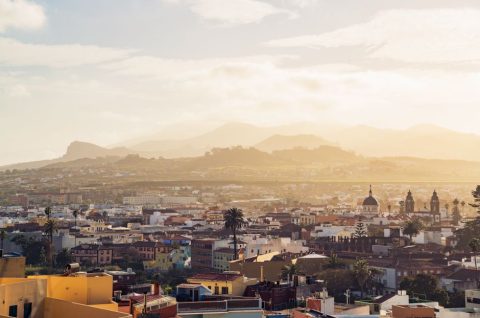
San Cristóbal de La Laguna (Old Town)
Tenerife's former capital and a UNESCO World Heritage Site, La Laguna's unfortified 16th-century grid plan directly inspired the layout of many Spanish colonial cities in the Americas. Its streets are lined with pastel mansions, wooden balconies, and historic churches, and the presence of the University of La Laguna gives the old town a lively student-city atmosphere alongside its colonial architecture. Far less touristy than the coastal resorts, with excellent tapas bars around Calle Herradores.
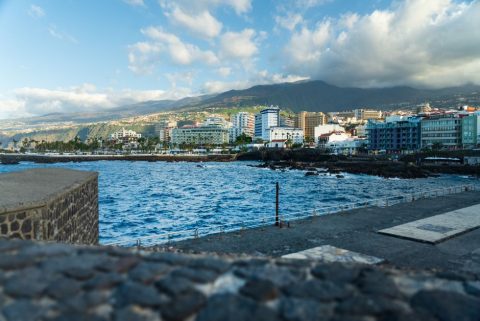
Puerto de la Cruz Old Town
Once Tenerife's main port and the island's original tourist resort, this north-coast town retains a historic core of narrow streets, black-sand beaches, and 19th-century architecture, distinct from the newer high-rise resorts of the south. Attractions include Plaza del Charco, the Lago Martiánez seawater lido designed by César Manrique, and a lively harbor. Its cooler, cloudier microclimate contrasts sharply with the sunnier south coast.
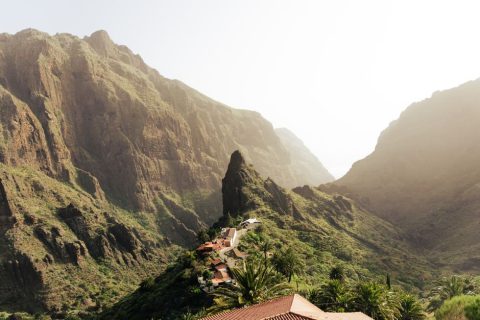
Masca Village
Tucked into a dramatic gorge in the Teno mountains, this tiny former farming hamlet is reachable only by a winding cliffside road and has become one of Tenerife's most photographed villages. It's the starting point for the famous Masca Gorge hike down to a secluded cove, though the trail has periodic closures for safety — check status before visiting. Even without hiking, the drive itself and the viewpoint above the village are worthwhile.
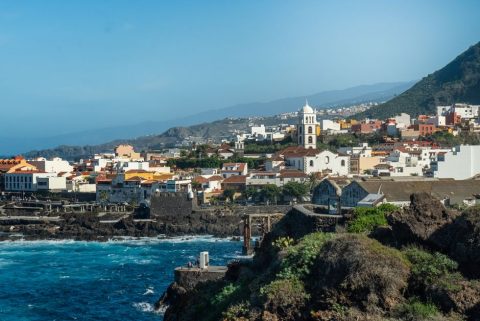
Garachico
This small north-coast town was Tenerife's principal port until a 1706 volcanic eruption buried its harbor in lava, forcing trade to shift to Santa Cruz. The lava flow left behind natural swimming pools — El Caletón — now a popular spot for a sea dip amid black volcanic rock. Cobbled streets, a restored castle, and colonial-era buildings give Garachico a quieter, more authentic feel than the resort towns.
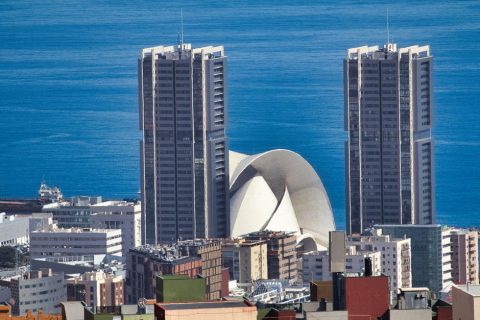
Santa Cruz de Tenerife City Center
The island's capital blends a compact historic core around Plaza de la Candelaria with the modern harborfront home to the Auditorio de Tenerife. It hosts the island's famous Carnival, rivaled in scale only by Rio de Janeiro's, and functions as a working city rather than a resort — a useful contrast to the tourist-focused south. The Rambla de Santa Cruz offers a shaded, tree-lined walk past public art.
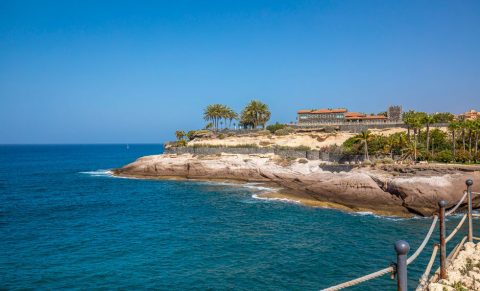
Costa Adeje
The island's most upscale resort area, on the sunny southwest coast, combines manicured beaches, luxury hotels, and a promenade lined with restaurants and shops. It's the main base for whale-watching excursions and sits close to Siam Park. Less historic than the northern towns, but the most reliable spot for guaranteed sun and family-friendly infrastructure.
Tips for Neighborhoods & Districts
- La Laguna is a short tram ride from Santa Cruz — easy to combine both in one day
- Check trail status for the Masca Gorge hike before driving out, as it closes periodically for rockfall risk
- Garachico's El Caletón pools are calmest early morning before day-trippers arrive